


Occupational Health and Safety Standards: What Every Business Should Know to Improve Workplace Safety and Productivity
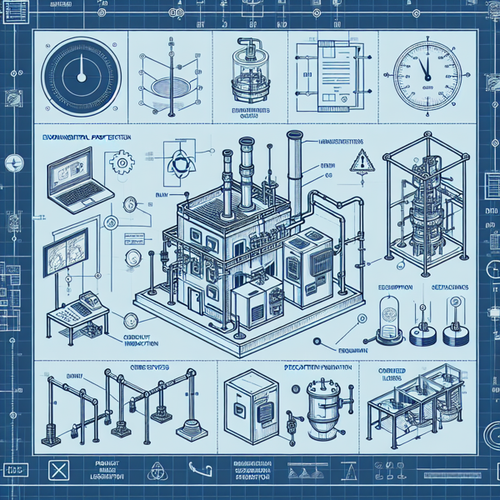
Creating a safe and healthy work environment is no longer a choice—it's a necessity for organizations seeking resilience, productivity, and growth. The environment category of international standards features four cornerstone documents that guide businesses on establishing and maintaining occupational health and safety (OH&S) systems: EN ISO 45001:2023, ISO 45002:2023, ISO 45004:2024, and SIST EN ISO 45001:2023/A1:2024. This article demystifies these standards, explaining their relevance, requirements, and benefits for organizations of all sizes and sectors. Whether you're an executive, safety manager, HR leader, or employee, understanding these standards can help foster a safer, more efficient workplace.
Overview / Introduction
Modern workplaces face pressures to increase output, remain competitive, and attract and retain talent, all while minimizing risk and meeting regulatory requirements. Occupational health and safety management systems (OH&S MS) play a pivotal role in achieving these goals. By implementing international OH&S standards, organizations can proactively prevent work-related injuries and illnesses, foster a culture of safety, and drive continual improvement. In this guide, you'll discover:
- The essentials of occupational health and safety standards
- How these standards protect people and assets
- Practical steps to achieving compliance and leveraging safety for productivity and business scaling
- Why OH&S is no longer just a compliance issue, but a strategic imperative for business success
Detailed Standards Coverage
EN ISO 45001:2023 - The Foundation for OH&S Management Systems
Occupational health and safety management systems - Requirements with guidance for use (ISO 45001:2018)
EN ISO 45001:2023 is the globally recognized benchmark for establishing, maintaining, and continuously improving an OH&S management system. Applicable to all organizations—regardless of size, sector, or risk profile—it sets out the requirements to create a systematic approach for managing workplace health and safety risks, fulfilling legal obligations, and achieving OH&S objectives. Its structure is based on the Plan-Do-Check-Act (PDCA) cycle, integrating safety within core business processes.
The standard covers areas such as hazard identification, risk assessment, leadership commitment, consultation and participation of workers, operational controls, emergency preparedness, and performance evaluation. It is flexible, allowing businesses to tailor controls to their unique context while requiring the integration of legal and other compliance obligations.
Practical implications for implementation include:
- Engaging leadership and worker participation at all levels
- Documenting and evaluating hazards and risks systematically
- Setting clear OH&S objectives linked to business strategy
- Monitoring, measuring, and reviewing performance for continual improvement
Key highlights:
- Universal applicability to any organization
- Focuses on preventing work-related injury and ill health
- Emphasizes continual improvement, compliance, and proactive risk management
Access the full standard:View EN ISO 45001:2023 on iTeh Standards
ISO 45002:2023 - Practical Guidance for Implementation
Occupational health and safety management systems — General guidelines for the implementation of ISO 45001:2018
ISO 45002:2023 is a companion guide designed to help organizations of any size or sector practically implement ISO 45001’s requirements. It expands on the WHAT of ISO 45001 with the HOW—providing step-by-step recommendations, illustrative examples, and best-practice tips tailored to diverse organizational contexts.
This guidance document covers:
- Interpreting and applying the requirements of ISO 45001
- Addressing the diverse needs of workers—including gender, age, and minority considerations
- Examples from real organizations to demonstrate effective implementation
- Recommendations for integrating OH&S with other management systems and processes
Who should use ISO 45002? Any organization seeking to:
- Establish or upgrade their OH&S management system
- Ensure that their system is robust, inclusive, and scalable
- Achieve sustained legal compliance and foster a positive safety culture
Key highlights:
- Practical, accessible implementation advice for ISO 45001
- Real-world case studies increase relevance
- Emphasizes inclusion and continuous improvement
Access the full standard:View ISO 45002:2023 on iTeh Standards
ISO 45004:2024 - Performance Evaluation for Continuous Improvement
Occupational health and safety management — Guidelines on performance evaluation
No management system is effective without meaningful measurement and evaluation. ISO 45004:2024 provides comprehensive guidance for organizations to establish, maintain, and improve their OH&S performance evaluation processes.
The standard addresses:
- Selection and development of key OH&S performance indicators (KPIs)
- Monitoring, measurement, analysis, and evaluation of safety processes and outcomes
- Use of both leading (proactive) and lagging (reactive) indicators
- Setting up audits, management reviews, and incident investigations
- Integration of performance evaluation within broader business processes
- Communicating OH&S performance results to stakeholders
ISO 45004 assists organizations in:
- Determining if intended OH&S outcomes are achieved
- Detecting inefficiencies or gaps in risk controls
- Supporting data-driven management decisions
- Sustaining regulatory compliance and continual improvement
Key highlights:
- Supports lifecycle management of performance evaluation
- Balances quantitative and qualitative measurement
- Focus on proactively driving improvement, not just measuring incidents
Access the full standard:View ISO 45004:2024 on iTeh Standards
SIST EN ISO 45001:2023/A1:2024 - Integrating Climate Action with OH&S
Occupational health and safety management systems - Requirements with guidance for use - Amendment 1: Climate action changes (ISO 45001:2018/Amd 1:2024)
The climate crisis poses new risks and challenges to occupational health and safety. This amendment updates ISO 45001:2018 requirements to embed climate action into OH&S management systems, acknowledging the growing impact of environmental changes on workplace health and safety.
Key features include:
- Recognizing climate change as a factor in organizational context and risk assessment
- Addressing new hazards arising from extreme weather, changing work patterns, and related emergencies
- Offering guidance for climate-adaptive OH&S planning and preparedness
- Emphasizing organizational resilience in the face of environmental change
Who should comply?
- All organizations seeking a future-proof OH&S management system
- Businesses engaging in climate risk disclosure, ESG initiatives, or seeking sustainability certifications
Key highlights:
- Integrates climate considerations into OH&S management
- Enhances risk identification and emergency preparedness
- Supports long-term business resilience and regulatory alignment
Access the full standard:View SIST EN ISO 45001:2023/A1:2024 on iTeh Standards
Industry Impact & Compliance
Implementing these occupational health and safety standards is transformational for businesses:
- Legal compliance: Aligning with international standards supports compliance with local and global OH&S laws, reducing the risk of costly penalties or operational shutdowns.
- Market credibility: Certification boosts stakeholder trust and competitive advantage, opening doors to new markets and partnerships.
- Risk reduction: Systematic hazard identification and risk management lower incident rates, insurance premiums, and absenteeism.
- Business continuity: Proactive preparedness for emergencies (including climate-driven events) ensures resilience.
- Productivity & scaling: Safe workplaces enhance morale, retention, and productivity, providing a strong foundation for scaling operations.
However, failure to comply can result in regulatory fines, legal action, reputational damage, and—most importantly—harm to workers.
Benefits at a Glance
- Reduced workplace injuries, illnesses, and related costs
- Stronger safety culture and improved worker engagement
- Clear evidence of due diligence and governance
- Improved ability to attract and retain talent
- Enhanced sustainability and ESG (Environmental, Social, Governance) scores
Implementation Guidance
Adopting occupational health and safety management standards may seem daunting, but a staged, pragmatic approach ensures success:
- Understand your baseline: Assess existing processes, risks, and compliance gaps.
- Engage leadership: Secure top management commitment and resource allocation.
- Consult stakeholders: Involve workers at every stage—for buy-in, relevance, and improved outcomes.
- Develop documentation: Create or update your OH&S manual, policies, objectives, and risk registers.
- Integrate systems: Align OH&S with quality, environmental, and business continuity management if possible.
- Invest in training: Capacity building enables effective daily execution and ongoing system improvement.
- Measure and review: Use performance indicators (as in ISO 45004) to inform a cycle of improvement.
- Prepare for certification: Consider third-party certification to ISO 45001 for additional validation and market credibility.
Best Practices
- Leverage real-world case studies: ISO 45002 offers practical insights from diverse organizations.
- Stay adaptive: Update risk assessments continuously—especially for climate, legal, and business changes.
- Prioritize communication: Regularly engage staff with updates, training, and transparent feedback on OH&S performance.
- Use digital tools: Many organizations benefit from OH&S software for risk tracking, document control, and analytics.
Resources:
- iTeh Standards for authoritative access to standards
- Professional associations, webinars, and government OH&S bodies
- Accredited training and consulting services
Conclusion / Next Steps
Occupational health and safety standards help organizations build safer, healthier, and more productive workplaces. Far from being a legal checkbox, compliance with EN ISO 45001:2023, ISO 45002:2023, ISO 45004:2024, and SIST EN ISO 45001:2023/A1:2024 empowers organizations to proactively respond to old and new workplace risks, integrate sustainability and climate action, and foster business resilience.
Key takeaways:
- International OH&S standards are essential for legal compliance, risk mitigation, and effective business scaling
- Implementation is achievable for any organization, with significant long-term benefits for people, reputation, and sustainability
- As workplace hazards evolve (including those from climate change), these standards provide a pathway for continuous improvement
Next steps:
- Review the full texts via iTeh Standards
- Conduct a gap analysis on your current OH&S system
- Begin stakeholder consultations and planning for implementation or upgrading
- Stay informed about updates and best practices in occupational safety and environmental management
By embedding these standards into their operations, organizations safeguard their most valuable asset—their people—while laying a strong foundation for growth in a responsible, sustainable future.
https://standards.iteh.ai/catalog/standards/iso/63dfede8-4ca3-465e-8d67-607d62a56fee/iso-45002-2023
https://standards.iteh.ai/catalog/standards/iso/8fbd2260-9aa6-465a-ab7c-9cd12cbc793b/iso-45004-2024
Categories
- Latest News
- New Arrivals
- Generalities
- Services and Management
- Natural Sciences
- Health Care
- Environment
- Metrology and Measurement
- Testing
- Mechanical Systems
- Fluid Systems
- Manufacturing
- Energy and Heat
- Electrical Engineering
- Electronics
- Telecommunications
- Information Technology
- Image Technology
- Precision Mechanics
- Road Vehicles
- Railway Engineering
- Shipbuilding
- Aircraft and Space
- Materials Handling
- Packaging
- Textile and Leather
- Clothing
- Agriculture
- Food technology
- Chemical Technology
- Mining and Minerals
- Petroleum
- Metallurgy
- Wood technology
- Glass and Ceramics
- Rubber and Plastics
- Paper Technology
- Paint Industries
- Construction
- Civil Engineering
- Military Engineering
- Entertainment