


Environmental & Infrastructure Management: Key Standards for Sustainable, Scalable Business Success
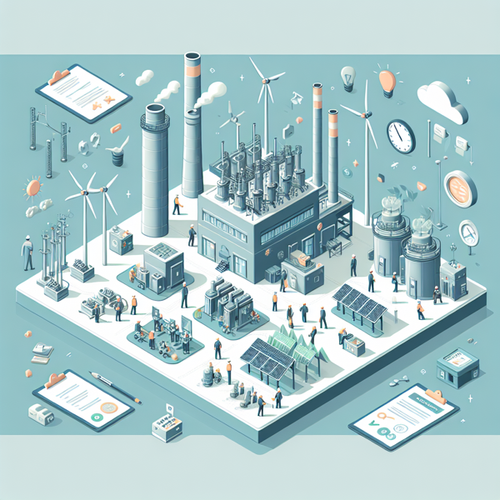
Environmental and infrastructure management are no longer optional business practices—they’re fundamental to success in today's global landscape. As organizations face growing pressures related to sustainability, compliance, and social responsibility, adherence to internationally recognized standards is proving essential. In this guide, we’ll explore four key standards driving best practices in environmental management and infrastructure scalability. We'll reveal why businesses of all sizes, across every sector, cannot afford to ignore these frameworks—and how aligning with them leads to greater productivity, security, and operational scale.
Overview / Introduction
Environmental management and sustainable infrastructure are at the heart of modern business operations. Increasing legal requirements, stakeholder expectations, and the drive for long-term profitability have made robust standards not merely advantageous, but essential. Leading organizations adopt comprehensive frameworks to:
- Minimize environmental impact
- Ensure regulatory compliance
- Communicate transparently with stakeholders
- Build a foundation for security, growth, and innovation
This article explains four cornerstone standards:
- EN ISO 14044:2006/A2:2020 – Life Cycle Assessment Requirements & Guidelines
- EN ISO 14050:2020 – Environmental Management Vocabulary
- EN ISO 9001:2015/A1:2024 – Quality Management Systems: Climate Action Changes
- ISO 14075:2024 – Principles & Framework for Social Life Cycle Assessment
Whether you're a business leader, sustainability officer, or public sector professional, this guide will help you understand the importance, requirements, and practical benefits of implementing these internationally recognized standards.
Detailed Standards Coverage
EN ISO 14044:2006/A2:2020 – Modernizing Life Cycle Assessment
Environmental management – Life cycle assessment – Requirements and guidelines – Amendment 2 (ISO 14044:2006/Amd 2:2020)
The EN ISO 14044:2006/A2:2020 standard is the definitive reference for conducting life cycle assessment (LCA) studies. Amendment 2 introduces crucial updates that reflect advancements in environmental management, improving both the consistency and transparency of life cycle assessment processes.
Scope & Requirements:
- Provides a structure for analyzing the environmental impacts of products and processes from cradle to grave, covering everything from resource extraction to final disposal.
- Defines and clarifies key terms, system boundaries, and allocation procedures for multi-output processes, ensuring that LCA results are robust and comparable.
- Requires completeness, consistency, and sensitivity checks in the verification process, strengthening result validity.
Target Organizations: Businesses in manufacturing, infrastructure, consumer goods, and the public sector rely on this standard to evaluate and minimize environmental impacts throughout supply chains and operational processes.
Implementation Implications: Implementing LCA according to EN ISO 14044 is vital for:
- Transparent reporting
- Regulatory compliance
- Identifying improvement areas for productivity and sustainability
- Communicating environmental credentials to clients and consumers
Notable Features:
- New and revised definitions around life cycle, system boundaries, and allocation methods
- Step-by-step allocation procedures outlined in Annex D
- Greater clarity for aligning studies with the United Nations Sustainable Development Goals (SDGs)
Key highlights:
- Covers all phases of life cycle assessment from goal definition to interpretation
- Emphasizes data accuracy, transparency, and result interpretation
- Aligns with the latest best practices and international policies
Access the full standard:View EN ISO 14044:2006/A2:2020 on iTeh Standards
EN ISO 14050:2020 – Building Common Understanding with Environmental Management Vocabulary
Environmental management – Vocabulary (ISO 14050:2020)
Consistency and clarity are at the heart of effective environmental management. The EN ISO 14050:2020 standard offers a universally accepted glossary of terms, supporting seamless communication in environmental reporting, compliance, and implementation.
Scope & Requirements:
- Defines key terms covering environmental management systems, footprinting, auditing, climate action, and sustainability.
- Enables shared understanding for documentation, training, reporting, and internal/external audits.
Target Organizations: All organizations working within policy, industrial, environmental, and infrastructure sectors benefit from a harmonized terminology—essential for multinational companies and organizations involved in cross-border projects.
Implementation Implications:
- Prevents misunderstandings and communication lapses
- Facilitates effective coordination among diverse teams and stakeholders
- Supports education and training of personnel in best practices
Notable Features:
- Structured glossary covers management systems, auditing, product life cycle, climate change terms, and more
- Aligned with the ISO 14000 family for seamless integration into compliance frameworks
Key highlights:
- Clarifies core environmental concepts, risks, KPIs, and performance indicators
- Supports alignment with regulatory and customer demands
- Underpins the implementation of other environmental standards
Access the full standard:View EN ISO 14050:2020 on iTeh Standards
EN ISO 9001:2015/A1:2024 – Enhancing Quality Management with Climate Action
Quality management systems – Requirements – Amendment 1: Climate action changes (ISO 9001:2015/Amd 1:2024)
This amendment to the renowned EN ISO 9001:2015 standard integrates climate change considerations directly into quality management systems (QMS). Organizations now need to show how climate-related risks and opportunities are addressed within their management systems.
Scope & Requirements:
- Updates quality management requirements to require consideration of climate change in strategic planning and risk management
- Emphasizes the integration of climate action into business processes—beyond basic compliance
Target Organizations: Any company seeking or maintaining ISO 9001 certification must now factor in climate-related risks at a strategic and operational level. This is especially relevant for infrastructure businesses, service providers, and manufacturers with environmental footprints.
Implementation Implications:
- Requires a holistic approach to business resilience and sustainability
- Promotes risk mitigation and opportunity identification
- Aligns quality management with global environmental priorities
Notable Features:
- Direct link between business quality and climate change action
- New requirements for documentation and ongoing review
- Stronger alignment with the United Nations SDGs and ESG (environmental, social, and governance) reporting expectations
Key highlights:
- Pushes organizations to proactively address climate risks and opportunities
- Fosters integration of environmental priorities with business quality goals
- Supports companies in achieving future-proof, responsible operations
Access the full standard:View EN ISO 9001:2015/A1:2024 on iTeh Standards
ISO 14075:2024 – Social Life Cycle Assessment for Sustainable Development
Environmental management — Principles and framework for social life cycle assessment
The newly published ISO 14075:2024 elevates social responsibility to the same level as environmental and economic considerations. It introduces a framework for conducting social life cycle assessments (S-LCAs), helping organizations evaluate the social impacts (both positive and negative) of their products and operations.
Scope & Requirements:
- Establishes principles, framework, and guidance for S-LCA across all phases: goal and scope, inventory, impact assessment, interpretation, and reporting
- Integrates consideration of stakeholder well-being, human rights, labor conditions, and community impacts
- Aims to help organizations contribute toward meeting the United Nations Sustainable Development Goals (SDGs)
Target Organizations: Manufacturers, service providers, infrastructure developers, and public agencies can use S-LCA to:
- Assess and improve social sustainability
- Identify social "hotspots" and opportunities for positive change
- Support responsible sourcing and supply chain transparency
Implementation Implications:
- Holistic view of sustainability, beyond just environmental and economic factors
- Practical steps for transparent, credible, and science-based social analysis
- Encourages transparency and stakeholder involvement throughout the product life cycle
Notable Features:
- Comprehensive requirements for qualitative and semi-quantitative data
- Impact pathways for risks and opportunities linked to social well-being
- Structured for alignment with existing life cycle and environmental assessment standards
Key highlights:
- Enables comparison and benchmarking of social impacts
- Supports SDG-based reporting and ESG criteria
- Practical guidance for integrating social assessment into existing frameworks
Access the full standard:View ISO 14075:2024 on iTeh Standards
Industry Impact & Compliance
Modern organizations face a complex array of obligations: environmental stewardship, regulatory compliance, and stakeholder engagement. These four standards provide:
- A systematic approach to environmental impact assessment, management, and reporting
- Tools to align internal processes with international legislation and stakeholder expectations
- Mechanisms for measuring, monitoring, and improving both environmental and social performance
Benefits of Compliance:
- Boosts market trust and brand differentiation
- Lowers the risk of legal or regulatory penalties
- Promotes sustainable use of resources—critical for long-term productivity
- Supports scaling operations by demonstrating responsible management to investors and partners
- Drives innovation in product and process design
Risks of Non-Compliance:
- Legal challenges and fines
- Damaged brand reputation
- Lost business opportunities and inability to secure contracts
- Difficulty attracting investment and top talent
Organizations that embrace these internationally recognized standards often find themselves better positioned for:
- Global supply chain participation
- Entry into new markets
- Meeting stringent tender and procurement requirements
- Long-term resilience in the face of environmental and social challenges
Implementation Guidance
Successfully adopting these standards requires strategic planning and commitment. Here are proven best practices:
Gap Analysis:
- Review current policies, processes, and internal terminology to identify discrepancies with standard requirements.
Staff Training:
- Educate personnel on crucial terminology (using EN ISO 14050), the importance of life cycle thinking, and new quality management approaches that include climate action.
Integrated Management Systems:
- Combine quality, environmental, and social management systems for maximum efficiency and performance.
Stakeholder Engagement:
- Involve internal and external parties to ensure that environmental and social impacts are accurately identified and addressed.
Data Management:
- Invest in data collection, monitoring, and analytical tools to enable transparent life cycle and social impact assessments as outlined in EN ISO 14044 and ISO 14075.
Continuous Improvement:
- Establish feedback loops to regularly update policies, targets, and performance indicators.
Resources for Organizations:
- Training modules from standards organizations
- Consulting services specializing in ISO and EN compliance
- Technical documentation, checklists, and industry benchmarks
- Stakeholder forums for best practice exchange
Conclusion / Next Steps
Adopting advanced environmental and infrastructure management standards is about more than compliance—it’s a strategic decision that leads to safer operations, improved sustainability, and business growth. By embracing standards like EN ISO 14044, EN ISO 14050, EN ISO 9001/A1 (climate action), and ISO 14075, organizations not only meet regulatory obligations but set themselves apart as industry leaders.
Key takeaways:
- Rigorous standards drive productivity, security, and business scalability
- Integrated vocabulary and holistic life cycle approaches foster clarity, consistency, and better decision-making
- Quality management is now inseparable from climate and social responsibility
- Holistic frameworks make organizations resilient, future-ready, and attractive to stakeholders
Take your next step toward sustainable business excellence—explore each standard in depth, invest in ongoing education, and join the global leaders advancing responsible environmental and infrastructure management.
https://standards.iteh.ai/catalog/standards/cen/64497347-d9dc-4562-a6f1-b659f5a76c98/en-iso-14044-2006-a2-2020https://standards.iteh.ai/catalog/standards/cen/12ccd47e-ab7b-43e6-b393-48f74dedfa1a/en-iso-14050-2020https://standards.iteh.ai/catalog/standards/cen/16d0a542-db25-4f6d-af8e-cd3d4d5f9ec5/en-iso-9001-2015-a1-2024https://standards.iteh.ai/catalog/standards/iso/1bbeb217-9bab-4c8b-8760-04d45a617424/iso-14075-2024
Categories
- Latest News
- New Arrivals
- Generalities
- Services and Management
- Natural Sciences
- Health Care
- Environment
- Metrology and Measurement
- Testing
- Mechanical Systems
- Fluid Systems
- Manufacturing
- Energy and Heat
- Electrical Engineering
- Electronics
- Telecommunications
- Information Technology
- Image Technology
- Precision Mechanics
- Road Vehicles
- Railway Engineering
- Shipbuilding
- Aircraft and Space
- Materials Handling
- Packaging
- Textile and Leather
- Clothing
- Agriculture
- Food technology
- Chemical Technology
- Mining and Minerals
- Petroleum
- Metallurgy
- Wood technology
- Glass and Ceramics
- Rubber and Plastics
- Paper Technology
- Paint Industries
- Construction
- Civil Engineering
- Military Engineering
- Entertainment