


June 2026: New Standards Advance Safety & Sustainability in Environmental Protection
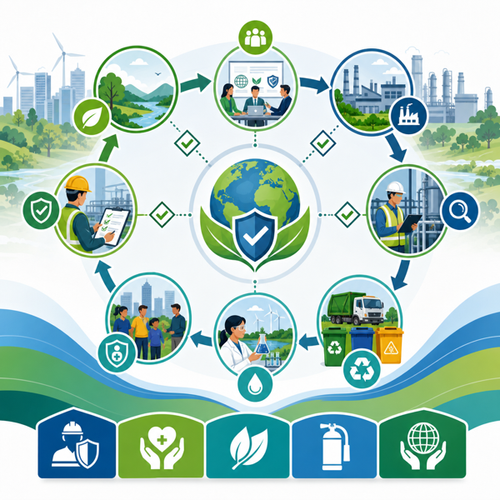
June 2026 marks a significant milestone for Environmental Protection, Health Protection, and Safety with the publication of five pivotal international standards. These new standards target diverse but interconnected areas—ranging from household appliance safety to sustainable materials management, solar power fire protection, and wastewater treatment technologies. For professionals in compliance, engineering, procurement, and environmental health, understanding these standards is essential to future-proofing operations and safeguarding public welfare.
Overview
Environmental protection and safety standards increasingly reflect society’s demand for safer products, greener technologies, and responsible resource management. With international momentum towards sustainability and regulatory compliance, these standards shape the operational landscape for manufacturers, public authorities, infrastructure operators, and recyclers alike.
This article covers:
- The scope and key requirements of five newly published standards (June 2026)
- Implementation best practices
- Compliance impacts and technical insights
Whether you’re a quality manager, design engineer, procurement specialist, or compliance officer, this overview equips you to navigate these critical changes confidently.
Detailed Standards Coverage
prEN IEC 60335-2-10:2024 – Safety for Floor Treatment and Wet Scrubbing Machines
Household and similar electrical appliances – Safety – Part 2-10: Particular requirements for floor treatment machines and wet scrubbing machines
This updated European Standard, aligning closely with IEC 60335-2-10:2021, establishes specific safety criteria for electric floor treatment and wet scrubbing machines intended for household and similar purposes. Designed for units with a rated voltage up to 250 V, it encompasses both mains- and battery-powered appliances.
Key sections:
- Defines hazards and safety requirements relating to electrical, mechanical, and thermal risks associated with cleaning appliances.
- Supplements the general safety requirements of IEC 60335-1.
- Introduces new test requirements for accessible surfaces (e.g., temperature rise, resistance to moisture).
Who needs to comply:
- Manufacturers of domestic and commercial floor cleaning appliances
- Safety testing laboratories and product certifiers
- Distributors and facility management procurement teams
Implementation:
- Manufacturers must reassess and validate designs for updated temperature rise and endurance tests.
- Enhanced labelling and documentation are mandated to ensure safe operation by end-users.
Notable changes:
- Alignment with IEC 60335-1:2020
- Clarification of moisture resistance and stability tests
- Additional requirements for battery-operated machines
Key highlights:
- Comprehensive protection against electric shock and overheating
- New temperature and moisture test regimes
- Broader applicability for battery-operated and DC appliances
Access the full standard:View prEN IEC 60335-2-10:2024 on iTeh Standards
IEC 60335-2-109:2023 – Safety for UV Radiation Water Treatment Appliances
Household and similar electrical appliances – Safety – Part 2-109: Particular requirements for UV radiation water treatment appliances
This international standard specifies safety requirements for UV water treatment appliances, safeguarding users at home, light industry, shops, and farms. Covering both single-phase (≤250 V) and multiphase (≤480 V) machines, it reflects advancements in UV technology and addresses evolving international safety expectations.
Key features include:
- Alignment with IEC 60335-1:2020, integrating the latest harmonized requirements
- Treatment of external accessible surfaces, including temperature limits and marking
- Updated guidance for remote operation and protection from harmful radiation
Who needs to comply:
- UV water treatment appliance manufacturers
- Facility managers deploying UV treatment in public or semi-public locations
- Regulators and product safety authorities
Practical implications:
- Certifications must reflect the new requirements for marking, depth limits, and surface temperatures.
- Design teams should review the revised safety clauses and remote operation guidelines.
Notable updates from previous editions:
- Enhanced temperature controls for user-accessible areas
- Standardized marking for maximum operating depth using IEC 60417 symbols
- Removal of duplicate radiation protection clauses (now addressed in Part 1)
Key highlights:
- Addresses risks posed by UV technology—electrical, thermal, and radiation
- Expanded remote operation requirements
- Covers DC and battery-powered equipment, not just mains-connected units
Access the full standard:View IEC 60335-2-109:2023 on iTeh Standards
CEN/TR 18325:2026 – ELT Rubber Compliance with CLP and REACH Regulations
Rubber materials obtained from End-of-Life Tyres – Guidelines for the compliance to CLP and REACH regulations – Granulates and powders
This new technical report delivers critical guidance for recyclers and producers of rubber granulates and powders sourced from end-of-life tyres (ELT). It bridges chemical risk assessment, regulatory screening, and communication across the value chain, enabling sustainable circular material use in the EU.
Key content:
- Screening and listing of hazardous substances relevant to ELT-derived rubber (e.g., 6PPD, silica, zinc)
- Guidance on CLP (Classification, Labelling and Packaging) hazard classification and assessment
- Stepwise REACH compliance guidance, including registration exemption conditions (per Article 2.7d)
Audience:
- ELT recyclers and material producers
- Manufacturers using ELT-recovered rubber in products (construction, sports, transport)
- Regulatory compliance teams and chemical safety assessors
Implementation steps:
- Identify and quantify relevant hazardous substances in ELT-derived materials.
- Classify granulates/powders per current CLP requirements, including emerging substances of concern.
- Demonstrate and document compliance for REACH registration or exemption.
Notable regulatory context:
- Silica and 6PPD are under regulatory review with significant impact projected post-2026.
- Ongoing monitoring is essential—this guidance will require periodic reassessment.
Key highlights:
- Clear, practical methodology for CLP/REACH compliance
- Up-to-date hazard screening for key substances
- Direct applicability to circular economy and green procurement initiatives
Access the full standard:View CEN/TR 18325:2026 on iTeh Standards
CEN/TR 18326:2026 – Fire Performance of Roof Systems with Above Roof PV Modules
Report on installation scenarios, available test methods and national legislation to be considered for the fire performance classification of roof systems with above roof mounted PV modules
The rapid proliferation of photovoltaic (PV) systems mounted above roofs—often referred to as BAPV—necessitates robust fire safety classification. This report offers comprehensive insight into:
- Real-world installation scenarios for above-roof PV systems
- Available fire test methods (including EN ISO 13943:2017, IEC 61730-1/2, CEN/TS 1187)
- National legislative differences across Europe
Scope and application:
- Applies to construction industry, facility owners, PV system integrators, and safety consultants
- Covers all components affecting fire performance: modules, supporting structure, roof system interaction
Best practices for implementation:
- Identify the regulatory testing route and documentation required in each jurisdiction
- Assess fire risk holistically—consider geometry, mounting height, access, array size, and proximity to critical infrastructure
- Specify PV modules and mounting systems tested together under realistic installation scenarios
Current gaps and recommendations:
- Absence of harmonized European test methodology—diverse local approaches persist
- Accurate risk evaluation requires considering new and existing test standards in tandem
Key highlights:
- Detailed breakdown of national variations in fire testing and legal requirements
- Outlines parameters that influence fire behavior (e.g., module inclination, gap sizes, mounting systems)
- Recommends nuanced assessment of both PV modules and roof assembly as an integrated system
Access the full standard:View CEN/TR 18326:2026 on iTeh Standards
EN 12255-7:2026 – Biological Fixed-Film Reactors in Wastewater Treatment Plants
Wastewater treatment plants – Part 7: Biological fixed-film reactors
Part 7 of the EN 12255 series delivers comprehensive design and performance requirements for biological fixed-film reactors applied in secondary and tertiary wastewater treatment. It covers installations serving more than 50 people, with direct applications to municipal, domestic, and select industrial plants.
Scope includes:
- Rotating Biological Contactors (RBC), Biological Trickling Reactors (BTR), Moving Bed Biological Reactors (MBBR), Submerged Medium Reactors (SMR), Submerged Media Filters (SMF)
- System dimensioning, media selection, flow management, and performance criteria
- Safety, control, automation, and best practice operational guidance
Who should apply this standard:
- Wastewater treatment plant designers, operators, and engineers
- Regulatory bodies and municipal authorities overseeing wastewater infrastructure
Practical implications:
- Up-to-date biological reactor designs ensuring high-quality effluent and robust performance
- Guidance for hybrid and enhanced fixed-film systems (interface to Part 6—activated sludge)
- Integration of the latest safety and automation controls
Notable updates since the previous edition:
- Expanded design recommendations, including moving bed systems
- Alignment with current state-of-the-art methodologies
- Enhanced annexes for media selection and dimensioning
Key highlights:
- Covers engineering, planning, safety, and operational control
- Improves environmental compliance and plant performance
- Supports municipalities in sustainable water management
Access the full standard:View EN 12255-7:2026 on iTeh Standards
Industry Impact & Compliance
The adoption of these standards has broad operational and regulatory implications for businesses:
- Reduced risk: Updated safety and fire performance standards mitigate hazards for users and infrastructure.
- Streamlined compliance: Clear guidelines for REACH and CLP help organizations confidently demonstrate regulatory alignment—critical for penetrating EU markets.
- Sustainability advancement: Enhanced requirements for wastewater and recycled materials support organizational and community sustainability objectives.
- Competitive advantage: Early adopters will be better positioned for tendering public contracts or meeting supply chain sustainability requirements.
- Risks of non-compliance: Regulatory penalties, product recalls, and increased liability in the event of incidents or non-conformance audits.
Implementation timelines:
- National adoption and transition periods are typically set between 12–36 months from publication. Organizations should proactively review gap analyses and adapt internal processes/controls accordingly.
Technical Insights
Several technical themes unify these standards:
- Safety engineering: Enhanced focus on electrical protection, temperature limits, and mechanical stability.
- Environmental risk management: Comprehensive approaches to chemical compliance and eco-design underpin the circular use of materials and responsible waste management.
- Testing and certification: Harmonization with parent standards (e.g., IEC 60335-1, ISO/EN 13943) ensures international compatibility. Laboratories and certification bodies must update protocols to reflect new test scenarios and risk thresholds.
- Documentation and traceability: Robust labelling, safety data sheets, and performance declarations support transparent compliance, especially for products and materials circulating within the EU Single Market.
- System integration: Both PV and wastewater standards emphasize the necessity of treating systems (roofs + PV, reactors + plant) as integrated wholes in risk assessment, engineering, and compliance.
Best practices for implementation:
- Conduct early impact assessments for supply chains and product portfolios.
- Update technical files, datasheets, and operator instructions as required by each standard.
- Engage accredited testing and certification partners to confirm compliance pre-market.
- Monitor regulatory developments, especially for chemicals under ongoing review (e.g., silica, 6PPD).
Conclusion / Next Steps
Staying informed on evolving international standards is critical for organizations dedicated to environmental protection, worker and user safety, and regulatory excellence. June 2026’s newly published standards open new opportunities for enhancing safety, sustainability, and legal compliance across sectors—from household appliances and recycled materials to sanitation systems and solar infrastructure.
Recommendations:
- Download and study full texts for applicable standards via iTeh Standards
- Conduct a gap analysis for product, plant, and process compliance
- Prioritize staff training on new requirements—particularly in safety, engineering, procurement, and environmental teams
- Subscribe to regular updates from standards authorities and platforms like iTeh Standards
By proactively adapting to these changes, organizations not only ensure compliance but also reinforce their commitment to innovation, public health, and sustainable development.
Categories
- Latest News
- New Arrivals
- Generalities
- Services and Management
- Natural Sciences
- Health Care
- Environment
- Metrology and Measurement
- Testing
- Mechanical Systems
- Fluid Systems
- Manufacturing
- Energy and Heat
- Electrical Engineering
- Electronics
- Telecommunications
- Information Technology
- Image Technology
- Precision Mechanics
- Road Vehicles
- Railway Engineering
- Shipbuilding
- Aircraft and Space
- Materials Handling
- Packaging
- Textile and Leather
- Clothing
- Agriculture
- Food technology
- Chemical Technology
- Mining and Minerals
- Petroleum
- Metallurgy
- Wood technology
- Glass and Ceramics
- Rubber and Plastics
- Paper Technology
- Paint Industries
- Construction
- Civil Engineering
- Military Engineering
- Entertainment