


Environmental & Infrastructure Management: Key Standards for Productivity, Security, and Sustainable Scaling
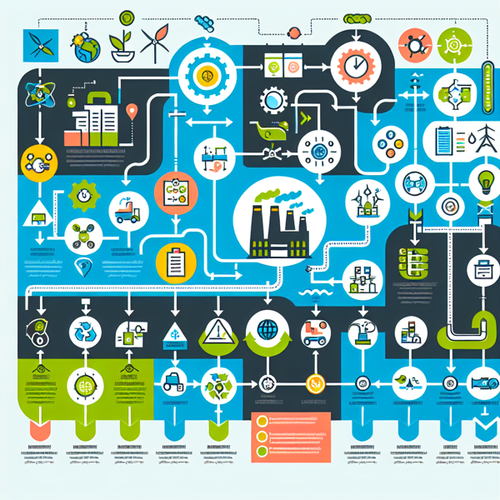
Maximizing productivity, ensuring security, and fostering scalable growth while safeguarding the environment have become indispensable priorities for organizations around the globe. Modern businesses face growing expectations for sustainability, regulatory compliance, and social responsibility. With four foundational standards—EN ISO 14044:2006/A2:2020, EN ISO 14050:2020, EN ISO 9001:2015/A1:2024, and ISO 14075:2024—companies can create stronger environmental and infrastructure management systems that unlock innovation, minimize risks, and support sustainable long-term growth. This article breaks down why these standards are essential, what they cover, and how organizations of any size can benefit from implementation.
Overview / Introduction
Environmental and infrastructure management standards underpin how organizations worldwide safeguard natural resources, address climate change, and build resilient operations. With public demand for transparency, supply chain responsibility, and climate action at an all-time high, aligning with trusted standards is no longer optional. These standards not only streamline compliance and reduce liability, but also unlock opportunities to innovate, improve cost efficiency, and scale business operations in line with the United Nations Sustainable Development Goals (SDGs).
In this compendium, you'll discover:
- The core concepts and requirements behind four international standards every modern organization should know
- How standardized practices help companies of all sectors, from manufacturing to services, environmental consulting to healthcare
- Practical takeaways for implementing these standards to improve productivity, security, and adaptability
Whether you're new to environmental management, aiming for ISO certification, or seeking to transform your business model, this guide provides accessible, actionable insights for all.
Detailed Standards Coverage
EN ISO 14044:2006/A2:2020 - Life Cycle Assessment Requirements & Guidelines Amendment 2
Environmental management – Life cycle assessment – Requirements and guidelines – Amendment 2 (ISO 14044:2006/Amd 2:2020)
This crucial amendment updates ISO 14044’s requirements for conducting a life cycle assessment (LCA), which is the systematic analysis of environmental impacts associated with all stages of a product’s life. With this standard, organizations are empowered to identify resource hotspots, optimize processes, and make data-driven sustainability decisions.
What It Covers and Scope
EN ISO 14044:2006/A2:2020 defines the rules, key definitions, and procedures for LCA studies—covering goal definition, scope, inventory analysis, impact assessment, interpretation, and transparent reporting. The Amendment 2 (A2) revises and clarifies pivotal terms (such as life cycle, system boundary, and allocation), updates data requirements, and introduces new guidance on reporting and allocation procedures.
Key Requirements & Specifications
- Detailed definitions for terms like
life cycle,system boundary, and processes forcompleteness,consistency, andsensitivity checks - Allocation procedures to manage complex shared processes or by-products across product systems
- Updates on system boundaries, input resources, and reference flows
- Clarified responsibilities for ensuring the accuracy, reliability, and transparency of results
- New information on how to treat allocation when the primary method cannot be applied
Who Needs to Comply?
- Manufacturers and product designers
- Environmental consultants
- Supply chain managers
- Sustainability officers and auditors
Practical Implications
Implementing EN ISO 14044 with A2 ensures companies can:
- Pinpoint inefficiencies or resource-intensive stages
- Make credible environmental claims and reports
- Reduce risk by aligning with international best practices
- Easily integrate life cycle thinking into product development and corporate strategy
Key highlights:
- Clear, harmonized definitions for LCA terminology
- Practical allocation rules to resolve complex process scenarios
- Emphasis on data completion, consistency, and sensitivity for credible results
Access the full standard:View EN ISO 14044:2006/A2:2020 on iTeh Standards
EN ISO 14050:2020 - Environmental Management Vocabulary
Environmental management – Vocabulary (ISO 14050:2020)
Effective communication is fundamental for implementing and maintaining environmental management systems. EN ISO 14050:2020 is the authoritative vocabulary for this field, providing over 400 terms and definitions spanning management systems, assessment tools, sustainability, compliance, carbon footprints, climate action, and more.
What It Covers and Scope
This standard defines the language of environmental management, facilitating a unified understanding among diverse stakeholders—from organizations and government regulators to auditors and the public. The terms support consistent interpretation and application of the ISO 14000 family of standards, and include:
- Environmental policy principles
- Systems and tools for environmental management
- Auditing, verification, communications, and reporting
- Life cycle analysis, carbon/water footprints, and GHG emissions
- Compliance requirements and sustainable development terminology
Key Requirements & Specifications
- Over 400 carefully curated terms and standardized definitions
- Arrangement by sub-domain: management systems, environmental performance, life cycle assessment, climate change, etc.
- Qualitative, quantitative, and business-related terms
- Clarity and consistency in referencing other standards and regulations
Who Needs to Comply?
- Any organization implementing (or seeking to implement) ISO 14001 or related standards
- Teams communicating on environment and compliance issues
- Auditors, consultants, trainers, and policy-makers
- Researchers and technical writers
Practical Implications
Organizations adopting EN ISO 14050 are able to:
- Foster clear internal and external communications
- Avoid misinterpretation of complex terms in audits and reports
- Enhance training, onboarding, and cross-departmental understanding
- Streamline compliance with ISO standards and regulations
Key highlights:
- Official reference for terminology across all environmental management domains
- Aids in the development, implementation, and communication of sustainability practices
- Supports legal and regulatory compliance
Access the full standard:View EN ISO 14050:2020 on iTeh Standards
EN ISO 9001:2015/A1:2024 - Quality Management Systems: Climate Action Amendment
Quality management systems – Requirements – Amendment 1: Climate action changes (ISO 9001:2015/Amd 1:2024)
Quality management is not just about product and service excellence—it is also now a critical lever for climate action. EN ISO 9001:2015/A1:2024 brings a dedicated climate change perspective to the globally respected ISO 9001 framework. This amendment ensures climate risks and opportunities are integrated directly into quality management practices.
What It Covers and Scope
The amendment introduces new clauses and updates to align QMS with climate risk management, greenhouse gas emission tracking, and climate adaptation responsibilities. The changes bridge quality assurance and environmental management, supporting organizations to proactively address climate impacts across their processes.
Key Requirements & Specifications
- Inclusion of climate change as a context factor when determining quality management system scope
- Requirement to consider climate-related risks and opportunities in planning and operational control
- Emphasis on leadership commitment to climate initiatives
- Alignment of documentation, monitoring, and resource allocation with climate goals
- Climate awareness and training for relevant personnel
Who Needs to Comply?
- All organizations certified or seeking certification to ISO 9001:2015
- Companies looking to strengthen or future-proof their management systems
- Multinationals managing supply chain climate risks
- Small to large businesses wishing to enhance their social and environmental reputation
Practical Implications
Adoption of EN ISO 9001:2015/A1:2024 enables:
- Integration of climate strategies into core business processes
- Improved resilience to supply, operational, or regulatory climate disruptions
- Increased market trust and competitive differentiation
- Future-ready compliance with evolving global regulations
Key highlights:
- Addresses climate action directly within quality management systems
- Mandates assessment and documentation of climate change impacts and mitigation
- Strengthens risk management for a changing climate environment
Access the full standard:View EN ISO 9001:2015/A1:2024 on iTeh Standards
ISO 14075:2024 - Principles and Framework for Social Life Cycle Assessment
Environmental management — Principles and framework for social life cycle assessment
Social responsibility is a vital pillar of sustainability. ISO 14075:2024 offers the first international consensus-based guidance for conducting social life cycle assessment (S-LCA)—assessing the social and socioeconomic impacts of products, systems, and services over their full life cycle.
What It Covers and Scope
ISO 14075:2024 provides a robust framework supporting organizations in measuring and improving social impacts such as labor conditions, community engagement, human rights, and fair business practices. Importantly, the standard aligns S-LCA with the UN Sustainable Development Goals (SDGs), making it integral for organizations seeking to advance global commitments.
It details:
- Principles of S-LCA (e.g., transparency, comprehensiveness, stakeholder engagement)
- Framework covering goal and scope definition, inventory analysis, impact assessment, interpretation, and reporting
- Requirements for collecting qualitative and quantitative data, reference scale assessment, and critical review
- Guidance for comparing products on social performance and ensuring credible, transparent outcomes
Key Requirements & Specifications
- Systematic process for defining S-LCA purpose, scope, and boundaries
- Procedures for identifying social aspects, impacts, hotspots, and interested parties
- Iterative approach—data collection, social inventory analysis, impact assessment, result interpretation
- Integration of reference scales and critical review mechanisms for credibility
Who Needs to Comply?
- Product manufacturers and service providers
- Organizations seeking to improve social performance or report on SDGs
- Auditors and consultants supporting sustainability and social compliance
- Public entities, procurement professionals, and NGOs focused on social risk reduction
Practical Implications
Implementing ISO 14075:2024 empowers organizations to:
- Systematically assess direct and indirect social impacts of their products
- Enhance brand value through socially responsible supply chains
- Identify and prioritize social risks and opportunities
- Communicate progress and compliance to stakeholders and investors
Key highlights:
- Aligns with the latest sustainability paradigms and UN SDGs
- Comprehensive framework for all aspects of social life cycle impact
- Facilitates transparent, defensible social responsibility claims
Access the full standard:View ISO 14075:2024 on iTeh Standards
Industry Impact & Compliance
The collective adoption of these environmental and infrastructure management standards is rapidly becoming the global benchmark for responsible, competitive, and future-proof business operations. Here’s how they impact modern organizations:
How These Standards Affect Businesses
- Market Access & Competitiveness: Many markets and government tenders require adherence to ISO/EN standards, boosting access and credibility.
- Sustainability Leadership: Standards-driven organizations are perceived as sustainability leaders, which appeals to investors, partners, and eco-aware consumers.
- Operational Resilience: Integrated risk, quality, and environment management helps mitigate sudden regulatory, supply chain, or climate-related shocks.
Compliance Considerations
- Failure to implement recognized management standards can exclude organizations from major supply chains and can increase the risk of regulatory penalties or reputational damage.
- Demonstrating compliance not only reduces legal risks but also ensures consistent, verifiable, and transparent operations, supporting continuous improvement and innovation.
- ISO/EN-compliant companies are better equipped to prove due diligence, particularly in environmental and social governance (ESG) reporting.
Benefits of Adopting These Standards
- Increased productivity through streamlined processes and reduced resource wastage
- Enhanced information security and regulatory compliance
- Ability to scale business operations sustainably and with lower risk
- Stronger stakeholder trust and employee engagement
Risks of Non-Compliance
- Loss of business opportunities due to exclusion from environmentally conscious supply chains
- Potential fines and legal action for failing to meet environmental or social due diligence regulations
- Reputational damage from environmental incidents or social harm
Implementation Guidance
Practical success in environmental and infrastructure management rests on thoughtful, strategic implementation of relevant standards. Here’s how to start:
Common Implementation Approaches
- Gap Assessment: Benchmark your current systems against the requirements of each standard. Use ISO 14050:2020 as your terminology guide.
- Stakeholder Engagement: Involve leadership and all relevant departments—especially those affecting product design, environment, quality, and supply chains.
- Training and Awareness: Provide targeted training on system boundaries, lifecycle thinking, and climate action obligations.
- Documented Systems: Develop and maintain clear documented processes, templates, and records, as prescribed in each standard.
- Continuous Improvement: Establish feedback loops for regular audits, management reviews, and targeted improvements.
Best Practices
- Start with Education: Use EN ISO 14050:2020 to harmonize understanding across all teams.
- Integrate Standards: Many requirements and processes overlap—integrate quality, environment, and social considerations for efficiency.
- Leverage Technology: Use data tools for life cycle assessment, carbon accounting, and S-LCA to simplify compliance and reporting.
- Engage External Experts: Consultants and certification bodies can speed up implementation and identify hidden risks.
- Transparency with Stakeholders: Clear, honest communication enhances credibility with customers, regulators, and investors.
Resources for Organizations
- Access the full standards directly via authoritative providers such as iTeh Standards
- Utilize ISO’s and CEN’s guidance documents and online platforms
- Participate in sector-specific forums and professional groups to share experiences and solutions
Conclusion / Next Steps
The adoption of EN ISO 14044:2006/A2:2020, EN ISO 14050:2020, EN ISO 9001:2015/A1:2024, and ISO 14075:2024 forms the cornerstone for robust environmental and infrastructure management. Implementing these four strategic standards eliminates ambiguity, meets evolving global expectations, and ensures your organization is ready for a future defined by productivity, security, and sustainable scaling.
Key takeaways:
- Aligned management systems reduce risks, boost productivity, and support responsible scaling
- Consistent terminology and transparent methodologies create a foundation for credible ESG progress
- Climate action, social responsibility, and regulatory resilience are now central to market success
Next steps:
- Assess your current systems against these standards
- Foster organization-wide understanding through training and clear communications
- Explore the official, up-to-date versions of each standard for implementation support
- Consider certification or third-party audits for additional credibility and competitive advantage
Continue your journey to environmental and infrastructure excellence—leverage the standards linked below to stay ahead, scale responsibly, and build trust with every stakeholder.
https://standards.iteh.ai/catalog/standards/cen/64497347-d9dc-4562-a6f1-b659f5a76c98/en-iso-14044-2006-a2-2020https://standards.iteh.ai/catalog/standards/cen/12ccd47e-ab7b-43e6-b393-48f74dedfa1a/en-iso-14050-2020https://standards.iteh.ai/catalog/standards/cen/16d0a542-db25-4f6d-af8e-cd3d4d5f9ec5/en-iso-9001-2015-a1-2024https://standards.iteh.ai/catalog/standards/iso/1bbeb217-9bab-4c8b-8760-04d45a617424/iso-14075-2024