


Understanding Ladder Safety Standards: A Guide to Productivity, Security, and Scaling in Entertainment and Commercial Environments
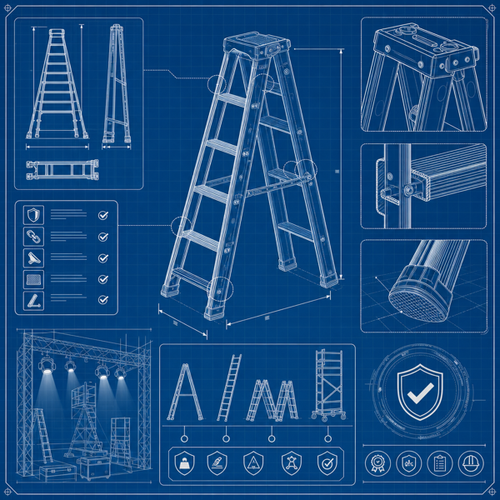
Ladders are an indispensable tool across the entertainment, commercial, and domestic sectors. From stage rigging and lighting in theaters to store maintenance, their safe use directly impacts workflow efficiency and user security. Today, adherence to modern ladder standards is not just a matter of regulation—it's essential for increasing productivity, ensuring workplace safety, and enabling scalable operations. In this comprehensive guide, we explore three major international standards governing ladders: SIST EN 131-1:2016, SIST EN 131-3:2018, and SIST EN 131-6:2019. These foundational ladder standards set the baseline for design, safety, and user guidance, helping businesses and organizations minimize accidents and operate with confidence.
Overview / Introduction
Ladders may seem like simple equipment, but injuries resulting from improper ladder use are among the leading causes of workplace incidents in both the entertainment industry and broader commercial environments. As businesses grow and demands on facility and technical staff intensify, the risks associated with improper ladder selection, faulty equipment, and inadequate user training escalate.
To mitigate these risks, a robust framework of European standards provides guidance on ladder terminology, functional dimensions, safe usage, and manufacturer marking. The standards examined in this article:
- Define the terms, types, and functional sizes for all portable ladders (SIST EN 131-1:2016)
- Ensure users receive essential safety information and operate equipment correctly (SIST EN 131-3:2018)
- Establish strict requirements for the increasingly popular class of telescopic ladders (SIST EN 131-6:2019)
By embedding these high-ranking keywords into your operations—ladder safety standards, ladder compliance, ladder user instructions, and telescopic ladder requirements—businesses can future-proof their environments, reduce liability, and streamline scaling initiatives.
This article provides:
- Clear explanations of each standard and its practical implications
- Discussion of compliance benefits and implementation strategies
- Direct links to each standard's full documentation at iTeh Standards
Detailed Standards Coverage
SIST EN 131-1:2016 – Foundation of Ladder Terms, Types, and Functional Sizes
Ladders – Part 1: Terms, Types, Functional Sizes
What it covers:
SIST EN 131-1:2016 establishes the terminology, typology, and essential functional dimensions of ladders used in entertainment, commercial, and domestic settings. Its scope focuses on portable ladders—devices incorporating steps or rungs that enable ascent or descent. This standard forms the cornerstone for ladder safety and design in Europe, serving as the benchmark for manufacturers, facility managers, and every user responsible for selecting and deploying ladders in their operations.
Key requirements and specifications:
- Provides clear definitions for all ladder elements: rungs, stiles, handrails, platforms, and more
- Categorizes ladder types, including leaning rung ladders, standing rung ladders, step ladders, combination ladders, and sectional/extension ladders
- Details functional sizes such as base width, length, rung/step dimensions, and support features to ensure stability
- Outlines which ladder classes are excluded, such as fire brigade ladders and step stools
- Emphasizes minimum base width and stability, with figures showing recommended stabilizers and construction improvements
Who needs to comply:
- Entertainment venues (theaters, auditoriums) using ladders for rigging and maintenance
- Commercial facilities, retailers, and offices relying on portable ladders
- Ladder manufacturers seeking CE conformity
- Maintenance contractors and facility managers overseeing ladder procurement and operation
Practical implications:
Implementing SIST EN 131-1:2016 ensures that organizations select ladders suited to intended tasks, minimizing the risk of instability, misapplication, or accidental falls. It accelerates workflow by providing clear criteria for choosing and inspecting ladders.
Notable features:
- Comprehensive ladder vocabulary and typology
- Guidance on minimum and maximum dimensions for safety
- Supplementary notes about related standards for specific ladder types (hinged, telescopic, mobile platforms)
Access the full standard:View SIST EN 131-1:2016 on iTeh Standards
SIST EN 131-3:2018 – Marking and User Instructions for Ladders
Ladders – Part 3: Marking and User Instructions
What it covers:
SIST EN 131-3:2018 ensures that every portable ladder in scope is supplied with clear, consistent safety markings and comprehensive user instructions. Recognizing that a major cause of ladder accidents is user error or misunderstanding, this standard mandates both physical markings on the ladder and accompanying printed user guidance—critical for both professionals and casual users.
Key requirements and specifications:
- Permanently fixed basic safety markings on ladders, including manufacturer details, ladder type, use classification (professional/non-professional), maximum load, and unique identification
- Detailed user instructions, provided in the language(s) of the country of sale
- Standardized safety symbols for warning, prohibition, mandatory actions, and safe conditions (compliant with ISO 3864-2, EN ISO 7010)
- Injury prevention guidance (checking for damage, avoiding overreaching or using on unstable ground, appropriate handhold use)
- Guidance on inspection, maintenance, storage, and what to do in case of ladder damage
Who needs to comply:
- Ladder manufacturers distributing ladders in European markets
- Retailers and suppliers ensuring consumer safety
- Facility and operations managers providing equipment to staff or the public
Practical implications:
With SIST EN 131-3:2018, users receive clear indicators on safe ladder use, reducing the likelihood of misuse and subsequent injuries. Facility managers are empowered to communicate hazards and inspection regimes to their teams, supporting a proactive safety culture.
Notable features:
- Essential for new product launches or imported ladders
- Reduces liability in the event of incident investigations
- Mandates instructions and markings that support non-expert users
Access the full standard:View SIST EN 131-3:2018 on iTeh Standards
SIST EN 131-6:2019 – Specific Requirements for Telescopic Ladders
Ladders – Part 6: Telescopic Ladders
What it covers:
Telescopic ladders have become increasingly popular in entertainment, event production, and commercial maintenance due to their compactness and versatility. SIST EN 131-6:2019 sets out the specific general design features, requirements, and test methods for both leaning and standing telescopic ladders—bringing advanced engineering and safety assurance to these products.
Key requirements and specifications:
- Defines telescopic ladder elements: rung/step sections, locking mechanisms, hinge joints, anti-squeeze protections
- Requires strict uniformity and correct spacing in rungs/steps to prevent missteps
- Mandates reliable locking indicators so users can visually confirm each section’s security
- Details specific dimensional and design requirements for contact points, base width, and stability
- Outlines exhaustive testing protocols (strength, bending, slip, durability, cyclic operation)
- Specifies marking and user information aligned with Parts 1 and 3 of EN 131
Who needs to comply:
- Manufacturers and importers marketing telescopic ladders in the EU/EEA
- Commercial buyers and operations teams seeking compact, high-reach access solutions
- Event coordinators, production crews, and maintenance staff relying on mobile, extendable ladders
Practical implications:
Implementing SIST EN 131-6:2019 reduces the risk of collapse or slip in telescopic ladders, a significant cause of injuries in dynamic workplaces. Clear locking and release mechanisms ensure operational safety during both use and stowing—boosting confidence for busy teams.
Notable features:
- Mandatory anti-squeeze mechanisms to protect hands during collapsing
- Highly visible locking indicators to confirm setup safety
- Comprehensive durability and stress testing requirements
Access the full standard:View SIST EN 131-6:2019 on iTeh Standards
Industry Impact & Compliance
Ladder-related incidents cost businesses in downtime, lost productivity, regulatory fines, and—most importantly—injury to staff or the public. Adhering to international ladder standards is now considered a baseline requirement for any business using this equipment.
How the standards affect businesses:
- Enable risk reduction by dictating robust design and clear user guidance
- Serve as a check for proper equipment selection and routine inspection
- Support legal compliance and risk management (helping defend against accident claims)
- Instill user confidence, reducing occupational stress and human error
Compliance considerations:
- Mandatory for CE-marking of ladders distributed in Europe
- Regular staff training should reference these user instructions
- Procurement policies should require only EN 131-compliant ladders
Benefits of adopting these standards:
- Improved workplace safety culture
- Fewer accidents and reduced insurance costs
- Streamlined procurement and asset management processes
- Enhanced reputation with clients and regulatory bodies
Risks of non-compliance:
- Increased likelihood of ladder-related injuries and disruptions
- Potential legal action or regulatory penalties
- Higher maintenance and replacement costs due to inferior/lax equipment standards
Implementation Guidance
Common implementation approaches:
- Equipment Audit: Review all existing ladders to ensure compliance with SIST EN 131-1:2016, SIST EN 131-3:2018, and (for telescopic models) SIST EN 131-6:2019.
- Staff Training: All personnel—not just technical teams—should receive guidance on reading safety markings and user instructions.
- Procurement Policy: Update acquisition policies to require suppliers to provide compliant documentation and markings for ladder products.
- Routine Inspection & Maintenance: Follow the checklists and maintenance guidelines provided in the standards’ user instructions. Keep records for compliance audits.
- Upgrade Programs: Replace non-compliant ladders or add retrofitted markings to grandfathered equipment as needed.
Best practices for adopting these standards:
- Use only reputable suppliers providing documentation aligned with EN 131 standards
- Translate and distribute user instructions in relevant workplace languages
- Promote a reporting culture, encouraging users to log defects or near-miss incidents
- Schedule regular reviews of safety markings for legibility and completeness
Resources for organizations:
- Full text of the standards via iTeh Standards
- Manufacturer safety alerts and updates
- Sector-specific safety associations (e.g., live event safety organizations)
Conclusion / Next Steps
The safe, effective use of ladders is fundamental to success in entertainment, retail, and commercial property management. The SIST EN 131 series of standards—specifically Parts 1, 3, and 6—provides the definitive benchmark for ladder safety, usability, and compliance.
Key takeaways:
- The correct choice and use of ladders relies on up-to-date terminology and robust dimension standards (SIST EN 131-1:2016).
- Clear, comprehensive markings and user guidance (SIST EN 131-3:2018) dramatically reduce the risk of user error.
- Specialized requirements for telescopic ladders (SIST EN 131-6:2019) protect users as new ladder types proliferate.
Recommendations for organizations:
- Audit your ladder inventory today and insist on EN 131-compliant products
- Train all staff on the key principles of safe usage and regular inspection
- Leverage checklists and documentation mandated by these standards for hassle-free scaling and reduced liability
- For more information and direct access to standards, visit iTeh Standards
Take the next step to safeguard your teams, future-proof operations, and demonstrate commitment to world-class ladder safety—implement these essential standards now.
Categories
- Latest News
- New Arrivals
- Generalities
- Services and Management
- Natural Sciences
- Health Care
- Environment
- Metrology and Measurement
- Testing
- Mechanical Systems
- Fluid Systems
- Manufacturing
- Energy and Heat
- Electrical Engineering
- Electronics
- Telecommunications
- Information Technology
- Image Technology
- Precision Mechanics
- Road Vehicles
- Railway Engineering
- Shipbuilding
- Aircraft and Space
- Materials Handling
- Packaging
- Textile and Leather
- Clothing
- Agriculture
- Food technology
- Chemical Technology
- Mining and Minerals
- Petroleum
- Metallurgy
- Wood technology
- Glass and Ceramics
- Rubber and Plastics
- Paper Technology
- Paint Industries
- Construction
- Civil Engineering
- Military Engineering
- Entertainment