


Cooking Appliances Safety and Performance: Key Standards for Fryers, Hobs, and Commercial Kitchens
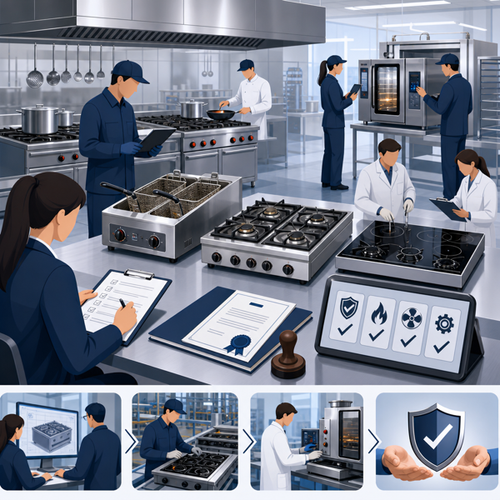
Modern households and commercial kitchens rely heavily on advanced cooking ranges, worktables, ovens, and similar appliances. As culinary spaces evolve—driven by demands for efficiency, safety, scaling, and sustainable operation—the safety and performance of these appliances are no longer optional priorities, but absolute necessities. The key to achieving seamless productivity and consumer trust in the food and entertainment industries is the implementation of robust international standards. Here, we delve into three foundational standards—SIST EN 203-2-4:2005, SIST EN 60350-2:2018, and SIST EN IEC 60335-2-37:2025/A11:2025—that govern commercial and household cooking appliances, with a focus on fryers and hobs. This comprehensive guide provides clarity on their safety, performance guidelines, and why adherence is a must for businesses aiming for scalability and reliability today.
Overview / Introduction
From bustling restaurant kitchens to cozy home environments, cooking appliances such as gas fryers, electric hobs, and commercial deep-fat fryers are everyday essentials. However, their widespread use introduces significant concerns around safety, energy consumption, consistency, and compliance. International standards have evolved to address these issues, providing frameworks that not only optimize appliance performance but also ensure security, operational scalability, and regulatory alignment.
Readers will discover:
- What each standard covers and its practical impact
- Key technical requirements for fryers and hobs
- Benefits for businesses—such as increased safety, productivity, and efficiency
- Guidance for implementation and compliance management
Let’s explore the specifics of these standards shaping today’s kitchens, both commercial and domestic.
Detailed Standards Coverage
SIST EN 203-2-4:2005 - Gas Heated Catering Equipment: Specific Requirements for Fryers
Gas heated catering equipment – Part 2-4: Specific requirements – Fryers
This European standard addresses the construction, operation, and safety requirements for commercial gas heated fryers. It details type testing procedures, focusing on rational energy use and effective marking to clearly communicate safe usage to operators—a critical factor in busy, high-throughput kitchens.
Scope and Key Requirements:
- Applies to single or multi-pan fryers used in commercial settings, designed for frying food submerged in oil or fat at high temperatures
- Encompasses both standard and pressure fryers
- Focuses on safety features (e.g., overheat protection, temperature regulation)
Construction and Operation:
- Material and construction must prevent oil from reaching burners or insulation, drastically reducing fire risk and improving the equipment’s durability
- Drainage devices and containers—such as tap valves or pump systems—must be easily accessible and safe to operate for effective oil maintenance
- Maximum and minimum oil levels must be clearly marked to ensure safe and optimal operation
- Emphasizes rational energy use, from burner design to operational efficiency, actively contributing to energy savings and sustainability
Who Needs Compliance:
- Commercial kitchens, catering units, restaurants, hospitality venues, and any operation with professional fryers for large-scale food preparation
Practical Implementation:
- Type testing validates all functionalities before appliances are released, protecting consumers and reducing recall risks for manufacturers
- Ensures user manuals are clear, covering safe use, maintenance, and cleaning
Key highlights:
- Rigorous fire and burn safety requirements
- Mandatory overheat limit and temperature control devices
- Rational energy consumption built into design and operation
Access the full standard:View SIST EN 203-2-4:2005 on iTeh Standards
SIST EN 60350-2:2018 - Household Electric Cooking Appliances: Hobs – Performance Measurement Methods
Household electric cooking appliances – Part 2: Hobs – Methods for measuring performance
Electric hobs are now the centerpiece of many domestic cooking environments and are increasingly used in modern hospitality operations. This standard defines how to measure the performance of electric hobs, regardless of whether they are built-in units or placed on work surfaces.
Scope and Key Requirements:
- Applies to fixed and built-in hobs used in household and some semi-professional settings
- Lists standardized methods to measure heating performance, energy consumption, heat distribution, and control accuracy
- Covers both traditional and flexible cooking zones, with references to new market trends such as induction technology
Significant Changes and Features:
- Redesigned terms and definitions to stay up to date with emerging technologies
- Inclusion of methods relevant to flexible and free induction zones, supporting modern appliance innovation
- New measurement techniques simulating real household cooking processes, ensuring performance data reflects genuine user experience
- Comprehensive requirements for energy measurement, aligning with EU Ecodesign directives, as well as methods for assessing low-power modes for environmental compliance
- Harmonized procedures for verifying cleaning ease and operational ergonomics
Who Needs Compliance:
- Appliance manufacturers targeting the household or hospitality sectors
- Organizations seeking energy labeling or market access in the European Union
Practical Implementation:
- Enables fair comparison of hob performance by standardizing measurement procedures
- Supports marketing claims, product improvement, and regulatory compliance
- Provides a credible base for energy efficiency declarations in public-facing documentation
Key highlights:
- Focused on energy measurement and household-relevant operational benchmarks
- Supports innovation—e.g., induction technology and flexible zone configurations
- Conforms with EU Ecodesign and energy efficiency regulations
Access the full standard:View SIST EN 60350-2:2018 on iTeh Standards
SIST EN IEC 60335-2-37:2025/A11:2025 - Safety for Commercial Electric Doughnut Fryers and Deep Fat Fryers
Household and similar electrical appliances – Safety – Part 2-37: Particular requirements for commercial electric doughnut fryers and deep fat fryers (Amendment A11)
The SIST EN IEC 60335-2-37:2025/A11:2025 amendment details updated safety requirements for commercial electric fryers—including doughnut and deep fat fryers—reflecting advances in both appliance design and regulatory environments. This amendment ensures compliance with the latest Low Voltage Directive (LVD) and Machinery Directive (MD), crucial for market access and legal operation in the EU.
Scope and Key Requirements:
- Applies to both household and commercial settings, placing special emphasis on appliances encountered by all persons, not just professionals
- Introduces ergonomic and mechanical hazard recommendations, especially around lid construction and steam scalding prevention
- Specifies user maintenance instructions, clear warnings for cleaning and repairs, and ergonomic design for safe handling (e.g., minimum support heights for table-top models)
Significant Changes:
- Reinforced labeling, instruction, and maintenance procedures, including operator training guidance
- Mandates disconnecting appliances from power during cleaning/maintenance, lowering shock and fire risks
- Enhanced stability, mechanical safety, and user ergonomics—important for busy, high-turnover food courts and commercial kitchens
- Sets clear boundaries around foreseeable misuse and related warnings
Who Needs Compliance:
- Manufacturers of commercial doughnut and deep fat fryers
- Restaurants, bakeries, and large-scale catering businesses
- Facilities managers responsible for workplace safety and accident prevention
Practical Implementation:
- Ensures all on-site staff and maintenance workers have actionable safety guidance
- Supports risk assessment and reduces insurance liability for operators
- Future-proofs appliance design for harmonized European market access
Key highlights:
- User-focused safety content, including ergonomic and operational guidelines
- Comprehensive coverage for maintenance, repairs, and accident prevention
- Updated for Europe’s latest LVD and MD legislative requirements
Access the full standard:View SIST EN IEC 60335-2-37:2025/A11:2025 on iTeh Standards
Industry Impact & Compliance
Why These Standards Matter Today
In a landscape where food safety scandals, workplace accidents, and product recalls can make or break a brand, adherence to cooking equipment standards is no longer a technical formality—it’s a competitive and operational imperative. Key areas of impact include:
- Productivity: Clear test methods, maintenance procedures, and optimized appliance ergonomics minimize downtime and increase kitchen throughput.
- Security: Robust safety systems (temperature regulators, emergency shut-offs, clear warnings) dramatically reduce fire, scald, and burn risks.
- Scalability: Harmonization with EU and global regulations opens new markets and enables standardized roll-out of kitchen equipment chains.
- Regulatory Protection: Compliance assures manufacturers, operators, and insurers that appliances meet both local and international safety mandates, reducing audit failures and legal vulnerabilities.
Risks of Non-Compliance
- Legal sanctions or withdrawal from markets
- Increased insurance premiums and claims
- Greater likelihood of workplace incidents, reputational damage, and costly recalls
Tangible Benefits of Compliance
- Enhanced trust—customers and inspectors alike favor certified operations
- Streamlined staff training and onboarding, thanks to comprehensive manuals and clear markings
- Reduced energy costs and smaller environmental footprint
- Future-proofing investments against evolving market and legislative trends
Implementation Guidance
Common Approaches
- Gap Analysis: Review current appliances and processes against the requirements of each relevant standard.
- Staff Training: Use manufacturer-provided manuals (as required by the standards) for onboarding, safety drills, and periodic refresher courses.
- Supplier Vetting: Source equipment and components from manufacturers certified to these standards.
- Ongoing Maintenance and Audit: Regular checks for compliance, preventive maintenance aligned with technical instructions, and documentation of any repairs or incidents.
Best Practices
- Integrate safety and performance standards into procurement policies—always request certificates of conformity.
- Use standardized documentation for both operation and maintenance—keeping clear records for authorities and insurers.
- Schedule regular energy audits and update appliances when new, more efficient models become available.
- Engage with local authorities and industry bodies to stay abreast of evolving requirements, ensuring forward compatibility.
Helpful Resources
- Official iTeh Standards portal for up-to-date documentation and cross-references
- Manufacturer-run training and certification programs
- EU regulatory newsletters and compliance bulletins
- Industry webinars on appliance safety and energy management
Conclusion / Next Steps
As kitchens—whether in restaurants, hotels, or smart homes—grow smarter and busier, the standards governing cooking ranges, worktables, ovens, and similar appliances have never been more crucial. Standards like SIST EN 203-2-4:2005, SIST EN 60350-2:2018, and SIST EN IEC 60335-2-37:2025/A11:2025 ensure safer, more efficient, and future-proof cooking environments. Adopting them isn’t just about compliance; it’s about protecting people, reputations, and bottom lines while enjoying the productivity and peace of mind required for scalable growth.
Key takeaways:
- Robust standards safeguard people and assets
- Energy and performance requirements support cost-effective, green kitchens
- Up-to-date compliance streamlines market access and operational scaling
For organizations and professionals:
- Explore each standard in detail using iTeh Standards links
- Review current practices—don’t wait for problems before upgrading
- Leverage training, documentation, and regular audits to unlock the productivity and safety benefits these standards enable
Stay proactive—visit iTeh Standards to access the latest official documents, updates, and compliance resources for your kitchen and cooking facilities.
Categories
- Latest News
- New Arrivals
- Generalities
- Services and Management
- Natural Sciences
- Health Care
- Environment
- Metrology and Measurement
- Testing
- Mechanical Systems
- Fluid Systems
- Manufacturing
- Energy and Heat
- Electrical Engineering
- Electronics
- Telecommunications
- Information Technology
- Image Technology
- Precision Mechanics
- Road Vehicles
- Railway Engineering
- Shipbuilding
- Aircraft and Space
- Materials Handling
- Packaging
- Textile and Leather
- Clothing
- Agriculture
- Food technology
- Chemical Technology
- Mining and Minerals
- Petroleum
- Metallurgy
- Wood technology
- Glass and Ceramics
- Rubber and Plastics
- Paper Technology
- Paint Industries
- Construction
- Civil Engineering
- Military Engineering
- Entertainment