


A Practical Guide to Key Standards for Advanced Semiconductor Devices in Electronics
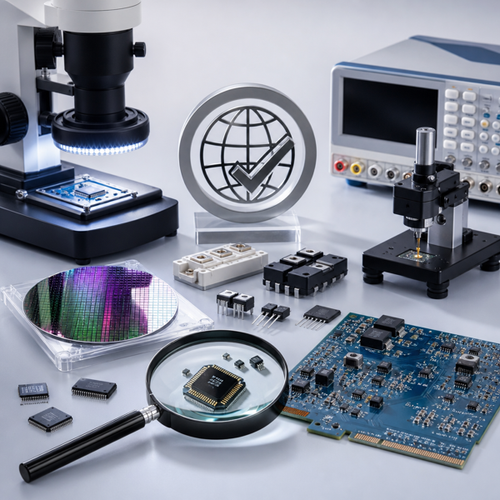
In today's electronics industry, the pace of innovation is only matched by the increasing complexity of semiconductor devices. Adopting and implementing internationally-recognized standards is crucial for businesses that seek to maximize productivity, ensure security, and scale their operations effectively. This detailed guide explores four key IEC standards for other semiconductor devices, from high-frequency microwave circuits to micro-electromechanical (MEMS) components. Understanding and complying with these standards is a must for any organization aiming to stay competitive and future-proof their technology investments.
Overview: The Importance of Semiconductor Device Standards in Electronics
The electronics sector thrives on precision, reliability, and rapid technological change. From consumer products to industrial automation, semiconductor devices form the technical backbone of countless applications. As systems become more sophisticated, companies face mounting challenges in quality assurance, compatibility, and safety.
International standards provide a solid framework to:
- Harmonize terminology, test methods, and rating definitions
- Improve cross-industry interoperability
- Reduce costly design errors and failures
- Facilitate scaling for mass production and global deployment
- Strengthen reliability and customer confidence
This article provides an easy-to-understand exploration of four pivotal standards—explaining what they cover, their practical applications, and why they can dramatically impact your success in implementing new technologies.
You’ll learn:
- What each standard addresses
- Who should comply and why
- Key requirements and implementation insights
- How standards enhance quality, productivity, security, and financial outcomes
Detailed Standards Coverage
IEC 60747-16-11:2026 – Specifications for Microwave Integrated Circuit Power Detectors
Semiconductor devices – Part 16-11: Microwave integrated circuits – Power detectors
IEC 60747-16-11:2026 sets out standardized terminology, essential ratings and characteristics, and prescribed measuring methods for microwave integrated circuit (MIC) power detectors. These components are critical in telecommunications basestations, radar, satellite systems, and emerging 5G infrastructure—applications where precise power measurement is non-negotiable.
The standard encompasses:
- Definition of output voltage, current sensitivity, frequency response, and dynamic range
- Functional descriptions and block diagrams
- Operating conditions, limiting values, and environmental ratings
- Detailed measurement methods for characteristics like input return loss, temperature sensitivity, and rise/fall times
Who should comply? This standard targets semiconductor manufacturers, RF circuit designers, test laboratories, and end-users integrating microwave detection into high-reliability systems.
Practical implications: Implementing IEC 60747-16-11:2026 ensures consistent product specification, reliable communication between stakeholders, and credible test data for product certification. Interoperability increases, and performance margins are clarified, reducing risk throughout the product lifecycle.
Key highlights:
- Comprehensive terminology and circuit type definitions
- Measurement procedures for sensitivity, voltage/current, return loss, and dynamic range
- Environmental and mechanical data requirements crucial for robust deployment
Access the full standard:View IEC 60747-16-11:2026 on iTeh Standards
IEC 60747-5-13:2021 – Hydrogen Sulphide Corrosion Test for LED Packages
Semiconductor devices – Part 5-13: Optoelectronic devices – Hydrogen sulphide corrosion test for LED packages
Corrosion is a primary cause of LED performance degradation, especially in environments with sulphide gases. IEC 60747-5-13:2021 establishes an accelerated test method to assess the effects of hydrogen sulphide (H₂S) on silver and silver alloys used in LED packages. This test directly simulates real-world degradation, measuring the impact on luminous (and radiant) flux maintenance—making it especially relevant for companies using LEDs in lighting and display.
The standard outlines:
- Selection and preconditioning of test specimens (hygroscopic treatment, posture, spacing)
- Precise test atmosphere requirements (H₂S and NO₂ concentrations, temperature, humidity, ventilation)
- Initial, intermediate, and final measurement methods for light output and electrical characteristics
- Provisions for reporting and interpretation of results
Who needs this standard? LED and component manufacturers, test labs, lighting system integrators, and quality assurance teams rely on the methodology to assure durability under corrosive conditions.
Implementation benefits: Compliance with IEC 60747-5-13:2021 mitigates risk by uncovering weaknesses in silver-coated LED packages – especially in harsh industrial, commercial, or even domestic environments. Predictable performance and reduced warranty claims mean higher confidence for end users and B2B customers.
Key highlights:
- Realistic corrosion simulation for silver-based LED package materials
- Direct linkage of corrosion effects to luminous/radiant flux decay, enabling actionable quality metrics
- Applicability to a wide range of LED lighting product certifications
Access the full standard:View IEC 60747-5-13:2021 on iTeh Standards
IEC 60747-5-18:2026 – Photoluminescence Testing for Epitaxial Wafers of Micro LEDs
Semiconductor devices – Part 5-18: Optoelectronic devices – Light emitting diodes – Test method of the macro photoluminescence for epitaxial wafers of micro light emitting diodes
As demand grows for micro LED displays in TVs, AR/VR, and advanced lighting, wafer-level quality assurance becomes vital. IEC 60747-5-18:2026 specifies rigorous measuring methods for macro photoluminescence (PL) in red, green, and blue micro LED wafers. This test is performed before chip fabrication, allowing early detection of material defects and spectral inconsistencies.
Covered areas include:
- Detailed terms and measurement principles (PL signal, spectral characteristics, centroid wavelength, FWHM, etc.)
- Instructions for test setups on 4", 6", and 8" wafers, with recommended edge exclusion zones
- Definition of test sequence and interpretation/reporting of results
Primary users: Micro LED wafer producers, research labs, display manufacturers, and those involved in front-end process development for advanced optoelectronics.
Practical outcomes: By standardizing PL assessment, organizations can tightly control yield, verify uniformity across large wafers, reduce process waste, and improve device performance. Early problem discovery saves significant costs further down the fabrication line.
Key highlights:
- Standardized PL terminology for micro LED material quality assessment
- Clear test instructions for scalable wafer sizes (enabling large-volume manufacturing)
- Enhanced comparability and repeatability for wafer-level LED producers
Access the full standard:View IEC 60747-5-18:2026 on iTeh Standards
IEC 62047-52:2026 – Biaxial Tensile Testing Method for Stretchable MEMS
Semiconductor devices – Micro-electromechanical devices – Part 52: Biaxial tensile testing method for stretchable MEMS
Flexible and stretchable MEMS (micro-electromechanical systems) are the foundation of wearable health monitors, flexible displays, and smart textiles. Their reliability under mechanical stress is paramount. IEC 62047-52:2026 specifies a biaxial tensile testing method for evaluating the failure strain and functional performance of such devices, with a focus on materials like single crystalline silicon or flexible circuit boards.
The standard covers:
- Cruciform test piece geometry (1-100 μm thickness) and dimensional measurement guidance
- Setup and execution of equi-biaxial or variable ratio strain testing
- Device performance analysis, including strain mapping and failure modes
Who needs to comply? MEMS designers, materials scientists, manufacturers of stretchable electronics, and quality/test laboratories benefit from this methodology, as it aligns materials R&D and commercial validation.
Implementation insights: Widespread adoption enables apples-to-apples comparison of stretchable MEMS materials, supporting technology transfer and scaling for wearables, flexible sensors, and other next-gen devices. Product developers can design for durability and accelerate time-to-market by leveraging comparable data.
Key highlights:
- Standard test geometry and loading protocol for reliable reproducibility
- Accommodates a range of flexible material types and application contexts
- Integrated pathways to integrate findings into commercial production environments
Access the full standard:View IEC 62047-52:2026 on iTeh Standards
Industry Impact & Compliance
The common thread among these standards is their focus on unifying measurement and performance criteria for advanced, high-value semiconductor devices. For businesses, this means:
- Reduced risk during design, testing, and manufacturing, thanks to universally recognized definitions and protocols
- Increased customer trust and satisfaction, as performance, durability, and compatibility are demonstrably assured
- Easier entry into new markets, since international standards compliance is a prerequisite for partnership, procurement, and regulatory approval
- Streamlined R&D investments, with shared test data and cross-industry comparability supporting rapid innovation
The risks of ignoring such standards are substantial. Non-compliance can lead to incompatible products, recalls, customer dissatisfaction, or even safety liabilities. When it comes to scaling operations in microelectronics, adhering to trusted standards is a vital business advantage.
Implementation Guidance
Implementing these standards typically involves:
- Staff training and internal process updates – Ensuring all technical staff understand new or revised definitions, methods, and reporting requirements.
- Test equipment calibration and validation – Procuring or certifying necessary equipment, such as environmental chambers, photoluminescence spectrometers, tensile testing rigs, and electronic characterization apparatus.
- Developing or updating quality manuals – Documenting compliance procedures and referencing the latest standards in enterprise quality-control documentation.
- Supplier and partner alignment – Working with suppliers, customers, and labs to ensure unified practices and mutual recognition.
- Ongoing monitoring and continuous improvement – Regular internal audits and participation in standardization updates ensure best practices are maintained and improved.
Resources for organizations:
- Official standard texts from IEC and iTeh Standards portals
- Accredited laboratories for independent testing and certification
- Industry training sessions and international workshops
Conclusion & Next Steps
Rapid technological change in electronics brings opportunities, but also exposes organizations to risk if underlying semiconductor device performance is not reliably characterized or controlled. International standards like IEC 60747-16-11:2026, IEC 60747-5-13:2021, IEC 60747-5-18:2026, and IEC 62047-52:2026 take the guesswork out of quality assurance, offering businesses a pathway to:
- Faster market entry and regulatory compliance
- Enhanced scaling and cost control
- Higher reliability and security
- Improved customer satisfaction and global competitiveness
Recommendation: Whether you are designing cutting-edge sensors, scaling up LED production, or launching innovative wearable electronics, now is the time to align your processes and products with these key standards. Start by exploring each standard in detail, engaging your teams for implementation, and leveraging the extensive resources and authoritative guidance available at iTeh Standards. Investing in compliance today ensures market readiness, better security, and technological leadership tomorrow.
Categories
- Latest News
- New Arrivals
- Generalities
- Services and Management
- Natural Sciences
- Health Care
- Environment
- Metrology and Measurement
- Testing
- Mechanical Systems
- Fluid Systems
- Manufacturing
- Energy and Heat
- Electrical Engineering
- Electronics
- Telecommunications
- Information Technology
- Image Technology
- Precision Mechanics
- Road Vehicles
- Railway Engineering
- Shipbuilding
- Aircraft and Space
- Materials Handling
- Packaging
- Textile and Leather
- Clothing
- Agriculture
- Food technology
- Chemical Technology
- Mining and Minerals
- Petroleum
- Metallurgy
- Wood technology
- Glass and Ceramics
- Rubber and Plastics
- Paper Technology
- Paint Industries
- Construction
- Civil Engineering
- Military Engineering
- Entertainment