


Plug-and-Socket Devices and Connectors: Why Modern Electronics Depend on International Standards
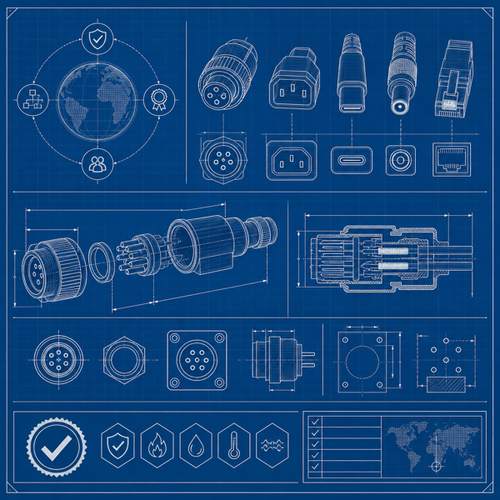
Plug-and-Socket Devices and Connectors: Why Modern Electronics Depend on International Standards
The seamless transmission of power and data in modern electronics hinges on the quality and compatibility of plug-and-socket devices and connectors. Behind the scenes, a series of precise international standards ensure that these vital components deliver safety, performance, and interoperability—whether on the factory floor or inside the consumer devices that shape our daily lives. This guide introduces four recently published, globally recognized IEC standards, illuminating the crucial role they play and the immense value they unlock for businesses striving to innovate, scale, and secure their operations in the connected age.
Overview / Introduction
In the world of electronics, connectors are much more than mechanical interfaces; they are the lifelines that ensure uninterrupted power, pristine signal integrity, and safety across diverse environments. As digital transformation accelerates, robust plug-and-socket standards like those from the International Electrotechnical Commission (IEC) have become essential not only for compliance, but for propelling productivity, scaling solutions, and safeguarding sensitive technologies.
In this comprehensive article, you'll learn:
- What sets these four connector standards apart
- Key technical and practical details for each standard
- Why adherence is imperative for modern businesses
- Tips, best practices, and resources for implementation
Detailed Standards Coverage
IEC 60352-7:2026 – Solderless Spring Clamp Connections
Solderless Connections - Part 7: Spring Clamp Connections - General Requirements, Test Methods and Practical Guidance
Scope and Application:
IEC 60352-7:2026 covers spring clamp connections created with stripped wire (per IEC 60228 or IEC 60189-3) without further preparation, addressing both the general requirements and the full test regime necessary for compliance. Spring clamp terminals are widely used in industrial automation, control panels, and consumer products for their convenience and reliability.
Key Requirements and Specifications:
- Quality of work, material selection, and essential design features
- Prescribed mechanical strength (e.g., tensile strength, wire deflection, vibration endurance)
- Comprehensive electrical testing (contact resistance, current carrying, temperature rise)
- Environment/climatic test conditions including temperature cycling and corrosion resistance
- Extensive test schedules—basic and full—including practical flowcharts and detailed acceptance criteria
Notably, this edition introduces refined requirements for contact pressure via insulating material (CoPI) and corresponding new tests. This ensures connectors remain robust even if insulation materials yield over time—a vital improvement for reliability in advanced automated environments.
Who Needs to Comply?
- Manufacturers and assemblers of electrical devices using spring clamp connections
- Electrical panel and switchgear designers
- Quality managers within OEMs, contract manufacturers, and suppliers
- Any industry where solderless, tool-less connections are favored for speed and repeatability
Practical Implications: Implementing IEC 60352-7:2026 means better connection reliability, lower maintenance costs, and enhanced safety for personnel and installations. Adhering to the test and material recommendations promotes consistent product quality, even for high-mix, high-volume manufacturing.
Key highlights:
- Provides a comprehensive regime of mechanical, electrical, and climatic tests
- Addresses new challenges like contact pressure transmitted through insulation (CoPI)
- Offers actionable, practical guidance for end-users and assemblers
Access the full standard:View IEC 60352-7:2026 on iTeh Standards
IEC 61076-2-104:2026 – M8 Circular Connectors for Automation
Connectors for Electrical and Electronic Equipment - Product Requirements - Part 2-104: Circular Connectors with M8 Screw-Locking or Snap-Locking
Scope and Application:
IEC 61076-2-104:2026 specifies 3-way to 12-way circular connectors with M8 screw-locking or snap-locking mechanisms, intended primarily for industrial automation—enabling both signal and power transmission up to 50 V AC/60 V DC and up to 4 A per contact.
Key Requirements and Specifications:
- Defined dimensional and interface parameters for all connector styles and codings
- Compatibility and performance levels for harsh industrial conditions
- Electrical characteristics (contact resistance, voltage proof, insulation resistance)
- Mechanical attributes (retention forces, insertion/withdrawal forces, vibration, shock)
- Mating and disengagement protocols, including protection against mis-mating and ingress (IP ratings)
- Comprehensive test schedules for both minimum and full qualification
Who Needs to Comply?
- Device manufacturers, systems integrators, and OEMs in industrial automation
- Field engineers designing plug-in sensors, actuators, and distributed control systems
- Industries using networked or modular equipment (manufacturing, logistics, robotics)
Practical Implications: Deploying connectors built to IEC 61076-2-104:2026 ensures plug-and-play interoperability between devices from different vendors, supporting quick upgrades and agile scaling. The rigorous mechanical and environmental criteria reduce equipment downtime and maintenance needs, directly boosting operational productivity and lifecycle cost-efficiency.
Key highlights:
- Standardizes 3- to 12-way circular connector configurations with both screw and snap locking
- Ensures safe power/signal transfer in demanding industrial environments
- Strengthens protection against vibration, ingress, and misconnections
Access the full standard:View IEC 61076-2-104:2026 on iTeh Standards
IEC 61076-2-111:2025 – Power Connectors with M12 Screw-Locking
Connectors for Electrical and Electronic Equipment - Product Requirements - Part 2-111: Circular Connectors - Detail Specification for Power Connectors with M12 Screw-Locking
Scope and Application:
IEC 61076-2-111:2025 defines power circular connectors featuring M12 screw-locking, commonly used in modern automated factories and industrial settings. It addresses 4- to 6-contact connectors, capable of handling high current (8, 12, or 16 A) and various operating voltages (50 V/60 V or 630 V DC/AC dependent on coding), tailored for robust power delivery to heavy-duty equipment and distributed devices.
Key Requirements and Specifications:
- Electrical ratings for safe high-current operations and insulation withstand voltage
- Coding systems for connector polarities and function separation
- Comprehensive environmental and mechanical performance (including vibration, shock, ingress)
- Various styles and form factors for both fixed and free connectors
- Clear mating and engagement norms for error-free, secure connections
- Clearly defined test schedules for performance and durability validation
Who Needs to Comply?
- Panel builders and controls engineers in smart manufacturing
- Suppliers of distributed power supplies and drive systems
- Robotics integrators and system designers employing power-dense connectors
Practical Implications: Leveraging IEC 61076-2-111:2025 boosts confidence in reliable power transfer, helps maintain uptime in dynamic, modular environments, and reduces the risk of safety incidents. The standard enables forward-compatible system design, simplifying upgrades in Industry 4.0 and advanced automation.
Key highlights:
- Supports safe, high-current, and higher-voltage connections in tight spaces
- Enables modular and reconfigurable power architectures
- Robust against vibration, shock, and industrial contamination
Access the full standard:View IEC 61076-2-111:2025 on iTeh Standards
IEC 61076-2:2025 – Sectional Specification for Circular Connectors
Connectors for Electrical and Electronic Equipment - Product Requirements - Part 2: Sectional Specification for Circular Connectors
Scope and Application:
IEC 61076-2:2025 lays the groundwork for all circular connectors by establishing uniform specifications and technical information, serving as a reference point for more detailed product-level specifications in the IEC 61076 series. It harmonizes connector definitions, test protocols, and compatibility requirements, fostering interoperability across manufacturers and applications.
Key Requirements and Specifications:
- Reference framework for detail specifications (covers pin assignments, system levels, codings)
- Delineation of environmental, mechanical, and electrical performance levels
- General principles for connector construction, marking, and verification
- Test schedules for routine, type, and acceptance testing
- Guidance for climatic category specification and derating methodology
- Compatibility scoring to facilitate cross-brand connector replacement and system scaling
Who Needs to Comply?
- All manufacturers and procurement teams working with circular connectors
- Product designers planning modular or scalable device architectures
- Sourcing/quality teams seeking guaranteed compatibility across regions and suppliers
Practical Implications: Adopting IEC 61076-2:2025 ensures coherent documentation, easy reference during product development, and simplifies conformance assessment. This, in turn, fast-tracks design, enhances reliability, and gives organizations a solid foundation for scaling applications globally.
Key highlights:
- Standardizes the foundation for all circular connector specs
- Facilitates cross-market and cross-supplier interoperability
- Enables clear, unified quality and performance benchmarks
Access the full standard:View IEC 61076-2:2025 on iTeh Standards
Industry Impact & Compliance
Why These Standards Matter for Businesses
The electronics industry is at the frontline of rapid technological evolution—driven by trends like Industry 4.0, smart manufacturing, IoT-enabled devices, and global supply chain optimization. Under these conditions, the connectors specified by IEC 60352-7:2026, IEC 61076-2-104:2026, IEC 61076-2-111:2025, and IEC 61076-2:2025 are essential for ensuring:
- Interoperability: Uniform connector standards make it possible to integrate components from different suppliers without compatibility concerns, facilitating flexible manufacturing and easier system upgrades.
- Productivity and Scaling: Reliable, quick-connect, and tool-less solutions mean faster maintenance, reduced downtime, and seamless scaling of systems as new technologies are adopted.
- Security and Safety: Consistent quality testing and clear interface rules minimize the likelihood of failures, thereby mitigating risks associated with electrical fires, shock hazards, or faulty equipment operation.
- Market Access: Adherence to these international standards is often a prerequisite for entering regulated and global markets, ensuring products are “plug and play” worldwide.
Compliance Considerations
- Regulatory Assurance: Certification to these standards is critical for meeting legal and insurance requirements in many jurisdictions.
- Risk Mitigation: Reduces liability for manufacturers and installers by providing a defensible, widely-recognized basis for quality and safety
- Customer Trust: Buyers and specifiers increasingly demand visible adherence to international norms for critical components
- Sustainable Growth: Standards-driven scalability helps future-proof organizations as they navigate technology shifts and business expansion
Risks of Non-Compliance:
- Increased vulnerability to product recalls or costly post-installation failures
- Difficulty accessing new markets and sustaining international partnerships
- Reduced competitiveness due to higher integration or maintenance costs
- Legal and reputation risk in case of safety incidents
Implementation Guidance
Common Implementation Approaches
- Gap Assessment: Map existing connector practices against the standard’s requirements. Identify gaps in testing, materials, or design.
- Supplier Alignment: Ensure upstream suppliers certify their products to the relevant IEC standards, providing compliance documentation as part of procurement.
- Testing and Validation: Adhere to the full or basic test schedules outlined (e.g., mechanical, electrical, and climatic tests). Use certified labs where possible.
- Documentation and Training: Update process documentation and train engineering, assembly, and quality teams on new connector specifications and test protocols.
- Continuous Review: Monitor for updates to the standards and adjust internal practices accordingly to stay current and competitive.
Best Practices
- Utilize the practical guidance and flowcharts provided in each standard for streamlined compliance
- Foster cross-functional collaboration: involve product development, sourcing, QA, and field service in the standards implementation process
- Engage with third-party certifiers or accredited labs for routine product validation
- Leverage digital tools for configuration management, documentation, and traceability
- Prioritize connector selection based on not just compliance, but also environmental and future scalability needs
Resources for Organizations
- iTeh Standards Portal: Source authoritative, up-to-date copies of all relevant IEC connector standards
- Industry Training/Webinars: Look for connector-focused sessions hosted by standards bodies and professional associations
- Third-party Certification Labs: For independent testing and compliance verification
- IEC Community and Electropedia: Leverage active forums and the global electrotechnical vocabulary for clarification and guidance
Conclusion / Next Steps
The surge of digital, automated, and connected systems in both industrial and consumer spaces makes plug-and-socket standards not just a box-ticking exercise but a core strategic priority. By aligning with the latest IEC requirements for spring clamp connections and circular connectors, businesses unlock the full potential of modern technology—driving productivity, enhancing safety, and ensuring smooth, cost-effective scaling into the future.
Time to Take Action:
- Review your current connector practices for compliance gaps
- Update your technical specifications and procurement policies
- Educate and empower your teams on the importance and implementation of these critical standards
- Explore the latest, authoritative standards documentation via iTeh Standards to stay ahead of regulatory and industry trends
For a world where every connection counts, make sure yours are certified for excellence.
Categories
- Latest News
- New Arrivals
- Generalities
- Services and Management
- Natural Sciences
- Health Care
- Environment
- Metrology and Measurement
- Testing
- Mechanical Systems
- Fluid Systems
- Manufacturing
- Energy and Heat
- Electrical Engineering
- Electronics
- Telecommunications
- Information Technology
- Image Technology
- Precision Mechanics
- Road Vehicles
- Railway Engineering
- Shipbuilding
- Aircraft and Space
- Materials Handling
- Packaging
- Textile and Leather
- Clothing
- Agriculture
- Food technology
- Chemical Technology
- Mining and Minerals
- Petroleum
- Metallurgy
- Wood technology
- Glass and Ceramics
- Rubber and Plastics
- Paper Technology
- Paint Industries
- Construction
- Civil Engineering
- Military Engineering
- Entertainment