


Essential Updates to Electronics Standards: December 2025 Releases
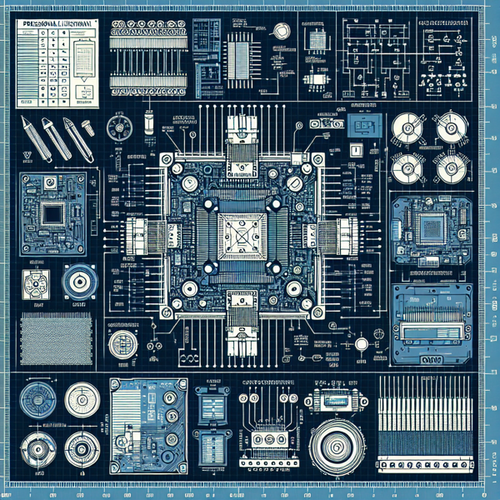
Electronics professionals have new benchmarks to meet as three critical standards were published in December 2025. Together, these updates address power connector specifications, solderability testing for semiconductor devices, and reliability verification under high-temperature operating life. In an era of stringent quality expectations and rapid innovation in electronics, these international standards promise greater safety, reliability, and global market compatibility.
Overview / Introduction
The electronics industry stands at the crossroads of innovation and compliance. International standards shape the foundation for interoperable, safe, and reliable electronic components and assemblies. With devices becoming more complex—and demands for miniaturization, high performance, and environmental resilience increasing—adhering to up-to-date standards is no longer optional for quality-driven organizations.
This article explores the latest December 2025 standards for:
- Power connectors (M12 screw-locking)
- Solderability testing of semiconductor devices
- High temperature operating life for reliability qualification
Whether you manage quality, design and prototype new products, oversee assembly lines, or source compliant components, a deep understanding of these standards is crucial for business continuity and competitive advantage.
Detailed Standards Coverage
IEC 61076-2-111:2025 - Circular Power Connectors (M12 Screw-Locking)
Connectors for electrical and electronic equipment – Product requirements – Part 2-111: Circular connectors – Detail specification for power connectors with M12 screw-locking
IEC 61076-2-111:2025 defines the requirements and specifications for 4- to 6-way circular connectors utilizing the M12 screw-locking mechanism, designed primarily for power supply and power applications in industrial environments. These connectors can handle current ratings of 8 A, 12 A, or 16 A per contact and voltage ratings spanning 50 V AC/60 V DC up to 630 V, depending on coding (F, K, L, M, S, T, etc.).
Scope and Coverage:
- Encompasses both fixed and free connectors (rewirable and non-rewirable)
- Covers male and female connectors with round contacts (Ø1.0mm and Ø1.5mm)
- Focuses on mechanical attributes such as mounting options (flange, single-hole), coding to prevent mismatings, and interface dimensions
Key requirements and specifications:
- Performance Levels: Defined for electrical, mechanical, and environmental performance, referencing IEC 61076-1
- Climatic Categories: Detailed classification ensures operational reliability in a range of environmental conditions
- Safety Aspects: Includes creepage and clearance distances, marking of insulation materials, and degree of protection via IP codes
- Mechanical Operations: Specifies insertion/withdrawal forces, retention, and mating cycles
- Testing: Outlines minimum and full test schedules, including dynamic stress and contact resistance checks
- Coding: Prevents improper connections by using unique keying features (e.g., F-, K-, L-, M-, S-, T-coding)
Who needs to comply:
- Manufacturers of industrial power connectors
- OEMs integrating power distribution systems in automation, process control, and machinery
- Procurement teams specifying standardized interfaces for new builds or retrofits
Practical implementation:
- Promotes safe and standardized use of high-current, multi-pin connectors, reducing risks in industrial power distribution
- Supports supply chain assurance by specifying compatible components
- Enables global compliance, reducing localization effort for multinational deployments
Notable changes from previous edition:
- Adaptation to latest IEC structure and document template
- Updated technical specs in Clause 5 (dimensions) and Clause 6 (performance)
- Added Annex B on cable outlet orientation
- Removal of mating face specs for now-obsolete M12 E-coded connectors
Key highlights:
- Clearly codified connectors minimize risk of cross-mating
- Detailed environmental categories support robust industrial application
- Comprehensive tests ensure mechanical and electrical reliability
Access the full standard:View IEC 61076-2-111:2025 on iTeh Standards
IEC 60749-21:2025 - Solderability Test Methods for Semiconductor Devices
Semiconductor devices – Mechanical and climatic test methods – Part 21: Solderability
This standard provides a unified approach to evaluating the solderability of device package terminations, whether they are destined for tin-lead (SnPb) or lead-free (Pb-free) processes, and includes through-hole, axial, and surface mount devices (SMDs). It details "dip and look" procedures and board mounting solderability simulation, as well as optional preconditioning via steam aging or high-temperature storage.
Scope and Coverage:
- Applicable to virtually all device packages: SMDs, leaded devices (axial and through-hole), and board-level assemblies
- Procedures for both SnPb and Pb-free soldering environments
- Emphasizes destructive testing for robust assessment
- Provides guidelines for preparation, flux specifications, solder composition, and aging techniques
Key requirements and specifications:
- Dip and Look Testing: Prescribed dwell times, solder bath temperatures, and visual inspection standards (min. 95% solder coverage per lead)
- Preconditioning: Optional steam aging (1-16 hours) or high-temperature storage for life-simulation
- Inspection: 10x to 20x magnification to rigorously assess solder coverage
- Flux and Solder Specification: Rosin flux tailored to Pb-containing or Pb-free applications; tightly defined solder alloy composition
- Backwards Compatibility: Specific procedures for evaluating Pb-free terminations in SnPb soldering processes
Who needs to comply:
- Device manufacturers (ICs, passive components)
- Electronics assemblers and contract manufacturers
- Companies certifying compliance for global markets
Practical implementation:
- Supports process qualification for both legacy SnPb and modern Pb-free assemblies
- Enables simulation and screening of real-world solderability, including with aged or storage-stressed components
- Facilitates comparison across suppliers and batches
Notable changes from previous edition:
- Updated operating conditions to reflect current manufacturing practices
Key highlights:
- Unified testing for both SnPb and Pb-free assemblies
- Optional aging for realistic life simulation
- Widely applicable to all major device types
Access the full standard:View IEC 60749-21:2025 on iTeh Standards
IEC 60749-23:2025 - High Temperature Operating Life (HTOL) for Semiconductor Devices
Semiconductor devices – Mechanical and climatic test methods – Part 23: High temperature operating life
IEC 60749-23:2025 is the definitive reference for simulating the effects of prolonged high temperature and bias on solid state devices. Used primarily for device qualification and reliability monitoring, its procedures enable accelerated testing equivalent to years of field service. It covers different stress modes (forward bias, reverse bias, gate bias, full operating) and is relevant for memory, logic, power devices, and more.
Scope and Coverage:
- Prescribes apparatus and methods for stress application (typically 125°C and up; up to 1000 hours)
- Simulates both operating (dynamic) and bias (static/pulsed) conditions
- Calls for environmental chambers with ±5°C accuracy, device-specific mounting, and careful measurement scheduling
- Addresses sample handling and reporting
Key requirements and specifications:
- Stress Conditions: Maintain ambient and junction temperatures; specify maximum operating voltages
- Configurable Biasing: Procedures for high temperature forward bias (HTFB), operating life (HTOL), reverse bias (HTRB), and gate bias (HTGB)
- Interim/Final Testing: Electrical parameters to be measured at prescribed intervals
- Failure Criteria: Devices must meet specification post-stress, with references to the IEC 60747 series as appropriate
- Reporting: Demand comprehensive test documentation and reporting
Who needs to comply:
- Semiconductor manufacturers qualifying new products/technologies
- Reliability engineers responsible for device lifespan and warranty
- System integrators requiring high confidence in semiconductor reliability
Practical implementation:
- Enables early screening and elimination of 'infant mortality' failures (via optional burn-in)
- Critical for automakers, aerospace, and mission-critical IoT device manufacturers
- Reduces field returns and enhances product reputation in demanding sectors
Notable changes from previous edition:
- Updated definitions for absolute stress and revised test durations
Key highlights:
- Accelerated testing supports rapid qualification cycles
- Detailed monitoring of test variables and outcomes
- Flexible bias configurations cover a full range of modern semiconductor devices
Access the full standard:View IEC 60749-23:2025 on iTeh Standards
Industry Impact & Compliance
Why These Standards Matter
Electronics manufacturers, OEMs, and supply chain professionals face increasing market scrutiny. Adopting the latest standards ensures:
- Regulatory compliance in global markets: Non-compliance can result in shipment delays, product bans, or costly recalls.
- Increased competitiveness and trust: Demonstrates dedication to safety, reliability, and quality—a must for customer satisfaction and industry certification.
- Risk mitigation: Rigorous testing standards like solderability and high temperature life reduce field failures, warranty costs, and reputational damage.
Compliance Considerations & Timelines
- Transition Periods: Plan for design and process changes ahead of customer or regulatory enforcement deadlines.
- Documentation: Maintain records of test reports, design evidence, and certification for audits.
- Supplier Communication: Ensure all upstream and downstream partners are aware of revised requirements.
Technical Insights
Common Technical Requirements
- Consistency across interfaces: Both connectors and semiconductor devices now benefit from harmonized definitions and testing for reliability and safety.
- Simulation of life cycles: From steam aging for solderability to high-temperature operating life, realistic process simulation is embedded into the standards.
- Measurement accuracy: Inspection using high magnification and defined test equipment keeps results objective and repeatable.
Implementation Best Practices
- Gap analysis: Compare in-house specifications to new standards and identify updates.
- Supplier qualification: Align vendor criteria with the latest edition requirements.
- Employee training: Ensure assembly, QC, and engineering teams understand technical changes.
- Certification & Documentation: Leverage third-party labs for independent testing where required.
Testing and Certification Considerations
- Use only calibrated and certified equipment, especially for temperature and voltage controls
- For soldering, source flux and solder that meet specified chemical compositions
- For connector mating, perform cycle tests to failure or as defined by IEC test schedules
Conclusion / Next Steps
December 2025 brings a new level of precision, reliability, and safety to electronics manufacturing. The revisions and additions in IEC 61076-2-111, IEC 60749-21, and IEC 60749-23 set the bar for what will be considered best practice through the rest of the decade. Organizations that proactively adopt these standards will:
- Optimize product quality and reduce warranty costs
- Build a robust brand for compliance-conscious customers
- Simplify access to regulated and global markets
Recommendations:
- Download and review each new standard thoroughly with your technical, QA, and procurement teams
- Start updating documentation, processes, and supplier contracts today
- Stay ahead of further updates and harmonizations by monitoring iTeh Standards
Explore the standards in detail at iTeh Standards and ensure your electronics business is future-ready.
Categories
- Latest News
- New Arrivals
- Generalities
- Services and Management
- Natural Sciences
- Health Care
- Environment
- Metrology and Measurement
- Testing
- Mechanical Systems
- Fluid Systems
- Manufacturing
- Energy and Heat
- Electrical Engineering
- Electronics
- Telecommunications
- Information Technology
- Image Technology
- Precision Mechanics
- Road Vehicles
- Railway Engineering
- Shipbuilding
- Aircraft and Space
- Materials Handling
- Packaging
- Textile and Leather
- Clothing
- Agriculture
- Food technology
- Chemical Technology
- Mining and Minerals
- Petroleum
- Metallurgy
- Wood technology
- Glass and Ceramics
- Rubber and Plastics
- Paper Technology
- Paint Industries
- Construction
- Civil Engineering
- Military Engineering
- Entertainment