


August 2026 Electronics Standards: New Guidelines for Power Connectors, Boards, and Devices
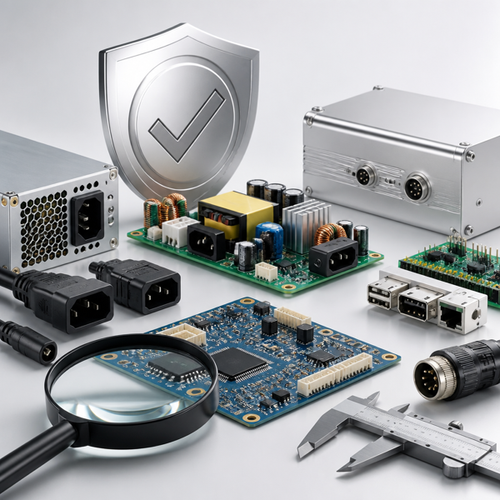
The electronics sector sees remarkable advancements this August 2026 with the publication of five pivotal international standards. These updates span a wide range of technologies, from robust power connectors and detailed specifications for resistors, to innovative circuit board routing parameters, reliability guidelines for power semiconductor modules, and precise test methods for wearable electromyography (sEMG) sensors. Each standard introduces rigorous requirements aimed at enhancing performance, reliability, and safety—not only for manufacturers but also for downstream users and integrators. For electronics industry professionals, staying updated with these standards is critical to maintaining compliance, driving innovation, and ensuring product quality across the supply chain.
Overview / Introduction
The electronics industry underpins virtually every modern technology—from smart homes and robotics to telecommunications and industrial automation. International standards play a vital role in ensuring compatibility, safety, performance, and global interoperability for electronic components and systems. Without up-to-date specifications, organizations risk falling behind on best practices, regulatory mandates, and quality benchmarks.
This article unpacks five newly published electronics standards from August 2026, providing engineers, quality managers, and procurement leaders with a comprehensive understanding of:
- What each standard covers
- Key design and testing requirements
- Target applications and affected sectors
- Strategies for implementation and compliance
Each section includes direct access to the full standards on iTeh Standards for further detail.
Detailed Standards Coverage
IEC 61076-8-110:2026 – High-Current, High-Protection Power Connectors
Connectors for electrical and electronic equipment – Product requirements – Part 8-110: Power connectors – Detail specification for 2P 300 A 1 000 V DC plus 2P 5 A 50 V DC shielded rectangular connectors with IP65/IP68 degree of protection when mated and locked, and IPXXB when unmated
IEC 61076-8-110:2026 specifies the performance and design requirements for free and fixed rectangular connectors featuring two power contacts (2P, 300A, 1000V DC) and two signal contacts (2P, 5A, 50V DC). Designed with a plastic housing, these connectors employ robust locking mechanisms and offer four possible codings for operational flexibility. Importantly, each power contact is individually shielded for enhanced EMC performance.
Key technical highlights include:
- IP65/IP68 ingress protection when mated and locked, ensuring resistance to dust and water in demanding environments
- IPXXB protection for unmated connectors, safeguarding users from accidental contact
- Detailed dimensional specifications for both free (plug) and fixed (receptacle) connectors
- Comprehensive testing protocols addressing electrical properties, mechanical strength, vibration, shock, and environmental exposure
- Test groups for dynamic climate, endurance, connection integrity, and shielding effectiveness
These connectors are especially suited for industrial machinery, renewable energy, electric vehicles, and other high-power electronic equipment where safety and robust electrical connectivity are paramount.
Key highlights:
- 2P power (300 A/1,000 V DC) and 2P signal (5 A/50 V DC) configuration
- Individual power contact shielding, four codings, plastic housing
- Rigorous mechanical and environmental testing regimes
Access the full standard:View IEC 61076-8-110:2026 on iTeh Standards
EN IEC 60115-4-10:2026 – Power Resistors for THT Applications
Fixed resistors for use in electronic equipment – Part 4-10: Blank detail specification: Power resistors with axial leads for through-hole assembly on circuit boards (THT), for general electronic equipment, classification level G
EN IEC 60115-4-10:2026 outlines the classification, test schedules, and performance requirements for fixed power resistors with axial leads designed specifically for through-hole (THT) mounting on printed circuit boards. The standard focuses on classification level G—targeting generic or consumer-grade electronic products, such as consumer devices and telecommunications equipment that operate under moderate environmental conditions.
Core requirements include:
- Defined dimensional and rating parameters (resistance ranges, tolerance values, power dissipation, temperature coefficient)
- Stringent testing for resistance changes, temperature rise, endurance, ESD, solderability, flammability, and climatic sequence
- Clear marking, packaging, and ordering information to support procurement and traceability
- Quality assessment procedures for both batch and 100% testing, including certificate of conformity and conformance inspections
- Guidance on soldering, cleaning, and post-assembly treatments to ensure durability and compliance
Manufacturers supplying or integrating low-power resistors into consumer or general-purpose electronics must comply with these standards to meet market and regulatory expectations.
Key highlights:
- Comprehensive performance and endurance test specifications
- Applicable to fixed, axial-lead power resistors (THT) in consumer and telecom devices
- Supports quality assessments (qualification and conformance)
Access the full standard:View EN IEC 60115-4-10:2026 on iTeh Standards
IEC 63287-3:2026 – Reliability Qualification Plans for Power Semiconductor Modules
Semiconductor devices – Generic semiconductor qualification guidelines – Part 3: Guidelines for reliability qualification plans for power semiconductor module
IEC 63287-3:2026 provides critical guidelines for developing reliability qualification plans for power semiconductor modules, excluding those with built-in control circuits or clamped, pressure-mounted packages (e.g., disc-type pressure packs). The standard targets multichip power modules across automotive, industrial, and consumer electronics applications—excluding uses in medical, military, or aerospace sectors.
The core methodology revolves around:
- Understanding and classifying failure modes and mechanisms (early failure, random failure, wear-out)
- Implementing relevant test strategies, including accelerated lifetime testing and environmental stress screening
- Selecting appropriate quality grades based on end-use application risk (with example grading and screening flows)
- Utilizing statistical analysis for failure rates and lifetime prediction (e.g., bath-tub curves, Weibull analysis, TDDB—Time Dependent Dielectric Breakdown)
- Emphasizing customer-supplier collaboration on drafting qualification plans
By aligning qualification and reliability testing with precise guidelines, this standard enables semiconductor makers and integrators to assure long-term device performance and reduce costly in-field failures.
Key highlights:
- Covers reliability qualification processes and lifecycle risk management
- Specifies accelerated test models and reporting requirements
- Supports supplier-user collaboration in industrial and automotive power electronics
Access the full standard:View IEC 63287-3:2026 on iTeh Standards
IEC PAS 63720:2026 – Standardized Routing Parameters for Rigid Circuit Boards
Rigid circuit board – Routing parameters
IEC PAS 63720:2026 introduces standardized routing parameter tables that guide the design and manufacture of rigid circuit boards with either mechanically or laser-drilled vias. This standard, based on French AFNOR Spec 2212 and earlier routing class models, defines a nomenclature and structured set of routing classes (RC1 to RC10), each matched to different PCB component densities and manufacturing complexities.
Key content includes:
- Definitions and conventions for mechanical, conductor, via (mechanical/laser), solder mask, and marking parameters
- Routing classes mapped to typical component packages (BGA, QFN, SMD) and board build difficulty
- Parameter tolerances and preferred values for conductor width/spacing, via diameters, solder mask opening, and ink marking
- Practical separation between routing classes (design rules) and IPC performance classes (inspection/acceptance rules)
- Integration guidance for EDA tools to streamline communication between PCB designers and manufacturers
This specification supports improved communication in the PCB supply chain, rationalizes manufacturing limitations, and enables more robust design-for-manufacturing practices in both high- and low-volume applications.
Key highlights:
- Enables standardized transmission of routing constraints between designers and PCB fabricators
- Simplifies integration of design parameters into EDA (electronic design automation) systems
- Supports a wide range of component types and density classes (RC1–RC10)
Access the full standard:View IEC PAS 63720:2026 on iTeh Standards
IEC 63203-403-1:2026 – Test Methods for sEMG Sensors in Wearable Devices
Wearable electronic devices and technologies – Part 403-1: Test method of surface electromyography sensors on forearm and hand for wearable applications
IEC 63203-403-1:2026 addresses the growing market for wearable electronics, focusing on standardized test methods for surface electromyography (sEMG) sensors used on the forearm and hand. The standard is intended for devices purposed for movement intention detection in consumer, VR, gaming, drone control, robotics, and home automation—not for medical diagnostics or treatment (which are ruled by national requirements).
Main requirements and methodologies include:
- Environment and subject requirements (test environment setup, subject preparation criteria)
- Classification, selection, and configuration of sEMG sensor types (dry, semi-dry, wet)
- Technical specifications for signal transmission quality and placement accuracy
- Performance metrics such as baseline noise, signal-to-noise ratio (SNR), discrimination, and repeatability
- Standardized procedures for muscle identification, sensor placement, and reporting
Compliance with this standard ensures reproducibility and comparability of sEMG sensor test results—crucial for wearable device developers, test labs, and quality assurance teams.
Key highlights:
- Defines step-by-step sEMG sensor test protocols for consumer applications
- Covers sensor classes, test setup, data evaluation, and reporting
- Facilitates consistent product validation and market access
Access the full standard:View IEC 63203-403-1:2026 on iTeh Standards
Industry Impact & Compliance
The release of these new standards brings significant implications for organizations across the electronics ecosystem:
- Compliance: Organizations must update their design, manufacturing, and quality assessment practices to align with new specifications and test methods.
- Transition Periods: Some standards specify transition/withdrawal timelines for superseded editions, which must be accounted for in project planning and procurement cycles.
- Risk Mitigation: Adoption reduces risks of non-conformity, product recalls, and potential liability from in-field failures or safety incidents.
- Market Advantage: Early and comprehensive compliance is a strong differentiator in bids, audits, and customer approvals, often required by global OEMs and regulators.
- Documentation & Traceability: New standards define enhanced documentation and marking requirements vital for procurement, traceability, and after-market support.
For procurement specialists and compliance officers, proactively auditing organizational readiness and supplier alignment is highly recommended.
Technical Insights
Across these standards, several technical themes emerge:
- Rigorous Environmental and Electrical Testing: All standards feature comprehensive test plans simulating real-world electrical, mechanical, and climatic stresses.
- Design-for-Manufacture (DFM) and Interoperability: The introduction of routing classes and connector codings streamlines collaboration between design, manufacturing, and supply chain actors.
- Quality Control: New, detailed assessment regimes—especially for resistors and semiconductor modules—drive tighter control over component reliability and production consistency.
- Data and Reporting: Standardization extends to test documentation and reporting (e.g., sEMG sensor performance, resistor conformance records), supporting both regulatory and customer-facing quality systems.
- Safety and User Protection: Enhanced ingress protection (IP ratings), contact shielding, and clear marking requirements are instrumental in preventing user harm and accidental failures.
Best Practices:
- Integrate new test methods and acceptance criteria into your auditing and validation cycles.
- Update CAD and EDA databases to reflect revised routing parameters and connector specs.
- Engage with suppliers early to align new qualification requirements, especially for semiconductor and passive components.
- Leverage training and documentation updates to ensure all relevant personnel understand new requirements.
- Plan phased rollouts for new or revised connectors/components in product development pipelines.
Conclusion / Next Steps
In August 2026, the electronics industry receives substantial enhancements to its standards portfolio, influencing everything from power distribution and circuit interconnection to wearable tech and component reliability. Committing to early adoption and continuous education on these standards will help your organization:
- Deliver more reliable, safe, and compliant products
- Streamline design and manufacturing workflows
- Enhance market competitiveness and customer trust
- Avoid costly rework, recalls, or non-compliance issues
Next Steps:
- Review the full text of the standards linked above for detailed clauses and annexes relevant to your projects.
- Audit your product and supplier portfolios for conformance opportunities and risks.
- Engage with industry peers, working groups, or professional bodies to stay ahead of future updates.
For more resources, visit iTeh Standards to explore the latest international standards shaping the future of electronics.
Categories
- Latest News
- New Arrivals
- Generalities
- Services and Management
- Natural Sciences
- Health Care
- Environment
- Metrology and Measurement
- Testing
- Mechanical Systems
- Fluid Systems
- Manufacturing
- Energy and Heat
- Electrical Engineering
- Electronics
- Telecommunications
- Information Technology
- Image Technology
- Precision Mechanics
- Road Vehicles
- Railway Engineering
- Shipbuilding
- Aircraft and Space
- Materials Handling
- Packaging
- Textile and Leather
- Clothing
- Agriculture
- Food technology
- Chemical Technology
- Mining and Minerals
- Petroleum
- Metallurgy
- Wood technology
- Glass and Ceramics
- Rubber and Plastics
- Paper Technology
- Paint Industries
- Construction
- Civil Engineering
- Military Engineering
- Entertainment