


August 2026: Essential Electronics Standards Released – Part 1 Highlights
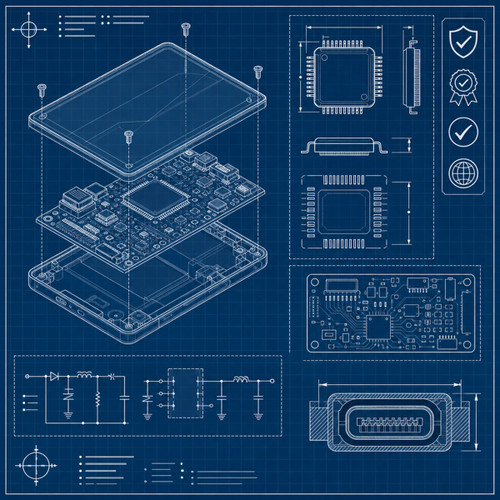
In August 2026, the electronics industry achieved a significant milestone with the publication of five cutting-edge international standards, setting new benchmarks for safety, performance, and interoperability. As businesses face expanding technological complexity and increasing regulatory expectations, these standards deliver essential guidance for safer laser processing, accurate optical component assessment, advanced surface mounting, and reliable power/data connectivity. Whether developing, evaluating, or sourcing electronics products, industry professionals will find these updates vital for compliance and competitive advancement.
Overview / Introduction
The electronics sector is continually evolving, shaped by advances in manufacturing, increasing automation, and the growing demands of smart systems. Standards play a crucial role in maintaining product safety, ensuring compatibility, and fostering innovation. In this article, we explore the first installment of August 2026's newly released electronics standards. You'll learn about new safety frameworks for laser processing, methods for measuring optical component absorptance, updated surface mounting guidelines, and robust connector specifications—each driving operational excellence throughout the industry.
Detailed Standards Coverage
ISO 11553-2:2026 - Safety of Machinery – Laser Processing Machines (Part 2)
Safety of Machinery — Laser Processing Machines — Part 2: Safety Requirements for Hand-Held or Hand-Operated Laser Processing Machines
Scope & Content: This standard addresses all significant hazards associated with hand-held or hand-operated laser processing machines (HLMs), laying out comprehensive safety and design requirements. It covers both the laser device and its ancillary components—beam guiding, shaping systems, and controls—ensuring hazards are recognized and mitigated across their lifecycle. Key hazards under scrutiny include laser radiation, mechanical and thermal risks, electrical and ergonomic dangers, and potential threats to unauthorized individuals. The standard is essential for manufacturers, integrators, and users of industrial laser hand tools, excluding medical, cosmetic, or military applications.
Key requirements:
- Rigorous hazard identification and risk assessment protocols
- Implementation of engineered controls and protective enclosures
- Mechanical, electrical, and thermal safety measures
- Detailed requirements for ergonomic design and labeling
- Guidance on user instructions, maintenance, and emergency action plans
Industry Application: Manufacturers, machine integrators, and end users of laser processing equipment in industrial settings must ensure full compliance to prevent injuries and achieve regulatory conformance. This edition, a technical revision of the 2007 version, refines hazard categories, expands ergonomic guidance, and strengthens documentation/process verification.
Key highlights:
- New structure and tables for hazard analysis
- Improved requirements for control systems and emergency stops
- Ergonomics and user information sections significantly expanded
Access the full standard:View ISO 11553-2:2026 on iTeh Standards
EN ISO 11551:2026 - Test Method for Absorptance of Optical Laser Components
Optics and Photonics – Lasers and Laser-Related Equipment – Test Method for Absorptance of Optical Laser Components (ISO 11551:2026)
Scope & Content: This standard specifies standardized procedures and techniques for measuring the absorptance of optical laser components—crucial for determining thermal load handling and performance under laser exposure. It defines thorough preparation of test samples, requirements for cleanroom environments, calibration methods, and detailed guidance on data evaluation. The process focuses on calorimetric measurements, supporting comparable results across manufacturers and laboratories.
Key requirements:
- Sample storage, cleaning, and mounting in controlled environments
- Calibration of radiant power and temperature signals
- Measurement methods for continuous and pulsed laser irradiation
- Comprehensive reporting and result validation
Industry Application: Critical for optics and photonics component manufacturers, systems integrators, and laboratories needing reproducible, reliable test outcomes. Ensures product reliability in high-power laser applications in industrial, research, and defense sectors.
Key highlights:
- Calorimetric and pulse/exponential test methods
- Detailed sample preparation and environment standards
- Full harmonization with the latest terminology and measurement conventions
Access the full standard:View EN ISO 11551:2026 on iTeh Standards
EN IEC 61760-1:2026 - Surface Mounting Technology: SMD Specification Method
Surface Mounting Technology – Part 1: Standard Method for the Specification of Surface Mounting Components (SMDs)
Scope & Content: This standard defines a systematic method for specifying surface mounting components (SMDs), establishing critical dimensions, marking and labeling requirements, and minimum reliability expectations. It covers all phases from component design, packaging, cleanroom compatibility, soldering, and mounting, to post-assembly processing and environmental compliance. The guidance helps ensure SMDs meet the demanding expectations of today’s automated electronics assembly lines.
Key requirements:
- SMD classification by application environment (general, dedicated, high-performance)
- Rules for marking, mechanical compliance, and terminal layout
- Specifications for cleanliness, surface roughness, and thermal properties
- Guidelines on packaging, transport, and labeling for traceability
- Reliability assurance and environmental/material disclosure mandates
Industry Application: Applies to SMD manufacturers, PCB assembly houses, electronics design engineers, and procurement teams. Supports improved assembly yields, product traceability, and compatibility in globally distributed supply chains.
Key highlights:
- Updated soldering and glue-bonding methods
- Cleanliness, packaging, and environmental compliance expanded
- New annexes on sustainability and supply chain considerations
Access the full standard:View EN IEC 61760-1:2026 on iTeh Standards
ISO 11551:2026 - Test Method for Absorptance of Optical Laser Components
Optics and Photonics — Lasers and Laser-Related Equipment — Test Method for Absorptance of Optical Laser Components
Scope & Content: This ISO standard, harmonized with EN ISO 11551:2026, provides internationally recognized test procedures for quantifying absorptance in optical laser components. Building on updates in environmental requirements and precision measurement, it details sample handling, calibration, and the test setup for reliable absorptance determination. The dual availability (as ISO and EN ISO) enables seamless adoption in global markets.
Key requirements:
- Cleanroom and environmental control standards (class 7 minimum)
- Calorimetric test procedures and data interpretation
- Robust reporting requirements
Industry Application: Mandatory in procurement, validation, and R&D for laser optics, this standard underpins both quality assurance and risk management processes across optical supply chains.
Key highlights:
- Fully revised from previous edition
- Synchronized with EU requirements for consistency
- Enhanced reporting and calibration benchmarks
Access the full standard:View ISO 11551:2026 on iTeh Standards
IEC 61076-2-117:2026 - Connectors for Electrical and Electronic Equipment: M12 to M40
Connectors for Electrical and Electronic Equipment – Product Requirements – Part 2-117: Detail Specification for Shielded and Unshielded, Free and Fixed Connectors M12 to M40 for Power, Auxiliary and Data Transmission with Frequencies up to 600 MHz
Scope & Content: This IEC standard delivers an up-to-date, in-depth detail specification for circular connectors (M12, M17, M23, and M40), addressing both shielded and unshielded variants. It covers physical dimensions, mechanical integrity, electrical performance—including high-frequency data paths—and environmental resistance. These connectors are foundational for industrial automation, factory networks, robotics, and power/data distribution systems.
Key requirements:
- Standard interface dimensions and coding for secure mating/unmating
- Mechanical, electrical, and transmission performance criteria
- Environmental and ingress protection specifications (IP ratings)
- Test plans for shock, vibration, and endurance
- Materials and marking mandates for traceability and service life assurance
Industry Application: Optimal for manufacturers and system integrators in industrial automation, robotics, communication infrastructure, and energy systems. The standard’s emphasis on high-frequency operation (up to 600 MHz) aligns with expanding IIoT and Industry 4.0 connectivity needs.
Key highlights:
- Complete dimension and compatibility matrices for M12–M40 connectors
- Rigorous test regimes for mechanical and signal integrity
- Newly harmonized structure for global interoperability
Access the full standard:View IEC 61076-2-117:2026 on iTeh Standards
Industry Impact & Compliance
The August 2026 standards reinforce safety, reliability, and quality benchmarks across multiple electronics domains. Organizations implementing these standards will:
- Streamline product development and assembly processes
- Improve worker and end-user safety, especially in high-risk laser applications
- Increase the market acceptance of their components across global supply chains
- Achieve regulatory compliance for product certification (CE, UL, etc.)
- Benefit from repeatable, comparable test results simplifying procurement and validation
Compliance considerations:
- Standards apply to products manufactured or updated after the date of publication
- Early adoption allows smoother transition and future-proofs products
- Non-compliance risks product recalls, increased liability, or legal penalties
Benefits:
- Reduced rework and improved yields in PCB assembly
- Predictable in-field performance and lower maintenance costs
- Enhanced brand trust and certification readiness
Technical Insights
Shared Technical Requirements:
- Emphasis on design for safety, ergonomic operation, and traceability
- Strict environmental and cleanliness controls for sensitive components
- Harmonized methodologies for testing and reporting (particularly in laser and SMD standards)
- Mandatory documentation for user guidance, maintenance, and emergency handling
Best Practices:
- Engage all relevant stakeholders—engineering, quality, procurement—early in adoption planning
- Use design reviews and risk assessments to cross-map new requirements
- Update internal documentation, training, and purchasing specifications
- Leverage accredited third-party labs for compliance testing and certification
Testing & Certification:
- Establish clean, controlled environments according to guidance (e.g., Class 7 cleanroom for optical measurements)
- Validate mechanical endurance (shock, vibration) and IP rating claims for connectors
- Use only calibrated, traceable measurement equipment for critical safety and performance attributes
Conclusion / Next Steps
With five major standards released, August 2026 sets a new bar for excellence in electronics design, safety, and interoperability. Organizations are encouraged to:
- Review each standard in detail to identify impacts on product lines and processes
- Prioritize compliance to unlock global markets and minimize risk
- Invest in staff training and documentation updates
- Monitor iTeh Standards for part 2 of this coverage and future updates
Stay ahead—explore these standards in-depth via iTeh Standards and ensure your electronics operations are fully aligned with the latest global best practices.
Categories
- Latest News
- New Arrivals
- Generalities
- Services and Management
- Natural Sciences
- Health Care
- Environment
- Metrology and Measurement
- Testing
- Mechanical Systems
- Fluid Systems
- Manufacturing
- Energy and Heat
- Electrical Engineering
- Electronics
- Telecommunications
- Information Technology
- Image Technology
- Precision Mechanics
- Road Vehicles
- Railway Engineering
- Shipbuilding
- Aircraft and Space
- Materials Handling
- Packaging
- Textile and Leather
- Clothing
- Agriculture
- Food technology
- Chemical Technology
- Mining and Minerals
- Petroleum
- Metallurgy
- Wood technology
- Glass and Ceramics
- Rubber and Plastics
- Paper Technology
- Paint Industries
- Construction
- Civil Engineering
- Military Engineering
- Entertainment