


A Comprehensive Guide to Modern Cable Standards: Ensuring Safety, Performance, and Growth in Electrical Engineering
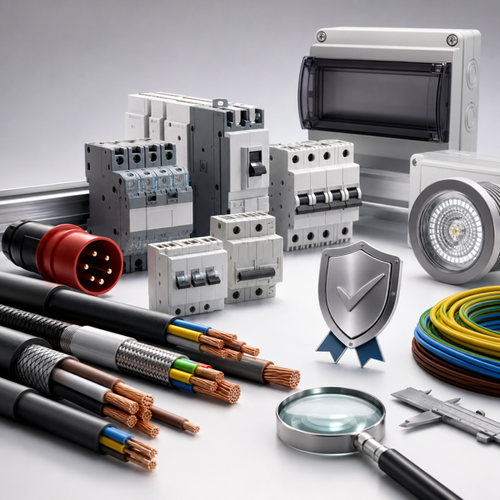
Electrical cables are the invisible backbone powering homes, industries, and infrastructure worldwide. Whether illuminating a city, running complex machinery, or keeping roads and buildings safe from winter’s chill, the right cables—and the standards governing them—are crucial for safety, efficiency, and growth. International standards lay out clear requirements that drive productivity, reduce risks, and set a foundation for business scalability. In this in-depth guide, we explore four fundamental cable standards developed by the International Electrotechnical Commission (IEC), highlighting why modern compliance is non-negotiable and how these standards help organizations worldwide achieve secure, productive, scalable electrical systems.
Overview / Introduction
Cables form the connection points between energy sources and end-use, enabling the flow of electricity essential to modern life. But with the diversity of applications—industrial plants, residential complexes, or critical heating systems—comes the need for consistency, safety, and performance. International standards for cable manufacturing, installation, and use help organizations choose the right products, minimize hazards like fire or electric shock, and ensure longevity under demanding conditions.
In this article, we break down four pivotal IEC standards:
- IEC 60227-5:2024 – Requirements for flexible polyvinyl chloride insulated cables
- IEC 60245-1:2026 – General requirements for rubber-insulated cables
- IEC 60245-4:2026 – Additional needs for cords and flexible rubber-insulated cables
- IEC 60800:2021 – Specialized cables for heating and ice prevention
You’ll learn what each covers, their practical implications, and why businesses today cannot afford to overlook compliance. By the end, you’ll possess foundational knowledge to inform purchasing, installation, and operational decisions that boost safety and efficiency.
Detailed Standards Coverage
IEC 60227-5:2024 – Flexible PVC Insulated Cables
Polyvinyl chloride insulated cables of rated voltages up to and including 450/750 V - Part 5: Flexible cables (cords)
Scope and Industry Context: IEC 60227-5:2024 addresses the particular requirements for flexible cables (cords) with polyvinyl chloride (PVC) insulation, designed for rated voltages up to and including 300/500 V. These flexible cables are widely used in domestic, commercial, and light industrial settings where flexibility, durability, and safety are paramount—think household appliances, extension leads, decorative lighting, and portable tools.
Key Requirements and Specifications:
- Additional Requirements: Applies in conjunction with the broad requirements of IEC 60227-1, meaning only certified cables meeting both general and this standard’s specific technical criteria are truly compliant.
- Construction: Specifies conductor and insulation types, assembly of cable cores, dimensions, and the application of sheaths.
- Code Designation and Types: Encompasses several variants—flat tinsel cords, indoor lighting cords, standard and heat-resistant sheathed cords—for use up to conductor temperatures of 90°C.
- Testing: Mandates bending, flexing, drop, and resistance tests to confirm mechanical resilience, insulation integrity, and performance under repeated use.
Who Needs to Comply:
- Electrical product manufacturers
- Installers of residential and commercial electrical systems
- Quality control and procurement teams
Practical Implications: Utilizing cables certified under IEC 60227-5:2024 means safer appliances and installations, fewer equipment failures, and a defense against costly liability due to substandard cabling.
Key highlights:
- Comprehensive coverage for flexible, low-voltage PVC-insulated cords
- Rigorous mechanical and electrical testing requirements ensure reliability
- Codifies heat-resistant options for high-temperature operation
Access the full standard:View IEC 60227-5:2024 on iTeh Standards
IEC 60245-1:2026 – Rubber Insulated Cables: General Requirements
Rubber insulated cables - Rated voltages up to and including 450/750 V - Part 1: General requirements
Scope and Industry Context: IEC 60245-1:2026 lays the foundation for all rigid and flexible power cables insulated (and optionally sheathed) with vulcanized rubber, suitable for voltages up to 450/750 V. These are indispensable in harsh environments or portable devices—construction sites, heavy machinery, and mobile equipment—where mechanical toughness and flexibility are vital.
Key Requirements and Specifications:
- Conductors and Insulation: Strict requirements for material quality, construction, color coding, and mechanical performance of rubber insulation and sheath.
- Marking and Identification: Detailed rules for manufacturer identification, legibility, and durability of cable markings.
- Core Identification: Mandates color and/or number indexing to ensure unambiguous wiring.
- Testing: Now references IEC 63294 (rather than IEC 60245-2) for standardized flexing and resistance tests, ensuring cables perform after repeated flexing or under thermal stress.
- Updated References: Brings all normative references up to date, reflecting the latest best practices and harmonization within the IEC series.
Who Needs to Comply:
- Cable manufacturers
- Distributors and bulk purchasers
- Electrical engineers and installers in commercial, public, and industrial settings
Practical Implications: By following IEC 60245-1:2026, businesses guarantee that every cable—regardless of specific type—meets core safety and performance criteria before further customization by use case.
Key highlights:
- Encompasses all major rubber-insulated cable types, both rigid and flexible
- Stricter focus on marking, identification, and color coding for safety
- Ensures all rubber cables meet universal performance thresholds before specialized adaptation
Access the full standard:View IEC 60245-1:2026 on iTeh Standards
IEC 60245-4:2026 – Rubber Insulated Flexible Cords and Cables
Rubber insulated cables - Rated voltages up to and including 450/750 V - Part 4: Cords and flexible cables
Scope and Industry Context: IEC 60245-4:2026 provides the specific requirements for a diverse range of rubber-insulated cords and flexible cables, including those with synthetic elastomeric sheaths like polychloroprene. These are favored for high-flex situations such as industrial machinery, temporary power connections, or equipment operating in demanding climates.
Key Requirements and Specifications:
- Types Covered: From braided cords to heavy synthetic elastomer sheathed cables, suitable for both indoor and harsh outdoor uses.
- Construction & Dimensional Rules: Specifies conductor quality, insulation thickness/type, assembly of cores, and sheathing for optimal flexibility and durability.
- Enhanced Testing: Uses IEC 63294 for unified, modern test protocols covering everything from flexing to electrical withstand and mechanical resilience.
- Recent Updates: Eliminates overlapping/older test references and ensures consistency with modern test approaches.
Who Needs to Comply:
- Manufacturers of portable/movable electrical equipment
- MRO (maintenance, repair, operations) teams
- Producers/installers working in flexible cable-intensive sectors
Practical Implications: Clear, international guidelines result in cables that are not only flexible but also resistant to abrasion, chemicals, and impacts—a must for portable tools, heavy-duty machinery, or mobile site applications.
Key highlights:
- Covers the full life cycle: from product design to use and maintenance
- High relevance for applications requiring robust flexibility
- Practical guidance included for safe deployment and domain-specific limitations
Access the full standard:View IEC 60245-4:2026 on iTeh Standards
IEC 60800:2021 – Heating Cables for Comfort and Ice Prevention
Heating cables with a rated voltage up to and including 300/500 V for comfort heating and prevention of ice formation
Scope and Industry Context: IEC 60800:2021 covers requirements for resistive heating cables used in both residential and commercial settings for comfort heating (such as underfloor systems) and essential winter protection (ice prevention on roofs, gutters, and pipes). As energy efficiency and safety become central to building design, adherence to this standard is vital for architects, contractors, and facility managers.
Key Requirements and Specifications:
- Product Types: Includes both factory-assembled and field-assembled heating cable sets.
- Testing Requirements: Extensive test regime including electrical resistance, insulation integrity after cyclic thermal/shock exposure, water immersion, UV/weathering, and mechanical deformation. Also addresses aging, output verification, and flammability.
- Scope Limits: Excludes mineral insulated or sub-50V bare/protected conductors and any application where sheath temperature exceeds 100°C.
- Installation Guidance: Mandates detailed instructions for safe, effective deployment and long-lasting function.
Who Needs to Comply:
- Heating system manufacturers and installers
- Building designers and facility engineers
- Contractors managing cold climate or wet environment installations
Practical Implications: Following IEC 60800 ensures that installed systems are reliable, energy efficient, and safe from hazards such as electrical faults or overheating—essential for modern smart buildings and public infrastructure.
Key highlights:
- Ensures safety and longevity in heating cable systems
- Protects against environmental extremes like water, UV, and frost
- Demands thorough validation testing for real-world performance
Access the full standard:View IEC 60800:2021 on iTeh Standards
Industry Impact & Compliance
In today’s business landscape, cable standards are more than a technical check-box—they underpin every aspect of operational safety, legal responsibility, and future-proofing. Here’s how:
- Operational Safety: Adhering to modern cable standards like IEC 60227-5, IEC 60245-1/4, and IEC 60800 mitigates core risks—electrical fires, accidental electrocution, and equipment failures.
- Regulatory Compliance: Most jurisdictions reference international standards in their local codes, so use of compliant cables supports approval processes and insurance obligations.
- Scalability & Productivity: Well-standardized cables support modular construction, facility expansions, and integration with new technologies without costly retrofits.
- Brand Reputation & Cost Savings: Proper compliance reduces downtime, maintenance, and liability claims—saving costs while protecting a company’s brand.
Risks of Non-Compliance:
- Legal/financial penalties for code violations
- Increased likelihood of system failures and safety incidents
- Higher operational and maintenance costs
- Loss of market access or decreased customer trust
Implementation Guidance
Aligning with international cable standards is a strategic investment. Here’s how businesses can ensure smooth adoption:
- Assessment: Review all cables in use or under consideration against the relevant IEC standards. Replace any sub-compliant products.
- Vendor Management: Source only from reputable suppliers who certify adherence to these standards and provide supporting test documentation.
- Training: Ensure installation and maintenance staff understand both the standards and manufacturer guidelines.
- Documentation: Maintain detailed records of cable specifications, certifications, and installation practices for audit-trail and future upgrades.
- Periodic Testing: Implement scheduled inspection and testing (especially for heating systems or high-flex cables) using the matrix of tests described in each standard.
- Continuous Review: Stay informed about updates to IEC standards and integrate new best practices—modern codes often refer to the latest edition.
Best Practices:
- Use only cables with markings conforming to standard requirements (clear, durable, legible)
- Observe rated voltage and temperature ratings carefully
- Apply correct color-coding/numbering for core identification
- Follow installation procedures precisely for heating cables, including output validation and splice/end termination checks
- Select heat-resistant cables for high-temperature or exposed installations
Resources:
- iTeh Standards Platform for the latest updates and full-text access
- Manufacturer training modules or IEC technical guides
- National electrical codes—often referencing IEC standards
Conclusion / Next Steps
As our global infrastructure modernizes, cable standards are the linchpin for safer, smarter, and more scalable electrical systems. Whether your business is delivering new buildings, redesigning old facilities, or safeguarding critical infrastructure, adopting international cable standards ensures:
- Legal and regulatory compliance
- Enhanced workplace and end-user safety
- Streamlined scaling of operations and maintenance
- Lower costs and improved return on investment
Recommendations:
- Regularly audit your organization’s cable inventory against the latest IEC standards
- Leverage resources like iTeh Standards to stay ahead of updates and best practices
- Incorporate compliance into purchasing and project management processes
The era of ad-hoc cabling is over. Building a future-ready organization means putting standards at the heart of every connection. Explore these standards in full, educate your team, and make smart choices for productivity, security, and sustainable growth.
Categories
- Latest News
- New Arrivals
- Generalities
- Services and Management
- Natural Sciences
- Health Care
- Environment
- Metrology and Measurement
- Testing
- Mechanical Systems
- Fluid Systems
- Manufacturing
- Energy and Heat
- Electrical Engineering
- Electronics
- Telecommunications
- Information Technology
- Image Technology
- Precision Mechanics
- Road Vehicles
- Railway Engineering
- Shipbuilding
- Aircraft and Space
- Materials Handling
- Packaging
- Textile and Leather
- Clothing
- Agriculture
- Food technology
- Chemical Technology
- Mining and Minerals
- Petroleum
- Metallurgy
- Wood technology
- Glass and Ceramics
- Rubber and Plastics
- Paper Technology
- Paint Industries
- Construction
- Civil Engineering
- Military Engineering
- Entertainment