

Electrical Engineering Standards Update: September 2026 – Safety for Pools & Railways
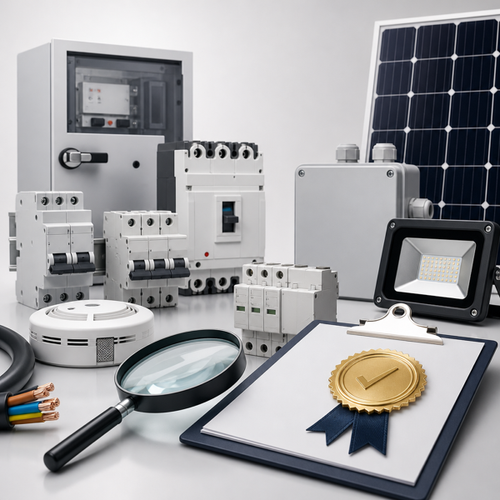
September 2026 saw the publication of two pivotal international standards in the Electrical Engineering sector. These new documents advance safety and system reliability in critical applications—specifically low-voltage electrical installations for swimming pools and fountains, and electric traction power supply systems in railway infrastructure. Stemming from CLC initiatives and harmonized with international best practices, these standards set rigorous benchmarks and reflect evolving industry needs. This article unpacks the essential updates, discusses compliance essentials, and delivers practical guidance for industry professionals.
Overview / Introduction
Electrical Engineering plays a central role across modern infrastructure, from public transportation to recreational facilities. In such environments, robust and comprehensive standards are vital to safeguard users and assure reliability. The two new standards published in September 2026 address key risk domains:
- The safety of electrical installations in places with a high risk of electric shock (such as swimming pools and fountains)
- The continued improvement of fixed electrical installations supplying power to railways, influencing both public safety and system interoperability
This article provides an in-depth analysis of these standards, explaining core requirements, key technical changes, target audiences, and the business implications of compliance.
Detailed Standards Coverage
prHD 60364-7-702:2025 – Requirements for Special Electrical Installations: Swimming Pools and Fountains
Low-voltage Electrical Installations – Part 7-702: Requirements for Special Installations or Locations – Swimming Pools and Fountains
Published by CLC on September 24, 2026, this updated standard focuses on the safety of low-voltage electrical installations in areas exposed to water hazards—specifically swimming pools, fountains, whirlpool spas, paddle pools, and similar environments. These locations are especially prone to electric shock risks due to the presence of water and user immersion.
What This Standard Covers and Its Scope
prHD 60364-7-702:2025 applies to:
- Locations with one or more basins (permanent or temporary) containing water where human or livestock immersion may occur
- Swimming and paddling pools, splash parks, whirlpools, and associated recreational facilities
- Fountains (with or without basins)
It establishes boundaries and requirements for electrical installations up to 4 meters from the water’s edge, defining zones 0, 1, and 2 with distinct protection and equipment rules.
Key Requirements and Specifications
- Protection against electric shock: Strict measures are mandated, including automatic disconnection, separation, and very-low voltage (SELV/PELV) systems.
- Zone classification: The standard refines descriptions for zone 0 (inside the water), zone 1 (immediately outside), and zone 2 (up to 2 m from the pool edge). Equipment type and installation method are dictated by zone.
- Supplementary equipotential bonding requirements: Ensures all conductive parts are interconnected to minimize step and touch voltages.
- Selection and erection of appropriate equipment: Devices must meet minimum IP (Ingress Protection) codes based on zone exposure to water and physical hazards.
- Updated rules for luminaires and heating systems: Specifies suitable equipment for safely illuminating and heating wet areas.
- Documented design and installation notes: Every installation requires thorough documentation covering compliance, inspection, and maintenance.
Who Needs to Comply?
- Electrical contractors and engineers designing installations for public or private pools, waterparks, spas, and fountains
- Facility owners and operators (sports clubs, hotels, municipalities)
- Compliance officers, facility managers, and safety auditors in recreation and hospitality sectors
Practical Implications for Implementation
Proper application of prHD 60364-7-702:2025 reduces electric shock and fire risk, directly impacting public safety and legal liability. It ensures installations remain serviceable, withstand the harsh aquatic environment, and meet the most current European legislative requirements.
Notable Changes from Previous Editions
- Expanded definitions for fountains (including those without basins)
- Broadened equipment requirements beyond pumps to cover all relevant electrical devices in wet vicinities
- Enhanced compatibility with the general IEC 60364 suite and improved guidance for documentation, testing, and inspection
Key highlights:
- Rigorous zone-specific requirements for electrical installations
- Enhanced protection measures—SELV/PELV, equipotential bonding
- Comprehensive updates for emerging types of pools and fountains
Access the full standard:View prHD 60364-7-702:2025 on iTeh Standards
prEN 50562-1:2025 – Safety of Electric Traction Power Supply Systems for Railways
Fixed Installations for Railway Applications – Safety of Electric Traction Power Supply Systems – Part 1: Generic Approach for Conventional Applications, Functions and Properties
Released by CLC on September 11, 2026, this standard sets out comprehensive requirements for the design, construction, operation, and maintenance of electric traction power supply systems—the backbone of modern rail, tram, and trolleybus networks.
What This Standard Covers and Its Scope
prEN 50562-1:2025 focuses on:
- Risk assessment, protective measures, and safety demonstration for both AC and DC fixed traction systems
- Application in railways, urban rail networks, and trolleybus infrastructure
- Coverage for new installations and major upgrades; applicable to at-grade, elevated, and underground deployments
- Establishment of codes of practice for conventional installations and guidance for deviation or innovation
This standard is closely aligned with the life-cycle framework laid out in EN 50126-1:2017 and EN 50126-2:2017, ensuring systematic hazard identification and mitigation.
Key Requirements and Specifications
- System definition and boundaries: Mandates detailed documentation of system functions, subsystems (substations, contact lines, return circuits), and all operational interfaces
- Risk assessment process: Incorporates hazard logs, structured analysis, and explicit risk acceptance principles (codes of practice, similarity analysis, or quantitative estimation)
- Protective measures: Detailed provisions for fault detection, emergency switching, isolation, earthing, and personnel safety across the entire traction network
- Interface management: Ensures consistent protective measures and interoperability between power supplies, rolling stock, track circuits, signaling, and communication networks
- Compliance with related standards: Direct reference to EN 50119 (contact lines), EN 50122 (earthing), EN 50488 (work safety), and EN IEC 62305 (lightning protection)
Who Needs to Comply?
- Rail infrastructure designers and system integrators
- National safety authorities, quality managers, and regulatory compliance officers
- Contractors and maintainers of stationary railway power installations
- Operators of urban and regional transit systems; specifically those planning upgrades or new projects
Practical Implications for Implementation
Implementing prEN 50562-1:2025 delivers structured processes for assessing and documenting risk, identifying hazards, and demonstrating the adequacy of protective measures. This leads to enhanced system reliability, minimized accident rates, and easier certification under EU legislative frameworks.
Notable Changes from Previous Editions
- Reorganization into two parts: Part 1 for conventional systems, Part 2 (forthcoming) for non-conventional/innovative cases
- Integration of previous annexes on risk acceptance, software safety, and cross-standard guidance into the clarified structure
- Streamlined approach to both hazard identification and the life-cycle risk assessment process
Key highlights:
- Universal framework for safe management of railway traction power systems
- Clear process for assessing, documenting, and mitigating system hazards
- Harmonization with proven best practices and supporting standards
Access the full standard:View prEN 50562-1:2025 on iTeh Standards
Industry Impact & Compliance
Business Impact
Both standards bring significant business implications for design, installation, and maintenance operations within the electrical engineering field:
- Competitive advantage: Early adoption showcases commitment to safety and operational excellence.
- Legal and contractual compliance: Ensures conformity to EU directives and national regulations, reducing legal exposure and risk of penalties.
- Market access and certification: Adherence is often mandatory for public procurement or operator licensing, especially in railway and public facility projects.
Compliance Considerations and Timelines
For swimming pools and fountains, compliance should be integrated into new projects immediately, with existing installations recommended for upgrade upon major refurbishment. For railway power systems, the standard applies to all new works and significant upgrades—asset owners should align procurement, engineering, and maintenance policies to the revised requirements.
Benefits of Adoption
- Stronger safety performance: Reduced risk of electric shock, fire, and accidents
- Reduced downtime and maintenance costs through robust documentation and risk management
- Improved insurance profiles and stakeholder trust
Risks of Non-Compliance
- Safety and legal liability for facility operators and contractors
- Higher likelihood of accidents or regulatory shutdowns
- Loss of business opportunities due to non-qualification in tenders
Technical Insights
Common Technical Requirements
Across both standards, organizations will find recurring themes:
- Detailed system documentation: Design files, maintenance plans, risk assessments
- Explicit hazard analysis: Using structured logs and reports
- Mandatory protective measures: From insulation, automatic disconnection, equipotential bonding, to safety interlocks
- Equipment conformity: Matching IP codes, voltage limits, and zoning rules
Implementation Best Practices
- Early gap analysis: Benchmark existing installations against new specifications
- Workforce training: Ensure that engineers and onsite personnel are fully briefed on zone distinction, equipment selection, and risk control tactics
- Documentation management: Maintain accessible, up-to-date installation and inspection records
- Regular audits: Verify that operational practices, safety checks, and maintenance match the standard’s intent
Testing and Certification Considerations
- Engage with accredited third-party inspection bodies for compliance checks
- Perform equipment-specific testing (IP rating, insulation, earthing efficacy)
- Schedule periodic re-inspections, particularly in aquatic or high-wear environments
- Align documentation with EN 50126 lifecycle steps for railway systems
Conclusion / Next Steps
The September 2026 updates to international electrical engineering standards reinforce the industry’s commitment to safety, reliability, and system interoperability. Whether upgrading a public pool or planning the electrification of a new metro line, successful implementation of prHD 60364-7-702:2025 and prEN 50562-1:2025 ensures compliance, fortifies public trust, and drives operational excellence.
Recommendations:
- Stay current: Review the full standards on iTeh Standards for in-depth specifications.
- Assess and plan: Conduct compliance checks on your relevant installations.
- Train teams: Equip staff and contractors with the latest requirements.
- Collaborate: Engage with qualified professionals for design, auditing, and certification.
For more authoritative updates and access to the latest Electrical Engineering standards, visit iTeh Standards and explore the full documentation.
Categories
- Latest News
- New Arrivals
- Generalities
- Services and Management
- Natural Sciences
- Health Care
- Environment
- Metrology and Measurement
- Testing
- Mechanical Systems
- Fluid Systems
- Manufacturing
- Energy and Heat
- Electrical Engineering
- Electronics
- Telecommunications
- Information Technology
- Image Technology
- Precision Mechanics
- Road Vehicles
- Railway Engineering
- Shipbuilding
- Aircraft and Space
- Materials Handling
- Packaging
- Textile and Leather
- Clothing
- Agriculture
- Food technology
- Chemical Technology
- Mining and Minerals
- Petroleum
- Metallurgy
- Wood technology
- Glass and Ceramics
- Rubber and Plastics
- Paper Technology
- Paint Industries
- Construction
- Civil Engineering
- Military Engineering
- Entertainment