


Electrical Engineering Standards Summary - September 2025
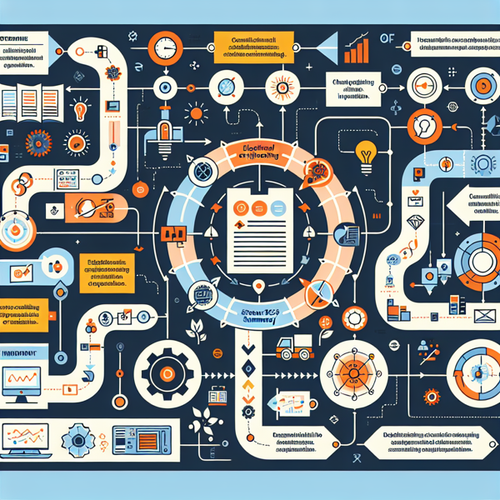
Looking back at September 2025, the Electrical Engineering sector saw a dynamic set of standards releases that collectively signal a maturing ecosystem focused on system integration, enhanced safety, and the future of electric power infrastructure. Five notable standards were published during this period, spanning critical areas such as communication and cybersecurity for EV charging infrastructure, updated guidance for electrical resistance trace heating in explosive atmospheres, and comprehensive frameworks for planning and specifying high voltage direct current (HVDC) grid systems. For professionals intent on maintaining compliance, driving innovation, or simply staying abreast of critical developments, this summary brings together the key points and underlying industry trends that shaped the month.
Monthly Overview: September 2025
The standards activity in Electrical Engineering during September 2025 reflected several important industry currents. The sector moved decisively toward digitalized, secure, and interoperable systems—whether in the context of charging station integration with local energy management or in the complex orchestration of HVDC grids spanning multiple vendors and geographies. Attention to safety in hazardous environments continues to escalate, especially with two major updates for trace heating in explosive atmospheres, which embrace new operational guidance and reinforce stringent testing requirements. The publication pace this month underscores the twin imperatives of supporting green energy transition (notably EV infrastructure and HVDC grids) and enforcing ever more rigorous approaches to system reliability and cyber resilience.
This period also marked the release of technical specifications specifically addressing interoperability and functional specification in HVDC systems—core themes for energy networks accommodating diverse new technologies and market entrants. When considered against typical monthly output, September 2025’s array of standards signaled an industry stepping up to challenges at the intersection of digital transformation, safety, and complex power system engineering.
Standards Published This Month
EN IEC 63380-3:2025 - Standard Interface for Connecting Charging Stations to Local Energy Management Systems, Part 3: Communication Protocol and Cybersecurity Specific Aspects
Standard interface for connecting charging stations to local energy management systems – Part 3: Communication protocol and cybersecurity specific aspects
This standard addresses the secure and interoperable exchange of information between local energy management systems (EMS) and electric vehicle (EV) charging stations. EN IEC 63380-3:2025 lays out the requirements for implementing secure transport protocols—namely SPINE (Smart Premises Interoperable Neutral-Message Exchange), SHIP (Smart Home IP), and ECHONET Lite—in the integration between charging stations and EMSs via resource managers.
It defines protocol architecture, commissioning processes, security mechanisms (including TLS, ECC cipher suites, certificate handling, and key management), and the structure of message data formats (XML/JSON). The standard is central to adoption by manufacturers and operators of EV charging infrastructure, building automation engineers, and all stakeholders working toward smart grid integration.
Key requirements:
- System-to-system authentication and cybersecurity controls
- Specification of interoperable message formats and protocols
- Scope for future protocol extension and support for additional standards
- Device discovery, registration, and secure data exchange procedures
In the broader regulatory context, this standard complements the EU’s push for standardized, secure, and scalable EV infrastructure and supports evolving privacy and cybersecurity mandates.
Key highlights:
- Defines secure communications architecture and commissioning for EMS and charging points
- Mandates use of standardized encryption and authentication mechanisms (TLS, ECC, etc.)
- Creates a foundation for future-proof, protocol-agnostic integration across regions and platforms
Access the full standard:View EN IEC 63380-3:2025 on iTeh Standards
IEC/IEEE 60079-30-1:2025 - Explosive Atmospheres, Part 30-1: Electrical Resistance Trace Heating – General and Testing Requirements
Explosive atmospheres – Part 30-1: Electrical resistance trace heating – General and testing requirements
This second edition revises the foundational test and compliance requirements for electrical resistance trace heating designed for use in explosive (hazardous) atmospheres. It addresses trace heaters as both factory and site-assembled units, including series, parallel, pad, and panel types. This edition introduces technical changes and updates in accordance with the latest understanding of explosion risk and system reliability, explicitly excluding applications demanding the highest levels of protection (EPL Ga, Da, Ma, Mb).
The standard details comprehensive requirements for design, mechanical strength, termination, circuit protection, and temperature requirements, as well as an extensive array of type and routine tests (dielectric, flammability, impact, deformation, and others). It also includes updated rules on marking, documentation, commissioning, and installation for both product manufacturers and site installers.
Who needs to comply: Manufacturers, project engineers, and operators of trace heating solutions for processing plants, refineries, and any location subject to explosive atmospheres as classified in IEC 60079 series.
Key highlights:
- Strict, updated testing requirements for multiple trace heater designs
- Mechanisms for safe temperature control, insulation, and mechanical integrity
- Guidance for system and product documentation, including Division method classification for North American users
Access the full standard:View IEC/IEEE 60079-30-1:2025 on iTeh Standards
IEC/IEEE 60079-30-2:2025 - Explosive Atmospheres, Part 30-2: Electrical Resistance Trace Heating – Guidance on Application for Design, Installation and Maintenance
Explosive atmospheres – Part 30-2: Electrical resistance trace heating – Guidance on application for design, installation and maintenance
Serving as the companion document to Part 30-1, this standard provides practitioners with guidance and best practices for the real-world application of electrical resistance trace heating in hazardous (explosive) areas outside the highest-risk zones (EPL Ga/Da). The document thoroughly addresses system design, installation processes, insulation selection, power supply and controls, documentation, and maintenance protocols. Special sections offer checklists, commissioning records, fault-finding and repair strategies, as well as extensive recommendations for thermal management and insulation of pipes, vessels, and other equipment.
This edition, a revision of the 2015 predecessor, expands on previous concepts, with particular attention to installation preparation, system reliability, personnel training, and safe operational practices. Additional annexes provide practical exemplars, formulas, and data sheets for field use.
Key highlights:
- Updated, field-oriented recommendations for safe trace heating system lifecycle
- Extended annexes for documentation, maintenance, and thermal calculations
- Applicability to both European zone-based and North American division-based classification systems
Access the full standard:View IEC/IEEE 60079-30-2:2025 on iTeh Standards
CLC IEC/TS 63291-1:2025 - HVDC Grid Systems and Connected Converter Stations – Guideline and Parameter Lists for Functional Specifications, Part 1: Guideline
High voltage direct current (HVDC) grid systems and connected converter stations – Guideline and parameter lists for functional specifications – Part 1: Guideline
CLC IEC/TS 63291-1:2025 delivers a comprehensive framework for the planning, specification, and execution of multi-vendor HVDC (High Voltage Direct Current) grid systems—especially those involving more than two converter stations and diverse system architectures (radial, meshed, or combined). Providing functional guidelines, it enables grid planners, designers, and operators to address interface coordination, system control, grid protection, testing, and AC/DC converter station integration.
This specification is instrumental for transmission operators, HVDC system integrators, and strategic planners working on interconnection, reliability, or resilience projects in high-voltage (>50 kV) networks. It also aligns with the latest IEC and CIGRE references, ensuring internationally consistent system approaches.
Notable features:
- Multi-layered grid coordination, including interoperability considerations from initial design through to testing
- Specific focus on AC/DC interfacing, grid protection schemes, information propagation, fault response, and ancillary services
- Recognition of both existing and future DC grid architectures, with placeholders for technological innovation (e.g., DC/DC converters)
Key highlights:
- Serves as the central reference for functional HVDC grid specification
- Ensures interoperability and performance across vendor solutions
- Supports utility compliance with modern grid integration and operation requirements
Access the full standard:View CLC IEC/TS 63291-1:2025 on iTeh Standards
CLC IEC/TS 63291-2:2025 - HVDC Grid Systems and Connected Converter Stations – Guideline and Parameter Lists for Functional Specifications, Part 2: Parameter Lists
High voltage direct current (HVDC) grid systems and connected converter stations – Guideline and parameter lists for functional specifications – Part 2: Parameter lists
This technical specification complements Part 1, providing exhaustive parameter lists to operationalize functional requirements in planning and execution of HVDC grid systems. CLC IEC/TS 63291-2:2025 organizes the critical parameters for system specification, serving as a practical tool for procurement, design engineering, and bid preparation across multi-vendor projects.
Included are structured lists covering AC/DC system parameters, protection and control interface characteristics, facility-specific requirements, and major design variables. It thereby ensures that all contracting parties employ common definitions and metrics, minimizing ambiguity and fostering transparency and interoperability.
Who benefits: Transmission system operators (TSOs), engineering consultants, vendors, project managers, and procurement teams involved in HVDC grid projects.
Key highlights:
- Provides an actionable, harmonized parameter reference for multi-vendor HVDC grid planning
- Enables transparent, consistent specification during procurement and contract management
- Supports system resilience, integration, and scalability across complex HVDC projects
Access the full standard:View CLC IEC/TS 63291-2:2025 on iTeh Standards
Common Themes and Industry Trends
A critical retrospective analysis of these September 2025 publications highlights several common threads:
- Integration and Interoperability: Both the EV charging and HVDC grid standards address the need for seamless data, signal, and power flows across heterogeneous and multi-vendor environments—a direct response to increasingly complex system architectures.
- Cybersecurity and Digitalization: The emphasis on formalized, secure communication protocols in EN IEC 63380-3:2025 signals recognition of cybersecurity as intrinsic to functional specification and compliance, especially for connected infrastructure.
- Safety in Hazardous Environments: The paired update of IEC/IEEE 60079-30-1 and -30-2 brings a renewed focus to trace heating solutions in explosive atmospheres. Their scope, which includes detailed product design and field installation guidance, reflects an industry-wide commitment to enhancing operational safety as system complexity and regulatory scrutiny intensify.
- Structured Project Specification: The CLC IEC/TS 63291 series marks a shift toward codification of functional requirements and parameter lists, supporting transparent procurement, streamlined implementation, and robust multi-party collaboration on HVDC projects.
- Harmonization with Global Standards: All documents demonstrate careful alignment with international frameworks, facilitating cross-border and multi-market deployments—a crucial factor in the globally networked energy sector.
Industry sectors most impacted include EV infrastructure providers, transmission system operators, hazardous process industries, and specialist engineering contractors.
Compliance and Implementation Considerations
For organizations affected by these standards, several practical steps and priorities are recommended:
- Gap Analysis: Conduct detailed reviews of existing protocols, procedures, and documentation against the new requirements (especially in cybersecurity, trace heating safety, and HVDC system coordination).
- Training & Awareness: Ensure engineering teams, site operatives, and quality/compliance staff are briefed on updated testing methods, parameter lists, and commissioning procedures.
- Procurement Alignment: Update procurement templates, RFQs, and vendor engagement procedures to reference the exact parameter lists and definitions established in the CLC IEC/TS 63291 series.
- Cybersecurity Upgrades: For EV charging and grid integration, prioritize implementing specified encryption, authentication protocols, and secure key management.
- Documentation & Records: Establish robust recordkeeping for field documentation, commissioning, and compliance (as required by IEC/IEEE 60079-30-1 and -30-2).
Timeline Considerations:
- Many compliance dates are tied to national adoption, but organizations should act now to integrate requirements in ongoing projects and system upgrades. Early adoption may also facilitate market access in regulated environments.
Resources:
- iTeh Standards provides authoritative access to the full text of all standards, alongside supporting materials for implementation and compliance management.
Conclusion: Key Takeaways from September 2025
September 2025 was a pivotal month for the Electrical Engineering sector, characterized by landmark progress in system interoperability, cybersecurity, and safe operation in hazardous environments. The new and updated standards support the sector’s evolution—toward digitalized, secure, and highly integrated systems—while responding to both regulatory and market imperatives.
Professionals in this field should:
- Prioritize technical reviews and staff training aligned with revised standards
- Engage with parameter-driven, transparent procurement and system specification processes
- Invest in compliance tracking and document control to streamline audits and implementation
- Monitor developments as these standards will influence regulatory frameworks and procurement in the years ahead
Staying current with these standards is essential—not only for compliance and market access but for ensuring best practices in safety, operational reliability, and technical innovation. For a deeper understanding or to obtain the latest authoritative documents, visit iTeh Standards and review the details of each publication.
Categories
- Latest News
- New Arrivals
- Generalities
- Services and Management
- Natural Sciences
- Health Care
- Environment
- Metrology and Measurement
- Testing
- Mechanical Systems
- Fluid Systems
- Manufacturing
- Energy and Heat
- Electrical Engineering
- Electronics
- Telecommunications
- Information Technology
- Image Technology
- Precision Mechanics
- Road Vehicles
- Railway Engineering
- Shipbuilding
- Aircraft and Space
- Materials Handling
- Packaging
- Textile and Leather
- Clothing
- Agriculture
- Food technology
- Chemical Technology
- Mining and Minerals
- Petroleum
- Metallurgy
- Wood technology
- Glass and Ceramics
- Rubber and Plastics
- Paper Technology
- Paint Industries
- Construction
- Civil Engineering
- Military Engineering
- Entertainment