


February 2026: New Safety Standards for Mobile Road Construction Machinery
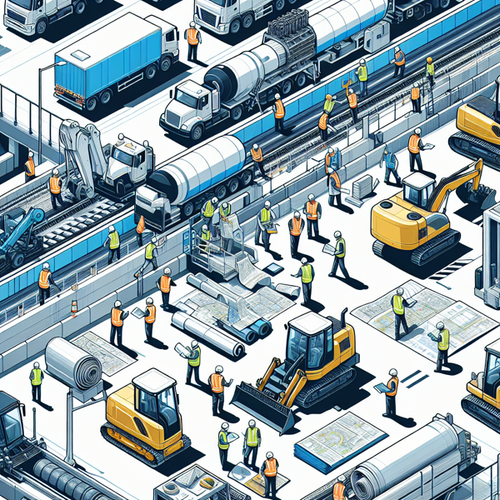
In February 2026, the civil engineering sector witnessed a pivotal update with the publication of five new ISO standards for mobile road construction machinery safety. Spanning from overarching safety requirements to machinery-specific provisions, these standards set a higher benchmark for operational safety, risk reduction, and regulatory alignment across a broad spectrum of construction equipment. Whether you are an equipment designer, project engineer, site manager, or compliance professional, understanding these updates is crucial to ensure the safety and efficiency of your operations and support ongoing compliance efforts.
Overview
Civil engineering is defined by complex projects, stringent safety needs, and a growing demand for robust machinery standards. Road construction sites, in particular, are dynamic environments where mobile machinery play a critical role in delivering quality results—yet also expose workers to significant hazards. International standards, such as those from ISO, serve as a baseline for machine manufacturers, operators, and public sector clients to assess safety, streamline design, and establish compliance frameworks.
In this article, we break down the five new ISO standards published in February 2026, all part of the ISO 20500 series. You’ll discover:
- The scope and key requirements of each standard
- Who these standards are designed for and why they matter
- The practical benefits of adoption
- Steps to achieve compliance and mitigate risks
Detailed Standards Coverage
ISO 20500-1:2026 – Common Safety Requirements for Mobile Road Construction Machinery
Mobile road construction machinery — Safety — Part 1: Common requirements
The foundational document in the ISO 20500 series, this standard lays out the common safety requirements applicable to a wide array of mobile road construction machinery. It addresses the significant hazards, hazardous situations, and events that operators or bystanders may encounter when the machinery is used as intended (and when reasonably foreseeable misuses are taken into account).
What does this standard cover?
- Visibility criteria and operator field of view
- Lighting and reflective devices
- Braking, steering, and emergency stop systems
- Operator stations and ergonomic design (covering 5–95 percentile of operator body dimensions)
- Control system reliability; protection against uncontrolled motion
- Conveyor safety, hot surface controls, and access systems
- Fire protection measures, tank and pressurized systems safety
- Noise and vibration reduction principles
This standard acts as the umbrella for several machinery families; machine-specific requirements (such as for milling or paver-finishers) are addressed in ISO 20500-2 through ISO 20500-7. Compliance ensures manufacturers and operators meet relevant safety levels, aligning with ISO 12100 principles for hazard recognition, risk reduction, and documentation.
Who must comply?
- Machinery manufacturers
- Equipment importers and distributors
- Fleet managers for civil engineering contractors
- Site safety officers
Key highlights:
- Comprehensive hazard identification; strong focus on operator safety
- Harmonization with ISO 3411 for ergonomic dimensions
- Does not cover ride-on machinery for dangerous goods or lightning hazards
Access the full standard:View ISO 20500-1:2026 on iTeh Standards
ISO 20500-2:2026 – Specific Requirements for Road-Milling Machines
Mobile road construction machinery — Safety — Part 2: Specific requirements for road-milling machines
This standard supplements Part 1, addressing all significant hazards across the lifecycle of road-milling machines—including foreseeable misuses. It is specifically relevant for mobile machines used to mill and remove material from paved surfaces.
Key requirements include:
- Enhanced visibility and operator safety devices specific to milling operations
- Guidelines for emission reduction devices (ERD) and evacuation systems for airborne particles
- Requirements for access/system maintenance and emergency procedures
- Precise controls for milling equipment and conveyors, ensuring safe operation and stoppage
- Test procedures for noise and airborne emission capture efficiency (tracer gas test methods)
Who must comply?
- Manufacturers of milling machines
- Civil engineering contractors using road-milling equipment
- Equipment safety engineers
Practical implications: Adoption enables manufacturers and project teams to minimize particulate exposure, enhance equipment usability, and verify compliance through documented test procedures. Notably, the standard references the development of future vibration test codes.
Key highlights:
- Introduction of ERD requirements and capture efficiency testing
- Procedures for operator visibility validation and noise assessment
- Not applicable to equipment built before February 2026
Access the full standard:View ISO 20500-2:2026 on iTeh Standards
ISO 20500-3:2026 – Requirements for Soil-Stabilising and Recycling Machines
Mobile road construction machinery — Safety — Part 3: Specific requirements for soil-stabilising machines and recycling machines
Part 3 zooms in on self-propelled or towed soil-stabilising and recycling machines, ensuring all hazards relevant to their use are mitigated, from pulverization and mixing to the recycling of road materials.
This standard covers:
- Visibility standards based on operator station design and machine operation
- Ergonomic operator stations, particularly cabs with mandatory dust filtration and HVAC readiness
- Controls for material mixing components (including emergency stop capabilities)
- Protective requirements against dust (cement, lime), with enforced filter and air inlet specifications
- Noise, vibration, and electromagnetic compatibility (EMC) requirements
Who benefits from this standard?
- Manufacturers and rental companies of soil-stabilising and recycling machinery
- Contractors performing groundwork in road construction and road recycling
- Maintenance and safety compliance managers
Practical implications: By adhering to ISO 20500-3, organizations dramatically reduce operator exposure to harmful dust and noise, enhance machine reliability, and support sustainable road rehabilitation practices that reuse site materials.
Key highlights:
- Cabs with high-performance dust filters now required (where applicable)
- New requirements for visibility tests and mixing component stops
- Focus on minimizing airborne contaminants and operator fatigue
Access the full standard:View ISO 20500-3:2026 on iTeh Standards
ISO 20500-4:2026 – Requirements for Compaction Machines
Mobile road construction machinery — Safety — Part 4: Specific requirements for compaction machines
Focused on vibratory plates and vibratory rammers (excluding ride-on types), this part harmonizes safety for hand-guided or remote-controlled compactors used in civil engineering and road construction.
Notable requirements:
- Safeguards for remote-controlled machines, including auto-stop controls and emergency shut-off measures
- Adjusted requirements for small machines (<300 kg), allowing structural tie-downs in lieu of dedicated points
- Detailed noise and vibration measurement protocols, prioritizing operator well-being
- Clear criteria for control system safety, emergency stoppage, and maintenance accessibility
Who must comply?
- Manufacturers of compaction equipment
- Contractors deploying vibratory plates and rammers on job sites
- Site safety officers overseeing hand-guided equipment
Implementation takeaways: Companies benefit by significantly reducing the risks of hand-arm vibration, accidental activation of remote compactors, and interface confusion. The focus on documentation and evidence-based safety verification supports audit readiness.
Key highlights:
- Remote control signal safety and emergency stop enhancements
- Reduction of required controls for compactors under 300 kg
- Specific hand-arm vibration measurement and noise test protocols
Access the full standard:View ISO 20500-4:2026 on iTeh Standards
ISO 20500-5:2026 – Requirements for Paver-Finishers
Mobile road construction machinery — Safety — Part 5: Specific requirements for paver-finishers
Paver-finishers, essential for creating smooth, uniform surfaces on modern roadways, operate under unique hazards and functional demands. This standard introduces stringent requirements for their design, operation, and maintenance.
In focus:
- Operator station layout options (with ergonomic access, controls, and visibility)
- Performance requirements for emission reducing devices (ERD) that capture harmful fumes from bitumen and additives
- Testing procedures for ERD efficiency using tracer gas and measurable capture criteria
- Controls for binder spraying, heating, and tank safety
- Marking, warning signs, and noise emission requirements
Target audience:
- Manufacturers of paver-finishers
- Highway construction contractors
- Safety compliance managers and project supervisors
Why it matters: Effective implementation means workers are shielded from hazardous emissions, management can document compliance with EN and ISO norms, and clients are assured of safe, high-quality finished surfaces.
Key highlights:
- ERD requirements and performance verification by tracer-gas methods
- Precise operator ergonomics and visibility benchmarks
- Enhanced marking and warning measures
Access the full standard:View ISO 20500-5:2026 on iTeh Standards
Industry Impact & Compliance
The introduction of these ISO 20500 series standards represents a leap forward for the civil engineering community. Firms that proactively adopt the new guidelines will:
- Minimize risky workplace incidents involving mobile equipment
- Satisfy both client and regulatory demands for safe, well-documented site machinery
- Reduce downtime and occupational health costs by tackling noise, vibration, and emissions exposures
- Streamline procurement by requiring suppliers to demonstrate adherence to up-to-date international standards
Compliance considerations:
- New equipment must comply as of February 2026; retrofitting older equipment is not required but may be advisable
- Key compliance steps include updating procurement, training, safety auditing, and maintenance documentation
- Non-compliance risks include regulatory penalties, workplace injuries, project delays, and client dissatisfaction
Technical Insights
Across the ISO 20500 series, a set of technical best practices emerges:
- Visibility: Emphasis on objective, testable visibility criteria tailored for each machine type enhances situational awareness and collision avoidance.
- Operator station design: Human factors engineering—addressing noise, vibration, ergonomic controls, and filtered air—are mandatory for many machine types.
- Emission control: The increased rigor in airborne particulate and volatile emissions capture (via ERD and EVAC systems) addresses growing environmental and occupational health concerns.
- Testing and documentation: Adoption of standardized noise/vibration measurement, tracer-gas testing for emission devices, and robust operator manual requirements underpin verifiable compliance and quality management systems.
- Certification: Many organizations will benefit from third-party certification and audits to demonstrate ISO compliance during client tenders or government contracts.
Conclusion / Next Steps
The February 2026 release of these five ISO 20500 standards marks a defining moment for road construction safety and efficiency. Organizations are encouraged to:
- Review the full text of each relevant standard and update internal policies
- Conduct gap analyses on current machinery, practices, and documentation
- Train staff on new requirements and safe equipment operation
- Engage with machinery suppliers and third-party auditors to verify compliance
- Stay ahead by monitoring upcoming releases (including Part 2 of this series, coming soon)
For further details, comprehensive documentation, and assistance with certification, access the full range of ISO 20500 standards on iTeh Standards.
Categories
- Latest News
- New Arrivals
- Generalities
- Services and Management
- Natural Sciences
- Health Care
- Environment
- Metrology and Measurement
- Testing
- Mechanical Systems
- Fluid Systems
- Manufacturing
- Energy and Heat
- Electrical Engineering
- Electronics
- Telecommunications
- Information Technology
- Image Technology
- Precision Mechanics
- Road Vehicles
- Railway Engineering
- Shipbuilding
- Aircraft and Space
- Materials Handling
- Packaging
- Textile and Leather
- Clothing
- Agriculture
- Food technology
- Chemical Technology
- Mining and Minerals
- Petroleum
- Metallurgy
- Wood technology
- Glass and Ceramics
- Rubber and Plastics
- Paper Technology
- Paint Industries
- Construction
- Civil Engineering
- Military Engineering
- Entertainment