


February 2026 Updates: Key Civil Engineering Standards for Road Machinery and Underground Pipelines
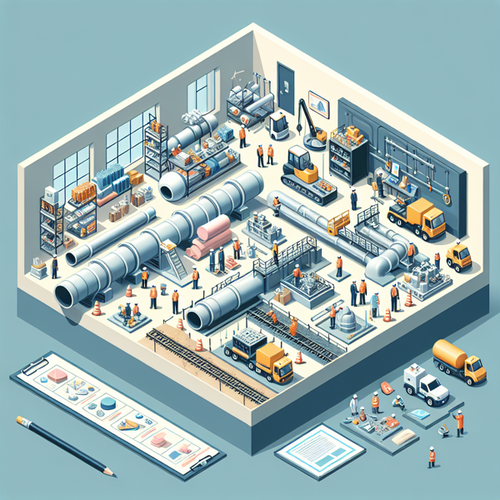
As the civil engineering sector evolves to meet the demands of safer, smarter infrastructure, February 2026 introduced four pivotal international standards that reshape both road construction machinery safety and underground utility rehabilitation. These updates impact mobile feeder and slipform paver operations and set a new quality benchmark for piping systems rehabilitating sewers and water supply networks. For professionals invested in safety, compliance, and performance, understanding these fresh requirements is an immediate priority.
Overview
Civil engineering stands at the heart of modern society’s infrastructure needs—spanning roadways, bridges, utilities, and beyond. Consistent international standards foster not only quality and innovation, but also public safety and operational efficiency. With rapid advancements in machinery and materials, regulatory frameworks must keep pace to address emerging hazards and performance expectations.
This article highlights four ISO standards published in February 2026 that practitioners cannot afford to overlook:
- Two standards extend safety requirements for road construction machinery,
- Two focus on materials and techniques for underground pipeline rehabilitation using polyethylene (PE) and unplasticized poly (vinyl chloride) (PVC-U).
Read on for in-depth analysis, actionable guidance, and practical compliance tips specifically crafted for civil engineering professionals, safety managers, contractors, and researchers.
Detailed Standards Coverage
ISO 20500-6:2026 – Mobile Road Construction Machinery: Safety for Mobile Feeders
Mobile road construction machinery — Safety — Part 6: Specific requirements for mobile feeders
This standard addresses all major hazards and hazardous situations throughout the lifecycle of mobile feeders—crucial machines for continuous transfer of paving material on road construction sites. Building upon the foundational ISO 20500-1:2026, this part delivers specific additions and modifications tailored to the unique operational realities of mobile feeders.
Scope and Applicability
- Targets self-propelled mobile feeders used to transfer paving material without direct physical contact with paver-finishers.
- Covers hazards from design to use and foreseeable misuse, per ISO 12100:2010.
- Not applicable to mobile feeders manufactured before February 2026.
Key Safety Requirements
- Visibility: Strict criteria for operator sightlines around the machine—including performance benchmarks and detailed testing protocols to avoid blind spots.
- Controls: Enhanced requirements for slewing conveyors, including hold-to-run mechanisms and safeguards against unintended activation.
- Protection Systems: Mandates robust protection to shield operators from hazards like material burial and accidental movement of hopper inserts.
- Signal Devices: Requirement for yellow flashing lights on slewing discharge conveyors to warn of crushing or shearing risks.
- Electromagnetic Compatibility (EMC): Specifies antenna placement for safe operation around sensitive controls.
- Noise: Standardizes noise emission measurement and documentation through detailed test protocols.
- Operator Guidance: Operator manuals now require comprehensive instructions for cleaning, handling hazardous goods, safe transport, and job-specific operation.
Who Should Comply
- Manufacturers and designers of mobile road construction machinery.
- Contractors, fleet operators, and site safety managers employing mobile feeders on road projects.
- Equipment procurement professionals seeking compliant products.
Notable Changes
- Substantial visibility and EMC enhancements.
- Expanded operator information requirements.
- Specific protocols for slew conveyor and safety verification.
Key highlights:
- Rigorous operator visibility standards reduce accident risks.
- Improved warning and signaling device requirements.
- Operator guidance now includes transport and hazardous material restrictions.
Access the full standard:View ISO 20500-6:2026 on iTeh Standards
ISO 20500-7:2026 – Mobile Road Construction Machinery: Safety for Slipform Pavers and Related Machines
Mobile road construction machinery — Safety — Part 7: Specific requirements for slipform pavers and related machines
Slipform pavers are highly specialized machines utilized for extruding and shaping continuous concrete barriers, pavements, and related structures. ISO 20500-7:2026, in conjunction with Part 1, establishes critical requirements to control operational risk and guarantee operator and bystander safety.
Scope and Applicability
- Applies to slipform pavers and related machinery (e.g., texture curing machines, concrete placers/spreaders).
- Focuses on full lifecycle hazards associated with both intended use and reasonably foreseeable misuse.
- Does not apply to machines manufactured before February 2026.
Key Safety Requirements
- Enhanced Visibility: Adopts advanced operator field-of-view testing and specific measurement protocols for masking.
- Operation and Handling: Tailors handling rules, especially around complex devices like tie bar and dowel bar inserters.
- Operator Access: Allows for some flexibility in access system requirements (such as higher first steps in non-operational modes) while maintaining safety around wheels and tracks.
- Protection Mechanisms: Mandates positive interlocks to immobilize DBIs and TBIs during maintenance or jam-clearing.
- Conveyor and Hopper Guards: Requires minimum mesh width and clearance standards to prevent access to hazardous zones.
- Signaling: Audible and visual warnings for folding conveyors; prominent hazard signage on critical elements (e.g., trimmers, distributors).
- EMC: Sets antenna placement to ensure interference-free operation of controls and sensors.
- Noise Measurement: Codifies process for standardized noise reporting and assessment.
Who Should Comply
- Manufacturers of slipform pavers, texture curing machines, and associated units.
- Construction contractors deploying road paving equipment.
- Safety and compliance managers focused on machinery operation.
Notable Changes
- Significantly updated operator visibility criteria and warning signage requirements.
- New protocols for protection of maintenance personnel.
- Refined requirements for conveyor guarding and operational safety signals.
Key highlights:
- Enforced standards for operator visibility and field-of-view.
- Interlocked safety systems on tie and dowel bar inserters.
- Standardized noise emission testing for compliance and operator well-being.
Access the full standard:View ISO 20500-7:2026 on iTeh Standards
ISO 11300-1:2026 – Piping Systems for Rehabilitation: Polyethylene (PE) Material
Piping systems for rehabilitation of underground drains, sewers and water supply networks — Part 1: Polyethylene (PE) material
ISO 11300-1:2026 establishes performance requirements and test methods for PE piping and fittings used in the rehabilitation and trenchless replacement of underground non-pressure and pressure pipelines, including those carrying drinking water. The standard supports a variety of modern construction methods for upgrading critical water infrastructure.
Scope and Applicability
- Covers PE pipes and fittings from manufacturing to as-installed conditions.
- Addresses both linings (continuous and close-fit) and trenchless replacements (pipe bursting, extraction, HDD, impact moling).
- Reference temperature: 20°C (with guidance for up to 40°C via ISO 4427-1:2019).
- Includes pipes with single or multi-layered co-extruded construction and diverse joining technologies (butt fusion, electrofusion, mechanical).
- Not applicable to existing, in-place pipelines or systems outside the designated materials/techniques.
Key Requirements
- Material Quality: Specifies requirements for virgin, reprocessable, or recyclable PE material.
- Physical/Mechanical Properties: Outlines appearance, color, dimensions, tensile, and creep resistance.
- Jointing & Installation: Guidance and test methods for all main joining techniques—ensuring watertight, robust assemblies post-installation.
- Testing and Marking: Comprehensive marking and traceability rules, process-related and final testing, and documentation requirements.
- Installation Best Practices: Recommendations for preparatory, handling, storage, safety, equipment use, and as-installed verification.
- Ancillary Elements: Criteria for non-pipe components integral to the system.
Who Should Comply
- Pipe manufacturers, piping system designers, and suppliers.
- Utilities, municipal agencies, and contractors specializing in underground rehabilitation.
- QA/inspection professionals and certification bodies assessing pipeline renewal projects.
Notable Changes
- Technical consolidation and expansion of PE pipe and fitting requirements.
- Modernization to reflect prevailing trenchless technologies.
- Systematic approach to marking, documentation, and post-installation conformity.
Key highlights:
- Supports multiple trenchless and renovation techniques for PE systems.
- Robust requirements for as-manufactured and as-installed conditions.
- Test methods for materials, fittings, joints, and system performance.
Access the full standard:View ISO 11300-1:2026 on iTeh Standards
ISO 11300-3:2026 – Piping Systems for Rehabilitation: Unplasticized Poly (Vinyl Chloride) (PVC-U) Material
Piping systems for rehabilitation of underground drains, sewers and water supply networks — Part 3: Unplasticized poly (vinyl chloride) (PVC-U) material
This standard addresses the requirements and test methods for pipes and fittings made from PVC-U for use in the rehabilitation of underground non-pressure drains and sewers—specifically via the close-fit lining technique commonly used for pipeline renewal in urban infrastructure projects.
Scope and Applicability
- Applicable only to non-pressure underground pipelines (drains and sewers).
- Service temperature for PVC-U must not exceed 35°C.
- Focused exclusively on lining with close-fit pipes (does not cover other renovation or replacement tech).
Key Requirements
- Material Performance: Focus on virgin, reprocessable, and recyclable PVC-U for manufacturing.
- Mechanical and Physical Properties: Details minimum requirements for tensile strength, ring stiffness, impact properties, and resistance to chemical exposure and deformation.
- Dimensional Control: Precise standards for dimensions, tolerances, and pipe/fitting geometry.
- Joint Integrity: Testing for integral joints and socket fusion techniques where applicable.
- Marking and Documentation: Rules for comprehensive system marking, installation documentation, and performance reports.
- Installation Guidance: Best practices for preparatory work, safety during trenchless installation, and post-installation verification.
Who Should Comply
- Pipe manufacturers focusing on PVC-U products for underground utilities.
- Contractors and system installers using close-fit lining methods.
- Quality managers and procurement professionals in municipal utilities and consulting engineering firms.
Notable Changes
- Technical revision in alignment with contemporary installation techniques and regional requirements.
- Enhanced focus on documented installation practices and post-process testing.
Key highlights:
- Complete performance criteria for PVC-U close-fit piping systems.
- Targeted guidance for non-pressurized drains and sewer rehabilitation.
- Extensive emphasis on test procedures and consistent marking/documentation.
Access the full standard:View ISO 11300-3:2026 on iTeh Standards
Industry Impact & Compliance
The February 2026 standards collectively strengthen safety, reliability, and project economics across key civil engineering activities—from road construction to underground water management. Proactive adoption addresses several critical dimensions:
- Regulatory Compliance: Manufacturers and operators are required to meet new safety and material standards to fulfill legal obligations and minimize liability.
- Competitive Edge: Early adopters can leverage compliance as a market differentiator in bids and client engagement.
- Risk Reduction: Enhanced visibility, interlocks, protection systems, and standardized documentation lower the chance of accidents, equipment failure, and costly rework.
- Improved Quality: Rigorous test protocols and installation guidelines foster higher-performing, longer-lasting infrastructure assets.
- Sustainability and Future-readiness: Material and installation advancements support eco-friendly, cost-efficient, and future-proofed solutions for urban infrastructure needs.
Compliance Timelines
- All equipment and systems covered must conform to the updated standards for machinery or piping produced after the publication date.
- Existing installations generally exempt but should be reviewed for retrofit opportunities.
- Organizations should update procurement specs, employee training, and QA processes without delay.
Technical Insights
While each standard has a focused scope, several technical threads weave through all four:
- Verification and Testing: Whether machinery safety or material properties for pipes, verification methods—including calculation, visual checks, physical measurement, and functional testing—are embedded throughout.
- Operator Safety: Improved signage, warning signals, and operator guides reflect modern site realities and accident-prevention best practices.
- Documentation: From operator manuals to installation practice, every standard emphasizes rigorous documentation and traceability.
- Material and Installation Quality: Greater clarity on approved materials (virgin, recycled, composite), environmental tolerances (temperature, chemical), and mechanical properties ensure long-term system performance.
- Trenchless Technologies: Both piping standards assume widespread use of renovation and trenchless installation, mandating as-installed verifications and system compatibility.
- Certification: The standards integrate easily with ISO-conformant quality and environmental management systems (e.g., ISO 9001, ISO 14001), simplifying integration into enterprise-wide workflows.
Implementation Tips
- Early Engagement: Involve QA and compliance teams at project specification to avoid surprises.
- Supplier Collaboration: Confirm all supplied machinery or piping meets the current edition of the relevant standard.
- Training: Update employee procedures and training modules—especially around new safety precautions, operator documentation, and testing regimes.
- Installation Audits: Regularly audit installation and commissioning practices for conformity with test and documentation requirements.
- Certify and Record: Maintain thorough, auditable records for inspection and certification bodies.
Conclusion & Next Steps
The February 2026 releases mark a significant leap forward for civil engineering professionals, particularly those tasked with the specification, acquisition, and safe operation of construction machinery and pipeline systems.
Key takeaways:
- Civil engineering standards now reflect the latest technological, safety, and performance benchmarks.
- New requirements support not only accident reduction but also robust, sustainable infrastructure outputs.
Recommendations:
- Review your current procurement and operational materials against these new standards.
- Engage with suppliers and contractors to confirm up-to-date compliance.
- Access the full standards at iTeh Standards and implement immediate training and documentation upgrades.
For ongoing updates, best practices, and industry insights, continue exploring iTeh Standards. Staying informed and compliant isn't just responsible—it's a strategic advantage.
Categories
- Latest News
- New Arrivals
- Generalities
- Services and Management
- Natural Sciences
- Health Care
- Environment
- Metrology and Measurement
- Testing
- Mechanical Systems
- Fluid Systems
- Manufacturing
- Energy and Heat
- Electrical Engineering
- Electronics
- Telecommunications
- Information Technology
- Image Technology
- Precision Mechanics
- Road Vehicles
- Railway Engineering
- Shipbuilding
- Aircraft and Space
- Materials Handling
- Packaging
- Textile and Leather
- Clothing
- Agriculture
- Food technology
- Chemical Technology
- Mining and Minerals
- Petroleum
- Metallurgy
- Wood technology
- Glass and Ceramics
- Rubber and Plastics
- Paper Technology
- Paint Industries
- Construction
- Civil Engineering
- Military Engineering
- Entertainment