


August 2026 Updates: New Standards Raise the Bar in Aircraft and Space Engineering
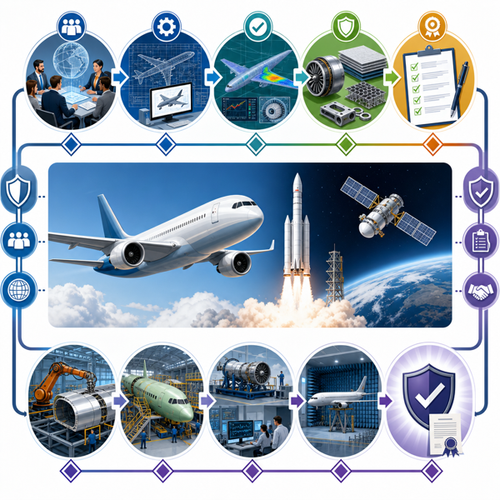
With rapid advancements shaping the aerospace landscape, August 2026 brings significant updates for Aircraft and Space Vehicle Engineering professionals. Five crucial international standards have just been released, influencing everything from system safety to advanced optical cable testing, launch vehicle interfaces, and the safe operation of uncrewed aircraft systems (UAS). These developments will impact how organizations manage risk, enhance operational reliability, and achieve global compliance—making it vital for industry leaders, engineers, and compliance officers to stay up to date.
Overview / Introduction
Aircraft and Space Vehicle Engineering is an ever-evolving sector where safety, performance, and interoperability are non-negotiable. International standards play a pivotal role in ensuring that organizations worldwide operate with best-in-class protocols, consistent terminology, and proven technical requirements.
This article provides a comprehensive deep dive into five newly published standards, effective August 2026. Whether your focus is on space system safety, testing aerospace optical cables, defining launch interfaces, or operationalizing UAS programs, you'll find actionable insights to help you:
- Understand new compliance requirements
- Implement technical and organizational best practices
- Align with up-to-date global standards
Detailed Standards Coverage
ISO 14620-1:2026 - Space Systems Safety Requirements (System Safety)
Space systems — Safety requirements — Part 1: System safety
ISO 14620-1:2026 establishes the foundational framework for safety management in all phases of space systems projects. Covering satellites, launch vehicles, ground support equipment, and personnel, it prescribes a robust safety program designed to minimize risks to life, property, and the environment.
Key requirements include establishing a dedicated safety organization, assigning clear safety representative roles with authority to halt operations, a review cycle for continuous safety assessment, and robust guidelines for hazard identification, risk management, and program documentation. Crucially, the standard requires systematic training, incident reporting, and a lessons-learned feedback loop.
This standard is vital for organizations involved in any aspect of space projects—manufacturers, integrators, launch service providers, and component suppliers—where system hazards may arise during development, launch, or operation. The 2026 edition reflects current industry safety policy, clarifies documentation access for customers, mandates more rigorous data package management, and strengthens the requirements for verifying compliance throughout a project's lifecycle.
Key highlights:
- Defines a mandatory system safety program and organizational structure
- Specifies requirements for risk, hazard, and failure tolerance analysis
- Mandates training, incident documentation, and continuous improvement
Access the full standard:View ISO 14620-1:2026 on iTeh Standards
ISO 23665:2026 - Training for Personnel in Uncrewed Aircraft Systems Operations
Uncrewed aircraft systems — Training for personnel involved in UAS operations
Addressing the explosive growth of uncrewed aircraft (UA) applications, ISO 23665:2026 sets out comprehensive criteria for training organizations, remote pilots, visual observers, fleet managers, and all staff involved in UAS operations. Structured around international best practices, this standard ensures personnel meet global competency benchmarks, regardless of their operational context or jurisdictional regulations.
The standard specifies curriculum content, trainer qualifications, recordkeeping, evaluation protocols, and scenarios ranging from simple VLOS (Visual Line of Sight) operations to complex BVLOS (Beyond Visual Line of Sight) and high-risk missions. Notable updates in this edition include alignment with ICAO’s risk-based categories, expanded training for BVLOS operations, and the formal introduction of courses for visual observers and fleet managers.
Organizations providing or receiving UAS operator training, including private operators, commercial drone fleets, and public sector agencies, must comply with this standard to ensure safe, effective, and legally recognized operations on a global stage.
Key highlights:
- Defines practical training requirements for all UAS operator categories
- Aligned with ICAO risk frameworks and supports international personnel mobility
- Introduces formalized training and verification for visual observers and fleet managers
Access the full standard:View ISO 23665:2026 on iTeh Standards
FprEN 3745 - Aerospace Optical Fibres and Cables: Test Methods
Aerospace series - Fibres and cables, optical, aircraft use - Test methods
FprEN 3745 provides an authoritative suite of test methods for optical fibres and cables designed for aircraft and aerospace use. The standard details precise definitions and testing procedures for properties such as visual inspection, dimensions, attenuation, environmental resistance, mechanical durability, and more. It integrates the latest updates from the EN 3745 series, ensuring harmonized European practice.
Key stakeholders—cable manufacturers, aerospace system integrators, and testing laboratories—rely on this standard to qualify fibre and cable products for new installations or for maintenance in existing fleets. The 2026 revision notably adds or updates procedures for thermal shock, ageing, nuclear radiation resistance, as well as new tests addressing mechanical impacts and cable implementation in demanding environments.
By adhering to these protocols, organizations guarantee the highest levels of safety, reliability, and regulatory conformity for optical communication systems in aircraft.
Key highlights:
- Comprehensive test regimens for optical properties, environment, and mechanics
- Integrated with European aerospace standards and references
- Updated and expanded methods for environmental and mechanical resilience
Access the full standard:View FprEN 3745 on iTeh Standards
ISO 14303:2026 - Space Systems: Launch-Vehicle-to-Spacecraft Interfaces
Space systems — Launch-vehicle-to-spacecraft interfaces
ISO 14303:2026 standardizes the technical and organizational interface requirements between launch vehicles (LV) and spacecraft (SC) across all mission profiles and integration scenarios. It specifies the mechanical, electrical, and electromagnetic compatibility requirements, data exchange formats, and verification methods to support reliable launch campaigns, reduce integration errors, and prevent costly miscommunication.
This document targets all organizations designing, integrating, or operating launch and spacecraft systems—OEMs, integrators, engineering teams, and mission managers. The latest edition enhances clarity around electrical and data interfaces, introduces more precise requirements for mechanical adapter specifications, and provides updated procedures for in-flight telemetry compatibility and verification analysis.
Implementing ISO 14303 is critical for risk reduction, schedule integrity, and maximizing mission success across orbital, suborbital, and escape missions.
Key highlights:
- Details standardized formats for presenting LV-SC interface data
- Covers mechanical, electrical, and RF interface specifications
- Streamlines verification, data responsibilities, and mission reliability
Access the full standard:View ISO 14303:2026 on iTeh Standards
ISO 21384-3:2026 - Uncrewed Aircraft Systems Operational Procedures
Uncrewed aircraft systems — Part 3: Operational procedures
ISO 21384-3:2026 presents a comprehensive process model for the safe commercial operation of uncrewed aircraft systems in any application, region, or regulatory context. The standard encompasses safety management, operator qualification, airspace compliance, documentation, contingency/emergency handling, and external service integration (such as command and control links).
Reflecting the latest international best practices, this edition is harmonized with the latest risk-based operational categories and incorporates extended requirements for personnel management (notably, visual observers and fleet managers), comprehensive pre-flight and in-flight safety protocols, and robust data protection measures.
Essential for UAS service providers, fleet operators, regulatory authorities, and commercial users, ISO 21384-3 enables organizations to build audit-ready operational compliance, reduce liability, and assure clients and authorities of adherence to international safety norms.
Key highlights:
- Universal operational safety protocols for commercial UAS
- Integrated data protection and personnel qualification procedures
- Flexible and scalable for any mission profile or geographical scope
Access the full standard:View ISO 21384-3:2026 on iTeh Standards
Industry Impact & Compliance
These August 2026 standards represent a new benchmark for quality, safety, and interoperability in the aerospace sector:
- Adoption raises organizational safety culture and supports risk management at every phase of engineering, integration, and operation.
- For space missions, implementation is vital for reducing hazards to personnel, property, and the environment, and is often a prerequisite for project participation.
- UAS operators and training organizations benefit from clear benchmarks for personnel qualification, supporting both regulatory compliance and international mobility.
- Manufacturers and integrators of fibre optic cables can streamline their testing and quality assurance, ensuring global acceptance of their components.
Compliance timelines may vary by jurisdiction or contractual arrangement, but early adoption is strongly recommended to take advantage of the mitigated risk profile, facilitate contractual engagements, and demonstrate commitment to best practices. Non-compliance risks include operational delays, liability exposure, reputational harm, and potential exclusion from critical projects.
Business benefits include:
- Enhanced bid competitiveness and client confidence
- Lower operational risk and insurance costs
- Streamlined regulatory approvals and audits
Technical Insights
Across these standards, several technical requirements and best practices emerge:
- Systematic safety management: From hazard analysis in ISO 14620-1 to pre-flight/flight incident checks in ISO 21384-3, proactive risk assessment and documentation underpin operational resilience.
- Modular qualification and training: Both UAS and spacecraft personnel training now follow modular, risk-based approaches, emphasizing competence maintenance and continuous improvement.
- Detailed interoperability protocols: Mechanical, electrical, and data interface standards (ISO 14303) alongside multi-disciplinary cable testing (FprEN 3745) ensure equipment and systems function reliantly across organizational and national boundaries.
- Testing and certification: Rigorous qualification processes are specified, especially for fibres and cables (mechanical, environmental, and optical properties). Organizations should invest in up-to-date testing infrastructure and certified personnel to meet these standards.
- Documentation and digital recordkeeping: All new standards place strong emphasis on accessible, accurate, and reviewable safety and operations documentation—facilitating audits and lessons-learned integration.
Implementation best practices:
- Conduct a gap assessment to current practices and standards
- Update internal procedures, training, and documentation to align with new requirements
- Engage specialized third parties or consultants for process improvements and initial compliance checks
- Maintain ongoing compliance monitoring and periodic reviews as technologies and standards evolve
Conclusion / Next Steps
The August 2026 standards for Aircraft and Space Vehicle Engineering introduce substantial advancements in safety, operator competence, component qualification, and operational consistency. Organizations should act swiftly to:
- Review and integrate the new standards into their processes
- Train personnel on updated requirements and protocols
- Leverage these standards as part of bids, audits, or supplier qualification
- Monitor iTeh Standards and other reputable sources for future developments
By adopting these standards, your organization demonstrates a commitment to excellence, safety, and global interoperability—strengthening your reputation and readiness for the next era of aerospace innovation.
Explore the full range of standards and stay compliant with the latest industry expectations at iTeh Standards.
Categories
- Latest News
- New Arrivals
- Generalities
- Services and Management
- Natural Sciences
- Health Care
- Environment
- Metrology and Measurement
- Testing
- Mechanical Systems
- Fluid Systems
- Manufacturing
- Energy and Heat
- Electrical Engineering
- Electronics
- Telecommunications
- Information Technology
- Image Technology
- Precision Mechanics
- Road Vehicles
- Railway Engineering
- Shipbuilding
- Aircraft and Space
- Materials Handling
- Packaging
- Textile and Leather
- Clothing
- Agriculture
- Food technology
- Chemical Technology
- Mining and Minerals
- Petroleum
- Metallurgy
- Wood technology
- Glass and Ceramics
- Rubber and Plastics
- Paper Technology
- Paint Industries
- Construction
- Civil Engineering
- Military Engineering
- Entertainment