

EN 16515:2015
(Main)Conservation of Cultural Heritage - Guidelines to characterize natural stone used in cultural heritage
- Abstract
This European Standard specifies a methodology for the characterization of sound or deteriorated stones by using the most appropriate analytical techniques on samples taken from the object.
This European Standard contains guidelines for the selection of methods to determine mineralogical, textural, physical, chemical and mechanical properties of natural stone used in cultural heritage monuments and objects. This information is used to define rock typology and to evaluate the stone’s condition with respect to its conservation as well as for understanding of deterioration processes of natural stone. Where possible existing standards are referred to and guidance provided where different specimens are required and additional methods used. The methods described are generally destructive, however, non-destructive (NDT) methods are always preferable to methods with a minimum of destruction and those are always preferable to destructive methods.
Methods used for stone analysis can vary depending upon the objectives of the work. All investigation and analysis need be proportional to the significance of the building or artefact being investigated, its condition and the likely level of intervention. This European Standard will be used to determine the kind, extent, and objectives of the examination to be made.
- Status
- Published
- Publication Date
- 31-Mar-2015
- Technical Committee
- CEN/TC 346 - Conservation of cultural property
- Current Stage
- 9093 - Decision to confirm - Review Enquiry
- Start Date
- 09-Dec-2021
- Completion Date
- 14-Oct-2026



Overview
EN 16515:2015 – Conservation of Cultural Heritage: Guidelines to Characterize Natural Stone Used in Cultural Heritage is a European Standard developed by CEN. Its primary objective is to provide a comprehensive methodology for analyzing and characterizing natural stones-whether sound or deteriorated-found in cultural heritage objects, monuments, and sites. The standard guides professionals in selecting and implementing suitable analytical techniques to assess the mineralogical, textural, physical, chemical, and mechanical properties of stone. This knowledge is vital for defining rock typology, evaluating stone condition, understanding deterioration processes, and making informed conservation decisions.
Key Topics
Characterization Methodology: Outlines how to plan and perform stone analysis by selecting the most appropriate methods based on the object's context, significance, and state of conservation.
- Initial Survey and Sampling: Guidance on conducting condition surveys or reports, and principles for representative sample collection.
- Visual and Microscopic Examination: Procedures for visual inspection, stereomicroscopy, and petrographic analysis using thin-section microscopy.
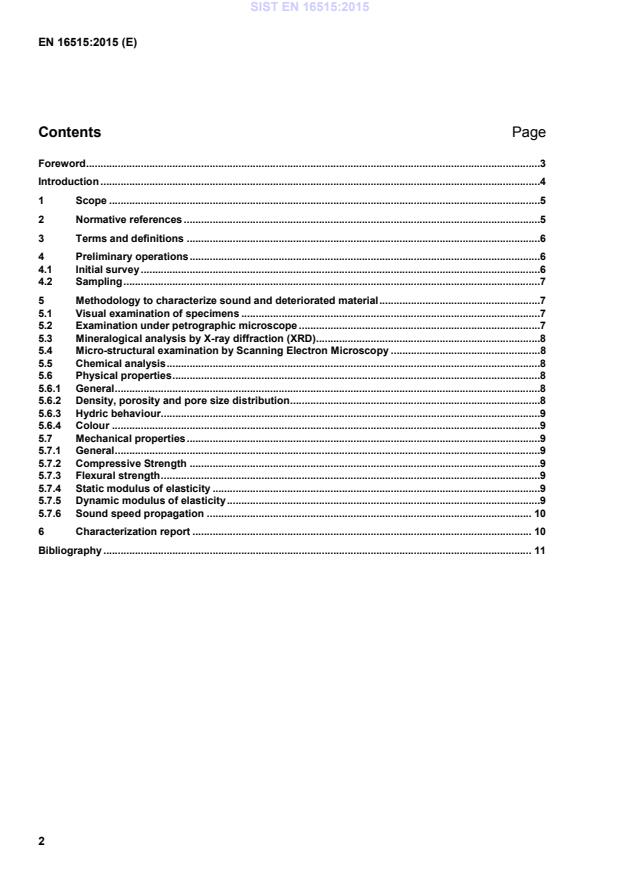
- Mineralogical and Chemical Analysis: Techniques such as X-ray diffraction (XRD), scanning electron microscopy (SEM-EDS/WDS), X-ray fluorescence (XRF), and spectroscopy for determining composition and weathering effects.
- Physical and Mechanical Properties: Instructions for measuring density, porosity, pore distribution, water absorption, colour, and mechanical strengths, including compressive, flexural, and modulus of elasticity tests.
Analytical Approach: Promotes the use of non-destructive testing (wherever feasible), minimizing sample removal from valuable heritage materials.
Reporting: Specifies required elements for a complete characterization report, ensuring traceability, reproducibility, and structured documentation.
Applications
EN 16515:2015 is essential for:
- Restoration and Conservation Projects: Enables conservators, restorers, and heritage professionals to assess the condition of stone materials and the extent of deterioration, supporting decisions on remedial interventions or stone replacement.
- Condition Monitoring: Facilitates regular assessment of historical buildings, monuments, sculptures, and artefacts, providing data to track changes in stone properties over time.
- Damage Assessment: Supports the investigation of weathering patterns, biodeterioration, and environmental influences, helping to diagnose the causes and progression of stone decay.
- Material Compatibility: Assists in identifying the original stone for sourcing compatible materials for repairs or replacements.
This standard is widely used by conservation scientists, materials engineers, architects, and authorities responsible for the protection and maintenance of cultural heritage sites.
Related Standards
EN 16515:2015 refers to and complements several other standards relevant to the conservation of natural stone in cultural heritage, including:
- EN 16085: Sampling procedures for conservation
- EN 16095: Condition reporting for movable heritage objects
- EN 16096: Condition survey for immovable heritage
- EN 1926: Determination of compressive strength of natural stone
- EN 1936: Determination of density and open porosity
- EN 12372: Flexural strength testing
- EN 13755: Water absorption tests
- EN 14146 / EN 14580: Modulus of elasticity measurements
- EN 14579: Sound speed propagation
- EN 15801 / EN 15803 / EN 15886: Capillarity, vapour permeability, and colour determination
- EN 16455: Analysis of soluble salts in stone
By adhering to EN 16515:2015, professionals ensure the use of standardized, validated methods for the analysis and conservation of stone in cultural heritage, promoting best practices, compatibility, and the long-term preservation of invaluable historic assets.
Relations
- Effective Date
- 28-Jan-2026
- Effective Date
- 28-Jan-2026
- Effective Date
- 28-Jan-2026
- Effective Date
- 28-Jan-2026
- Effective Date
- 28-Jan-2026
- Effective Date
- 28-Jan-2026
- Effective Date
- 28-Jan-2026
- Refers
EN 15886:2010 - Conservation of cultural property - Test methods - Colour measurement of surfaces - Effective Date
- 28-Jan-2026
- Effective Date
- 28-Jan-2026
- Effective Date
- 28-Jan-2026
- Effective Date
- 28-Jan-2026
- Effective Date
- 28-Jan-2026
- Effective Date
- 28-Jan-2026
- Effective Date
- 28-Jan-2026
- Referred By
CEN/TS 16931-3-4:2020 - Electronic invoicing - Part 3-4: Syntax binding for UN/EDIFACT INVOIC D16B - Effective Date
- 28-Jan-2026
Frequently Asked Questions
EN 16515:2015 is a standard published by the European Committee for Standardization (CEN). Its full title is "Conservation of Cultural Heritage - Guidelines to characterize natural stone used in cultural heritage". This standard covers: This European Standard specifies a methodology for the characterization of sound or deteriorated stones by using the most appropriate analytical techniques on samples taken from the object. This European Standard contains guidelines for the selection of methods to determine mineralogical, textural, physical, chemical and mechanical properties of natural stone used in cultural heritage monuments and objects. This information is used to define rock typology and to evaluate the stone’s condition with respect to its conservation as well as for understanding of deterioration processes of natural stone. Where possible existing standards are referred to and guidance provided where different specimens are required and additional methods used. The methods described are generally destructive, however, non-destructive (NDT) methods are always preferable to methods with a minimum of destruction and those are always preferable to destructive methods. Methods used for stone analysis can vary depending upon the objectives of the work. All investigation and analysis need be proportional to the significance of the building or artefact being investigated, its condition and the likely level of intervention. This European Standard will be used to determine the kind, extent, and objectives of the examination to be made.
This European Standard specifies a methodology for the characterization of sound or deteriorated stones by using the most appropriate analytical techniques on samples taken from the object. This European Standard contains guidelines for the selection of methods to determine mineralogical, textural, physical, chemical and mechanical properties of natural stone used in cultural heritage monuments and objects. This information is used to define rock typology and to evaluate the stone’s condition with respect to its conservation as well as for understanding of deterioration processes of natural stone. Where possible existing standards are referred to and guidance provided where different specimens are required and additional methods used. The methods described are generally destructive, however, non-destructive (NDT) methods are always preferable to methods with a minimum of destruction and those are always preferable to destructive methods. Methods used for stone analysis can vary depending upon the objectives of the work. All investigation and analysis need be proportional to the significance of the building or artefact being investigated, its condition and the likely level of intervention. This European Standard will be used to determine the kind, extent, and objectives of the examination to be made.
EN 16515:2015 is classified under the following ICS (International Classification for Standards) categories: 97.195 - Items of art and handicrafts. Cultural property and heritage. The ICS classification helps identify the subject area and facilitates finding related standards.
EN 16515:2015 has the following relationships with other standards: It is inter standard links to EN 16455:2014, EN 15898:2019, EN 16322:2013, EN 15803:2009, EN 14579:2004, EN 16085:2012, EN 15801:2009, EN 15886:2010, EN 14146:2004, EN 13755:2008, EN 14580:2005, EN 12372:2022, EN 1936:2006, EN 1926:2006, CEN/TS 16931-3-4:2020. Understanding these relationships helps ensure you are using the most current and applicable version of the standard.
EN 16515:2015 is available in PDF format for immediate download after purchase. The document can be added to your cart and obtained through the secure checkout process. Digital delivery ensures instant access to the complete standard document.
Standards Content (Sample)
2003-01.Slovenski inštitut za standardizacijo. Razmnoževanje celote ali delov tega standarda ni dovoljeno.Erhaltung des kulturellen Erbes - Leitfaden zur Charakterisierung von Naturstein in der DenkmalpflegeConservation du patrimoine culturel - Guide pour la caractérisation de la pierre naturelle utilisée dans les biens culturelsConservation of Cultural Heritage - Guidelines to characterize natural stone used in cultural heritage97.195Umetniški in obrtniški izdelkiItems of art and handicraftsICS:Ta slovenski standard je istoveten z:EN 16515:2015SIST EN 16515:2015en,fr,de01-junij-2015SIST EN 16515:2015SLOVENSKI
STANDARD
EUROPEAN STANDARD NORME EUROPÉENNE EUROPÄISCHE NORM
EN 16515
April 2015 ICS 97.195 English Version
Conservation of Cultural Heritage - Guidelines to characterize natural stone used in cultural heritage
Conservation du patrimoine culturel - Lignes directrices pour la caractérisation de la pierre naturelle utilisée dans le patrimoine culturel
Erhaltung des kulturellen Erbes - Leitfaden zur Charakterisierung von Naturstein in der Denkmalpflege This European Standard was approved by CEN on 7 February 2015.
CEN members are bound to comply with the CEN/CENELEC Internal Regulations which stipulate the conditions for giving this European Standard the status of a national standard without any alteration. Up-to-date lists and bibliographical references concerning such national standards may be obtained on application to the CEN-CENELEC Management Centre or to any CEN member.
This European Standard exists in three official versions (English, French, German). A version in any other language made by translation under the responsibility of a CEN member into its own language and notified to the CEN-CENELEC Management Centre has the same status as the official versions.
CEN members are the national standards bodies of Austria, Belgium, Bulgaria, Croatia, Cyprus, Czech Republic, Denmark, Estonia, Finland, Former Yugoslav Republic of Macedonia, France, Germany, Greece, Hungary, Iceland, Ireland, Italy, Latvia, Lithuania, Luxembourg, Malta, Netherlands, Norway, Poland, Portugal, Romania, Slovakia, Slovenia, Spain, Sweden, Switzerland, Turkey and United Kingdom.
EUROPEAN COMMITTEE FOR STANDARDIZATION
COMITÉ EUROPÉEN DE NORMALISATION EUROPÄISCHES KOMITEE FÜR NORMUNG
CEN-CENELEC Management Centre:
Avenue Marnix 17,
B-1000 Brussels © 2015 CEN All rights of exploitation in any form and by any means reserved worldwide for CEN national Members. Ref. No. EN 16515:2015 ESIST EN 16515:2015
EN 1936, open porosity EN 12372, trated load EN 13755,
EN 14146, the fundamental resonance frequency) EN 14579,
EN 14580,
EN 15801, capillarity EN 15803, (/p) EN 15886,
EN 15898, in general terms and definitions EN 16085,
EN 16322,
...